

What You'll Learn About Gearmotors
The Core Concept
Understand what a gearmotor is and how it differs from a standalone motor, focusing on its fundamental purpose.
Torque vs. Speed
Explore the essential trade-off between rotational force (torque) and rotational speed, and how gearboxes manipulate this balance.
Gear Ratios Explained
Demystify gear ratios and learn how they are calculated and applied to achieve specific performance goals in robotics.
Real-World Applications
Discover practical scenarios where gearmotors are indispensable, from industrial robots to hobby projects.
 A compact gearmotor, combining an electric motor with an integrated gearbox.
What Exactly is a Gearmotor?
Imagine you have a powerful engine, but you need to move a very heavy object slowly, or a light object very quickly. You wouldn't use the same gear in your car for both tasks, right? That's the core idea behind a gearmotor.
A gearmotor is simply an electric motor combined with a gearbox. The motor provides the rotational power, and the gearbox modifies that power, typically to increase torque and decrease speed. This integration creates a single, compact unit optimized for specific performance characteristics, making it a workhorse in robotics and automation.
While you can buy a motor and a gearbox separately and connect them, a gearmotor is designed as a single, optimized system. This often leads to better efficiency, reduced noise, and a more compact footprint, which are crucial factors in many robotic designs.
Why Can't a Regular Motor Do the Job Alone?
Standard electric motors, especially DC motors, are fantastic at generating high speeds. However, they often lack the raw rotational force, or torque, needed to move heavy loads, climb inclines, or overcome significant resistance. Think of a small, fast motor trying to lift a heavy box – it might spin quickly, but it won't have the strength to lift.
This is where the gearbox comes in. It acts as a mechanical transformer, taking the high-speed, low-torque output of the motor and converting it into a lower-speed, higher-torque output. This fundamental trade-off between speed and torque is the primary reason gearmotors exist and are so widely used.
Torque: Imagine trying to loosen a stubborn bolt with a wrench. The force you apply to the end of the wrench, multiplied by the length of the wrench, creates torque. In motors, it's the twisting force that causes rotation and is measured in Newton-meters (Nm) or ounce-inches (oz-in). Higher torque means more rotational strength.
Speed: This refers to how fast the motor's shaft rotates, typically measured in Revolutions Per Minute (RPM). A motor with high RPM spins very quickly, while one with low RPM spins slowly. Gearboxes are used to reduce RPM while increasing torque.
 Intermeshing gears are the heart of a gearbox, changing speed and torque.
How Do Gear Ratios Work Their Magic?
The core principle of a gearbox is the gear ratio. It's simply the ratio of the number of teeth on the output gear to the number of teeth on the input gear. For example, if an input gear has 10 teeth and drives an output gear with 50 teeth, the gear ratio is 50:10, or 5:1.
This 5:1 ratio means that for every 5 rotations of the input gear (from the motor), the output gear rotates once. This reduction in speed comes with a proportional increase in torque (ignoring efficiency losses). So, a 5:1 gear ratio would reduce the speed by a factor of 5 and increase the torque by a factor of 5.
Understanding gear ratios is crucial for selecting the right gearmotor. A higher gear ratio means more torque and less speed, ideal for heavy lifting or slow, powerful movements. A lower gear ratio means less torque but higher speed, suitable for faster, lighter applications. You can learn more about specific motor types and their characteristics in our Motor Types Hub.
What's your primary goal for motion?
For Heavy Lifting / High Force
You'll generally need a higher gear ratio (e.g., 50:1, 100:1, or even higher). This significantly boosts torque, allowing your robot to move heavy loads or overcome strong resistance, albeit at a slower speed. Think about robotic arms lifting objects or tracked robots climbing steep terrain.
For Fast Movement / Low Force
A lower gear ratio (e.g., 5:1, 10:1) is more suitable. This provides a moderate torque increase while maintaining a relatively high output speed. Ideal for applications like conveyor belts, small wheeled robots on flat surfaces, or fast-acting mechanisms that don't require immense force.
For Balanced Performance
A medium gear ratio (e.g., 20:1, 30:1) often provides a good compromise between torque and speed. This is a common choice for general-purpose robots where both strength and reasonable speed are important, such as mobile platforms navigating varied environments.
Common Gearbox Types at a Glance
Not all gearboxes are created equal. Different types offer unique advantages in terms of efficiency, size, noise, and load capacity. Understanding these can help you choose the right gearmotor for your specific needs.
Spur Gearboxes
Spur gearboxes are the most common and simplest type, featuring straight-cut teeth mounted on parallel shafts. They are known for their high efficiency and relatively low cost. However, they can be noisy at high speeds and typically require multiple stages to achieve high gear ratios, which can increase their size.
- Pros: High efficiency, simple design, cost-effective.
- Cons: Can be noisy, less compact for high ratios, not self-locking.
- Best for: General-purpose applications, moderate torque, where noise isn't a critical factor.
Planetary Gearboxes
Planetary gearboxes are highly compact and efficient, offering high torque density in a small package. They consist of a central 'sun' gear, several 'planet' gears orbiting the sun, and an outer 'ring' gear. This concentric arrangement allows for multiple points of contact, distributing the load and resulting in high torque capacity and smooth operation. They are often found in high-performance robotics.
- Pros: High torque density, compact size, high efficiency, low backlash, quiet operation.
- Cons: More complex to manufacture, higher cost.
- Best for: Robotic arms, precision motion control, applications requiring high torque in a small space.
Worm Gearboxes
Worm gearboxes consist of a worm (a screw-like gear) meshing with a worm wheel. Their unique design allows for very high gear ratios in a single stage and offers a significant advantage: they are often self-locking. This means the worm wheel cannot drive the worm, preventing back-driving and holding a load in place even when the motor is off. However, they are less efficient due to sliding friction.
- Pros: Very high gear ratios in a single stage, self-locking capability (prevents back-driving), quiet.
- Cons: Lower efficiency, can generate heat.
- Best for: Lifting mechanisms, conveyors, applications requiring load holding without continuous power.
Key Benefits of Using a Gearmotor
Beyond simply increasing torque, gearmotors bring several advantages to your robotics projects:
When Should You Definitely Consider a Gearmotor?
While almost any motor can benefit from a gearbox, certain applications make gearmotors almost mandatory. If your project involves any of the following, a gearmotor is likely your best bet:
- Moving Heavy Loads: Robotic arms, lifting mechanisms, heavy-duty conveyors.
- Slow, Controlled Movements: Precision positioning, delicate manipulation, slow-moving mobile robots.
- Climbing or Overcoming Resistance: Tracked vehicles, robots navigating uneven terrain, opening/closing heavy doors.
- Holding a Position: Actuators that need to maintain a specific angle or height against gravity or external forces.
- Limited Space: When you need high power in a compact form factor.
For a deeper dive into motor selection, check out our Motor Comparison Tool.
Which scenario MOST likely requires a gearmotor?
Key Specifications to Consider for Your Gearmotor
Choosing the right gearmotor involves looking at several critical specifications. Don't just pick the most powerful one; select the one that matches your project's exact needs.
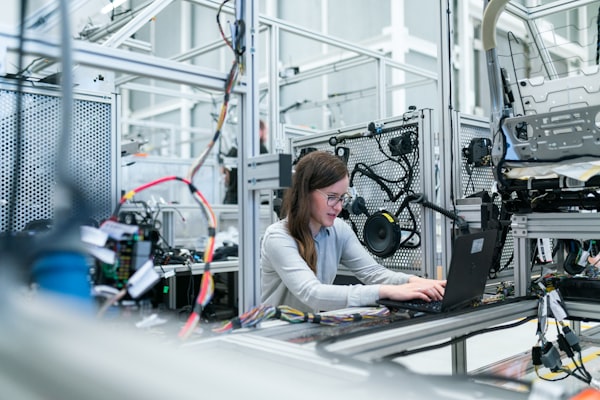
 Careful consideration of specifications ensures optimal performance and longevity.
- Output Torque: This is the most important spec. It's the rotational force available at the output shaft of the gearbox, measured in Nm or oz-in. Ensure it exceeds your maximum required load.
- Output Speed (RPM): The rotational speed of the gearbox's output shaft. This should match your desired operational speed.
- Gear Ratio: The ratio of input speed to output speed. Directly impacts torque and speed.
- Voltage: The operating voltage of the motor (e.g., 12V DC, 24V DC).
- Current Draw: The amount of current the motor consumes, especially under load. Important for power supply sizing.
- Efficiency: How much of the input power is converted into useful mechanical output power. Gearboxes have inherent losses.
- Backlash: The amount of play or 'slop' in the gears. Low backlash is crucial for precision applications.
- Size and Weight: Physical dimensions and mass, critical for space-constrained or weight-sensitive robots.
If you're unsure about the exact size, our Motor Sizing Calculator can help you get started.
Your Gearmotor Selection Checklist
0 of 5 completedReal-World Gearmotor Applications in Robotics
Gearmotors are ubiquitous in robotics, powering everything from tiny hobby robots to massive industrial machines. Here are a few examples:
 Industrial robotic arms rely on gearmotors for precise, powerful movements.
Industrial Robotic Arms
These complex machines require immense torque to lift and manipulate heavy components with high precision. Gearmotors, especially those with planetary gearboxes, are essential at each joint to provide the necessary force and fine control, enabling tasks like welding, assembly, and material handling.
This humanoid robot kit features multiple degrees of freedom, each joint requiring precise, controlled motion and sufficient torque, making it an excellent example of where compact gearmotors would be utilized for articulation.
 Quadruped robots use gearmotors in their leg joints for dynamic movement and stability.
Mobile Robotics (Wheeled & Legged)
From autonomous guided vehicles (AGVs) in warehouses to advanced quadruped robots, gearmotors provide the driving force. For wheeled robots, they offer the torque to move the robot and its payload. For legged robots, gearmotors in each joint enable the complex, high-torque movements required for walking, running, and balancing.
The Unitree Go2's advanced athletic movements and stability are powered by sophisticated joint actuators, which are essentially high-performance gearmotors designed for dynamic, high-torque output in a compact form factor.
The Numbers Behind the Power
Gearmotors are engineered for performance. Here's a glimpse at typical capabilities:
Common Questions About Gearmotors
Can I add a gearbox to any motor?
While technically possible to couple a separate gearbox to almost any motor, it's often more efficient and reliable to use an integrated gearmotor. Integrated units are designed for optimal performance and fit, reducing alignment issues and mechanical losses. If you're building from scratch, consider a purpose-built gearmotor.
Do gearmotors consume more power?
A gearmotor itself doesn't inherently consume more power than a standalone motor. In fact, by allowing the motor to operate closer to its peak efficiency for a given load, a gearmotor can often be more energy-efficient than trying to use an oversized, direct-drive motor for a high-torque application. However, gearboxes do have some efficiency losses due to friction, typically 5-10% per stage.
What is 'backlash' and why does it matter?
Backlash refers to the small amount of play or 'slop' between meshing gears. When the direction of rotation changes, the input gear might turn a small amount before it engages and moves the output gear. For applications requiring high precision, like robotic arms or CNC machines, low backlash gearboxes are critical to ensure accurate positioning and repeatability.
Integrating a Gearmotor into Your Robotics Project
Once you've selected your gearmotor, proper integration is key to its performance and longevity. Here are a few considerations:
- Mounting: Ensure the gearmotor is securely mounted to your robot's frame. Vibrations can reduce efficiency and lifespan.
- Shaft Coupling: Use appropriate couplings to connect the gearmotor's output shaft to your mechanism (e.g., wheels, arms, lead screws). Ensure proper alignment to avoid stress on the shafts and bearings.
- Power Supply: Provide a stable power supply that can deliver the required voltage and current, especially under peak load conditions.
- Motor Controller: A suitable motor controller is essential for regulating speed, direction, and often position. Ensure the controller's current rating exceeds the motor's maximum draw.
- Thermal Management: Under heavy loads or continuous operation, gearmotors can generate heat. Ensure adequate ventilation or consider heatsinks if operating near their thermal limits.
This Bafang mid-mounted motor is a prime example of a gearmotor, specifically designed for electric bicycles. Its mid-drive configuration, combined with internal gearing, provides excellent torque for climbing and efficient power delivery, demonstrating a real-world application of gearmotor principles.
Ready to Power Your Next Project?
Gearmotors are indispensable components in the world of robotics, offering a powerful and efficient solution for applications requiring high torque and precise speed control. By understanding the fundamentals of torque, speed, and gear ratios, you're now equipped to make informed decisions for your next build.
Whether you're designing a complex robotic arm or a simple mobile platform, choosing the right gearmotor will significantly impact your project's performance and success. Keep exploring our learning center to deepen your knowledge!
Further Reading