

What You'll Discover with Our Project Planner
Clarify Your Project Needs
Pinpoint the essential requirements for your robotics or electronics project, from basic control to advanced connectivity.
Avoid Common Pitfalls
Steer clear of overspending or underpowering your project by making informed decisions about your microcontroller choice.
Match Features to Boards
Understand how I/O pins, processing power, and connectivity options translate into real-world board recommendations.
Get Actionable Recommendations
Receive specific board suggestions and links to related resources to kickstart your building process with confidence.
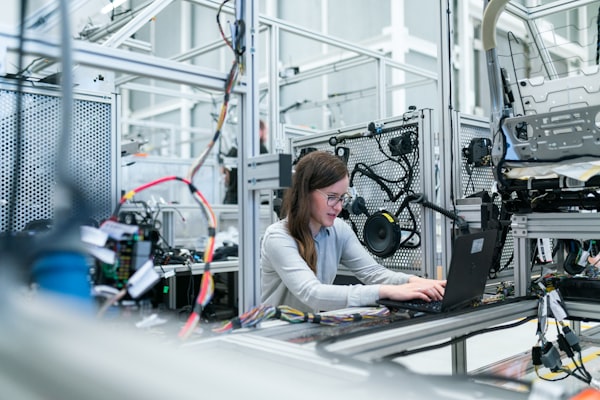 Careful planning is the first step to a successful robotics project.
What Does Your Robot or Project Need to Do?
Before diving into technical specifications, let's define the core purpose of your project. Are you building a simple sensor monitor, a complex robotic arm, or something in between? Understanding the primary function will guide all subsequent decisions about your microcontroller's capabilities.
Think about the main tasks your project will perform. Will it primarily gather data, move objects, communicate wirelessly, or process information? Each of these functions places different demands on your chosen board.
What's the primary function of your project?
Focus on I/O and Analog Capabilities
For sensing and monitoring, you'll need a board with sufficient Analog-to-Digital Converter (ADC) pins to read various sensor inputs (temperature, light, distance). Digital I/O pins are also crucial for simple on/off sensors. Consider boards known for robust analog performance and ease of sensor integration, like many Arduino variants or ESP32 for integrated Wi-Fi data logging.
Excellent for beginners, robust I/O, and a large community for sensor integration examples.
Prioritize PWM and Motor Control
Projects involving motors, servos, or other actuators require boards with Pulse Width Modulation (PWM) capabilities for precise speed and position control. You'll also need enough digital I/O pins to interface with motor drivers. Boards with good real-time performance and dedicated motor control libraries are ideal. The ESP32's dual-core processor can also handle complex movement algorithms efficiently.
Powerful dual-core, excellent PWM, and integrated Wi-Fi/Bluetooth for remote control.
Look for Higher Processing Power and Memory
If your project involves complex calculations, data logging, image processing, or running advanced algorithms (like basic AI/ML), you'll need a microcontroller with a faster clock speed, more RAM, and potentially more flash memory. Boards like the Raspberry Pi Pico or higher-end ESP32 variants offer significant processing capabilities for embedded applications.
Cost-effective, powerful RP2040 chip, ample memory, and integrated Wi-Fi for data processing and transmission.
Connectivity is Key: Wi-Fi, Bluetooth, Ethernet
For projects that need to communicate with the internet, other devices, or a central server, integrated wireless capabilities are paramount. ESP32 boards are renowned for their built-in Wi-Fi and Bluetooth. For wired connections, some boards offer Ethernet. Consider the range, power consumption, and data throughput required for your communication needs.
Advanced ESP32-S3 chip with Wi-Fi 6, Bluetooth 5, and more processing power for robust IoT applications.
 The tiny chip at the heart of your board dictates its processing power.
How Much Brainpower Does Your Project Need?
The central processing unit (CPU) and memory are the 'brain' of your microcontroller. A faster CPU can execute instructions more quickly, which is crucial for time-sensitive tasks like real-time control or complex calculations. Memory (RAM for temporary data, Flash for program storage) determines how large and intricate your code can be, and how much data your project can handle at once.
Don't just pick the fastest board; consider if your project truly benefits from it. Over-specifying can lead to unnecessary cost and power consumption. Conversely, an underpowered board will struggle, leading to delays or malfunctions. Let's assess your needs.
How Fast Do Things Need to Happen? (Clock Speed)
Consider the responsiveness required. Is it a simple LED blink, or controlling a drone's flight stability?
- Slow (MHz range): Basic automation, simple sensor reading, non-time-critical tasks.
- Medium (Tens of MHz): Multiple sensor inputs, basic motor control, simple data logging.
- Fast (Hundreds of MHz): Real-time control, complex algorithms, high-speed data processing, advanced robotics.
Your project likely needs: Medium speed (tens of MHz)
How Much Code and Data Will You Store? (Flash Memory)
Flash memory stores your program code and any permanent data. Complex projects with many features, libraries, or large datasets require more.
- Small (32KB - 256KB): Simple scripts, basic sensor projects.
- Medium (512KB - 4MB): IoT applications, complex control logic, multiple libraries.
- Large (8MB+): Web servers, advanced graphics, machine learning models, extensive data logging.
Your project likely needs: Medium (512KB - 4MB)
How Much Temporary Data Will You Handle? (RAM)
RAM (Random Access Memory) is where your program stores temporary variables and data it's actively working with. More complex operations or handling larger data buffers require more RAM.
- Small (2KB - 32KB): Basic calculations, small sensor readings.
- Medium (64KB - 512KB): Network buffers, moderate data processing, multiple concurrent tasks.
- Large (1MB+): Image processing, audio processing, complex data structures.
Your project likely needs: Medium (64KB - 512KB)
Based on these considerations, you're looking for a board with a good balance of processing power and memory. Boards like the ESP32 or Raspberry Pi Pico often fit these mid-to-high range requirements well.
 Connecting components to your microcontroller requires understanding its I/O pins.
How Will Your Board Talk to Sensors and Actuators? (I/O & Peripherals)
The Input/Output (I/O) pins are how your microcontroller interacts with the outside world – reading data from sensors and sending commands to actuators. Different types of I/O serve different purposes. Knowing what kind of sensors and actuators you plan to use is critical for selecting a board with the right mix of pins.
Common I/O types include General Purpose Input/Output (GPIO), Analog-to-Digital Converters (ADC), Pulse Width Modulation (PWM), and various communication protocols like I2C, SPI, and UART. Each has its strengths for specific tasks. For a deeper dive into these, check out our guide on Exploring Common Microcontroller Board Features.
Your I/O & Peripheral Checklist
0 of 8 completed Integrated Wi-Fi and Bluetooth modules enable powerful IoT applications.
Does Your Project Need to Go Wireless? (Connectivity)
Modern robotics and IoT projects often require some form of connectivity. Whether it's connecting to the internet, communicating with a smartphone, or interacting with other devices, integrated wireless capabilities can simplify your design significantly. The most common options are Wi-Fi and Bluetooth, but others like LoRa or Ethernet might be relevant for specific applications.
Consider the range, data rate, and power consumption of your connectivity needs. For example, Wi-Fi offers high bandwidth over moderate distances but consumes more power, while Bluetooth is great for short-range, low-power device-to-device communication. For a detailed comparison of boards with these features, see our article: Arduino vs. ESP32 vs. Raspberry Pi: Which Board is Right for You?
Wi-Fi: For Internet of Things (IoT) and Networked Devices
Wi-Fi is essential for projects that need to connect to local networks or the internet. This includes smart home devices, remote monitoring systems, and web-controlled robots. Boards like the ESP32 are popular for their integrated Wi-Fi, making them ideal for IoT applications. Ensure your chosen board supports the Wi-Fi standards (e.g., 802.11 b/g/n) required for your network.
Bluetooth: For Short-Range Device Communication
Bluetooth (Classic or Low Energy - BLE) is perfect for projects that need to communicate with smartphones, tablets, or other nearby devices. Think wearable tech, remote controls, or data transfer over short distances. Many ESP32 boards also include Bluetooth, offering versatile connectivity options for personal devices.
Ethernet: For Reliable Wired Network Connections
When stability, high bandwidth, and security are paramount, and a wired connection is feasible, Ethernet is the way to go. Industrial automation, network servers, or critical infrastructure monitoring often benefit from Ethernet. While less common on small microcontrollers, some development boards offer Ethernet shields or integrated controllers.
LoRa: For Long-Range, Low-Power Communication
LoRa (Long Range) is a wireless technology designed for long-range, low-power communication, making it suitable for applications like remote environmental monitoring, asset tracking, or smart agriculture where devices are spread out and battery life is critical. Specific LoRa-enabled microcontrollers are available for these niche applications.
Balancing Performance with Your Budget & Ecosystem
Beyond technical specs, practical considerations like cost, community support, and the availability of development tools significantly impact your project's success. Don't overlook these factors!
How much should I budget for my microcontroller board?
Microcontroller boards range from a few dollars for basic models (like an ESP8266 or Raspberry Pi Pico) to over $50 for more advanced, feature-rich options (like some Arduino Portenta or higher-end ESP32 boards). Remember to factor in accessories like sensors, actuators, power supplies, and prototyping materials. Our Budgeting for Your Board guide offers a comprehensive breakdown.
Why does community support matter for my project?
A strong community means more tutorials, example code, troubleshooting forums, and readily available libraries. This significantly speeds up development, especially for beginners. Arduino boasts one of the largest communities, while ESP32 and Raspberry Pi also have very active user bases, making learning and problem-solving much easier.
What about the development environment and tools?
Consider the ease of setting up your Integrated Development Environment (IDE) and flashing firmware. Arduino IDE is famously user-friendly. ESP32 often uses PlatformIO or Arduino IDE. Raspberry Pi Pico can be programmed with MicroPython or C/C++. Ensure the tools align with your comfort level. Learn more in our guide on Setting Up Your Development Environment.
Your Tailored Board Recommendations
Based on the considerations above, here's a quick overview of popular microcontroller families and where they typically shine. Use this as a starting point to explore specific models that align with your project's profile.
| Feature | Arduino (e.g., Uno, Nano) | ESP32 (e.g., DevKitC, S3) | Raspberry Pi Pico (W) |
|---|---|---|---|
| Ease of Use (Beginner) | Excellent | Good | Good |
| Processing Power | Basic to Medium | Medium to High | Medium |
| Memory (Flash/RAM) | Low to Medium | Medium to High | Medium |
| Integrated Wi-Fi/BT | Rare (shields needed) | Standard | Pico W only |
| Analog I/O (ADC) | Good | Good | Good |
| PWM Channels | Moderate | Excellent | Good |
| Cost Range | $10 - $40 | $5 - $25 | $4 - $10 |
| Best For | Learning, simple projects, sensor reading, basic control. | IoT, networked devices, advanced control, data logging. | Embedded AI/ML, high-performance microcontrollers, MicroPython projects. |
This table provides a general overview. Specific models within each family will have varying capabilities. Always check the datasheet for the exact board you're considering.
Ready to Build? Explore More!
Now that you have a clearer idea of which microcontroller board aligns with your project vision, it's time to dive deeper. Our learning center is packed with resources to help you from concept to completion.
Choosing Your First Board: A Decision Framework for Beginners
Just starting out? This guide helps you pick your very first microcontroller with confidence.
Advanced Board Features: When Do You Need More Power or Connectivity?
Explore specialized features for complex projects, from real-time operating systems to advanced security.
Bringing Your Robot to Life: How Microcontrollers Control Movement & Sensors
Understand the fundamentals of using microcontrollers to drive motors and read sensor data for robotics.