

What You'll Learn in This Guide
Core Differences Explained
Understand the fundamental distinctions between microcontrollers and single-board computers and why it matters for your project.
Platform Strengths & Weaknesses
Dive into the specific advantages and limitations of Arduino, ESP32, and Raspberry Pi for various applications.
Real-World Project Matching
See practical examples and scenarios to help you match the right board to your specific robotics or IoT project.
Decision-Making Framework
Utilize interactive tools and checklists to confidently make your final board selection.
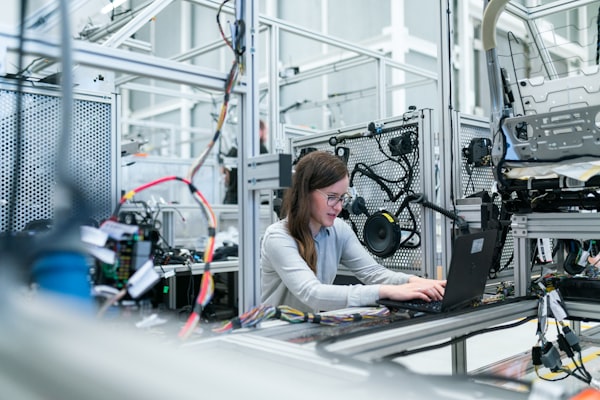 A typical microcontroller board, the brain of many robotics projects.
Microcontroller vs. Single-Board Computer: What's the Big Deal?
Before we dive into specific boards, it's crucial to understand the fundamental difference between a microcontroller (MCU) and a single-board computer (SBC). This distinction will guide your entire decision-making process.
Think of a microcontroller as a tiny, specialized computer designed to do one or a few tasks very well, very efficiently. It's perfect for controlling specific hardware, reading sensors, and executing repetitive actions. A single-board computer, on the other hand, is a full-fledged computer shrunk down to a single circuit board, capable of running an operating system, handling complex software, and managing multiple high-level tasks simultaneously.
Microcontrollers typically have limited RAM and storage, often measured in kilobytes, and run simple, bare-metal code or a real-time operating system (RTOS). They excel at real-time control and low-power applications. SBCs, like your desktop computer, have gigabytes of RAM and storage, run Linux or other OSes, and can handle graphical interfaces, networking, and complex computations. They are less suited for precise real-time control due to OS overhead.
For a more in-depth look at these differences, check out our guide: What's the Difference Between a Microcontroller and a Microprocessor?
 The iconic Arduino Uno, a popular choice for beginners.
Arduino: The Friendly Entry Point to Robotics?
Arduino boards are the quintessential microcontroller for beginners and hobbyists. They are known for their simplicity, extensive community support, and user-friendly Integrated Development Environment (IDE). If you're just starting your journey into electronics and robotics, Arduino is often the recommended first step.
Strengths:
Limitations:
Which type of project is Arduino LEAST suited for?
 An ESP32 board, compact and powerful with built-in wireless.
ESP32: The Connected Microcontroller for IoT Robotics?
The ESP32 is a powerful, low-cost microcontroller developed by Espressif Systems. Its standout feature is integrated Wi-Fi and Bluetooth connectivity, making it a favorite for Internet of Things (IoT) projects and connected robotics. It offers significantly more processing power than most Arduinos while maintaining a small footprint and low power consumption.
Strengths:
Limitations:
This robust ESP32 board offers excellent performance, integrated Wi-Fi/Bluetooth, and a user-friendly form factor, perfect for connected robotics and IoT applications.
 A Raspberry Pi, a full computer in a compact size.
Raspberry Pi: The Mini Computer for Complex Robotics?
The Raspberry Pi is not a microcontroller; it's a single-board computer (SBC). This means it's a much more powerful device, capable of running a full Linux operating system (like Raspberry Pi OS), handling complex software, and even driving displays. If your robotics project involves advanced computation, AI, machine learning, or needs a graphical interface, the Raspberry Pi is your go-to.
Strengths:
Limitations:
What's the primary focus of your robotics project?
For Precise Control: Consider Arduino or ESP32
If your project primarily involves direct control of motors, reading many sensors with strict timing, and low-power operation, a microcontroller like Arduino or ESP32 will be more efficient and reliable. Raspberry Pi's OS can introduce delays that are undesirable for real-time control.
For IoT & Wireless: ESP32 is Your Best Bet
When wireless communication (Wi-Fi, Bluetooth) is central to your project, the ESP32's integrated capabilities make it the most cost-effective and power-efficient choice. Raspberry Pi can do this too, but often with higher power draw and more complexity for simple IoT tasks.
For AI, Vision & Complex Computing: Raspberry Pi Shines
If your robot needs to 'see' (computer vision), 'think' (AI/ML), process large datasets, or run a web server, the Raspberry Pi's powerful processor and full OS are indispensable. It provides the computational horsepower that microcontrollers simply cannot match.
Quick Comparison: Arduino, ESP32, and Raspberry Pi
Here's a side-by-side look at the key specifications and features to help you compare these popular boards at a glance.
| Feature | Arduino (e.g., Uno/Mega) | ESP32 (e.g., ESP32-WROOM) | Raspberry Pi (e.g., Pi 4) |
|---|---|---|---|
| Type | Microcontroller (MCU) | Microcontroller (MCU) | Single-Board Computer (SBC) |
| Processor | 8-bit/32-bit (e.g., ATmega328P) | Dual-core 32-bit (Tensilica Xtensa LX6) | Quad-core 64-bit (ARM Cortex-A72) |
| Clock Speed | 16-48 MHz | Up to 240 MHz | Up to 1.8 GHz |
| RAM | 2-8 KB SRAM | 520 KB SRAM | 2GB, 4GB, or 8GB LPDDR4 |
| Storage | 32-256 KB Flash | 4-16 MB Flash | MicroSD card (GBs) |
| Operating System | Bare-metal / RTOS | Bare-metal / RTOS | Linux (Raspberry Pi OS) |
| Wi-Fi / Bluetooth | No (requires shield) | Yes (integrated) | Yes (integrated) |
| USB Ports | 1 (for programming) | 1 (for programming) | 2x USB 3.0, 2x USB 2.0 |
| HDMI Output | No | No | 2x Micro HDMI |
| Power Consumption | Very Low (mA) | Low (tens of mA) | Moderate (hundreds of mA to Amps) |
| Typical Cost | $5 - $30 | $5 - $20 | $35 - $75+ |
Choosing Your Board: Project Type Recommendations
Still unsure? Let's look at common robotics project types and which board typically excels in each scenario.
Simple Robotics & Automation: Arduino is King
For projects like line-following robots, basic robotic arms, automated plant watering systems, or simple sensor data logging, Arduino boards (like the Uno or Mega) are ideal. They offer excellent real-time control, are easy to learn, and have a vast ecosystem of shields and sensors. The focus here is on direct hardware interaction and straightforward logic.
The classic choice for beginners, updated with a more powerful 32-bit microcontroller while retaining the familiar form factor and ease of use. Perfect for learning the fundamentals of robotics.
IoT & Connected Robotics: ESP32 is the Champion
If your robot needs to be controlled remotely via a web interface, send data to a cloud server, or communicate with other smart devices, the ESP32 is unmatched. Think smart home robots, remote-controlled vehicles with live sensor feedback, or environmental monitoring drones. Its integrated Wi-Fi and Bluetooth simplify development significantly.
Combine the power of ESP32 with a camera for basic vision tasks, streaming, or remote monitoring in your IoT robotics projects. A versatile choice for connected applications.
Advanced AI & Vision Robotics: Raspberry Pi Takes the Lead
For complex projects requiring computer vision (e.g., object detection, facial recognition), machine learning, simultaneous localization and mapping (SLAM), or running a full ROS (Robot Operating System) stack, the Raspberry Pi is essential. Consider autonomous robots, advanced drones, or robots with complex human-robot interaction. Its processing power and OS capabilities open up a world of possibilities.
The latest and most powerful Raspberry Pi, offering significant performance improvements for demanding AI, vision, and complex robotics applications. Ideal for serious developers.
Why Your Board Choice Matters: Impactful Stats
Choosing the right board impacts everything from your project's complexity and power budget to its overall cost and development time. A mismatch can lead to frustration and unnecessary expenses.
For a deeper dive into planning your project, explore our Project Planner Tool. And don't forget to consider the financial implications with our guide on Budgeting for Your Board.
Your Board Selection Checklist
Use this interactive checklist to review your project requirements and confirm your ideal board choice.
Confirm Your Needs
0 of 7 completedReady to Build? Explore More!
Now that you have a clearer idea of which board might be right for your next robotics adventure, continue your learning journey with these related resources:
Further Reading