

What Exciting Adventures Await Your Robot?
Unboxing a new robotics kit is just the beginning of an incredible journey. The real magic happens when you start building and bringing your ideas to life! This guide is designed to ignite your imagination with practical, engaging projects that are perfect for beginners. You'll learn how to:
Master Basic Movements
Get your robot rolling, turning, and navigating simple paths. Understand the fundamentals of motors and control.
Enable Sensing & Interaction
Teach your robot to react to its environment using sensors like light, distance, and line followers.
Unleash Creative Problem-Solving
Tackle fun challenges, debug your code, and iterate on your designs to achieve impressive results.
Build Confidence & Skills
Every successful project builds your confidence in coding, engineering, and critical thinking.
 Your robotics kit is a collection of building blocks for endless creations.
What's Inside My Robot Kit, and How Does It Help Me Build?
Before diving into specific projects, it's helpful to understand the basic components that make up most robotics kits. Think of them as your robot's body, brain, and senses. Most kits include a microcontroller (the brain), motors (for movement), sensors (for input), and structural pieces to hold everything together.
Knowing what each part does will give you a huge advantage when planning your projects. For a deeper dive into these essential parts, check out our guide on What Parts Make Up a Robotics Kit?
What's your primary motivation for building a robot project?
Great for Learning & Experimentation!
If you're eager to understand how things work, start with projects that focus on fundamental concepts. Try building a simple line-following robot to learn about sensors and conditional logic, or a basic obstacle avoidance robot to grasp distance sensing and motor control. These projects offer clear learning outcomes and are easy to debug.
Perfect for Problem Solvers!
Robotics is all about finding innovative solutions. Consider projects that address a small, real-world challenge. Perhaps a robot that sorts small objects by color, a simple automated plant watering system, or a robotic arm that can pick up and move lightweight items. Focus on defining the problem first, then designing your robot to solve it.
Unleash Your Creativity!
Robots can be more than just functional; they can be artistic and expressive! Think about building a drawing robot that creates patterns, a musical robot that plays simple tunes, or a robot that reacts to sound or light with unique movements and LED displays. Let your imagination guide your design and programming choices.
 Even the simplest movements can be incredibly satisfying to program.
Your First Steps: Simple & Satisfying Projects
Starting with straightforward projects helps build confidence and familiarity with your kit. These ideas focus on basic movement and interaction, perfect for getting your robot up and running without complex programming.
- The Forward-Backward Bot: Program your robot to move forward for a few seconds, then backward. This teaches you basic motor control and timing.
- The Turning Robot: Expand on the previous project by adding turns. Make your robot move in a square or a circle. This introduces concepts of direction and rotation.
- Light-Seeking Robot: If your kit has light sensors, program your robot to move towards a light source. This is a fantastic introduction to using sensor input to control movement.
- Obstacle Avoider (Basic): Using a simple bumper switch or an ultrasonic distance sensor, make your robot stop or turn when it detects an object in its path. This is a classic beginner project for understanding reactive behavior.
Before You Start Your Project: A Quick Checklist
0 of 5 completed Different locomotion methods offer unique advantages for various tasks.
Bringing Your Robot to Life: Mastering Movement
Once your robot can move, a whole new world of projects opens up. Movement is often achieved through motors, which are controlled by your robot's brain (microcontroller) based on your code. Understanding how to control these motors is fundamental to creating dynamic and interactive robots.
Whether you're building a robot that drives, walks, or even flies, the principles of programming movement remain similar. If you're new to coding, our guide on How Do I Make My Robot Move? Understanding Robot Programming is a great place to start.
This kit is perfect for mastering basic movement projects, featuring robust motors and easy-to-assemble chassis for quick learning.
Exploring Robot Movement Types: Which One Suits Your Project?
Wheeled Robots: Speed and Simplicity
Wheeled robots are the most common and easiest to build for beginners. They excel on flat, smooth surfaces and are great for projects requiring speed and straightforward navigation.
- Pros: Simple mechanics, high speed, easy to program basic turns.
- Cons: Struggles with uneven terrain, stairs, or obstacles.
- Project Ideas: Line follower, remote-controlled car, maze solver, light-following robot.
Tracked Robots: Grip and Stability
Similar to mini tanks, tracked robots use continuous tracks instead of wheels. This gives them superior traction and stability, making them ideal for rougher terrain or climbing small obstacles.
- Pros: Excellent traction, good for uneven surfaces, stable.
- Cons: Slower than wheeled robots, more complex mechanics than wheels.
- Project Ideas: All-terrain explorer, small delivery robot for indoor/outdoor, surveillance bot.
Bipedal/Legged Robots: Advanced Agility
Legged robots, especially bipedal (two-legged) ones, are significantly more complex but offer incredible agility and the ability to navigate highly irregular terrain, including stairs. They require precise balance and advanced programming.
- Pros: Can navigate stairs and very rough terrain, mimic biological movement.
- Cons: Very complex to build and program, often slower, requires many servos.
- Project Ideas: Simple walking robot, dancing robot, robot that can step over small objects. (Often for more advanced beginners or intermediate builders).
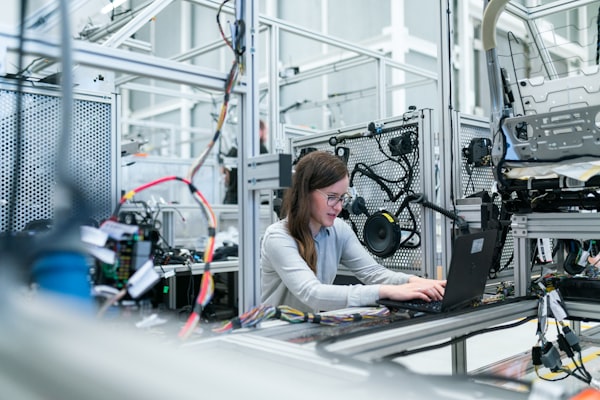 Sensors are your robot's eyes and ears, allowing it to perceive its environment.
Making Your Robot Smart: Sensing the World Around It
A robot that can only move is like a car without a driver. To make your robot truly interactive and autonomous, it needs to be able to sense its environment. Sensors provide input to your robot's brain, allowing it to make decisions and react to changes.
Most beginner kits come with a few basic sensors, such as ultrasonic distance sensors, line-following sensors, or light sensors. Learning how to read data from these sensors and use it in your code is a crucial step in robotics. Dive deeper into how these components work with our guide on How Do Robots Sense and Act? Sensors & Actuators Demystified.
- Line-Following Robot: Program your robot to follow a black line on a white surface using infrared sensors. This teaches precise sensor reading and motor control.
- Maze Solver: Combine distance sensors with movement to navigate a simple maze autonomously. This project challenges your logical thinking and pathfinding algorithms.
- Clap-Activated Robot: Use a sound sensor to make your robot react to claps – perhaps moving forward with one clap and stopping with two.
- Smart Nightlight: If your robot has LEDs and a light sensor, program it to turn on its lights automatically when the room gets dark.
Expand your robot's capabilities with this pack, including ultrasonic, line-follower, and sound sensors for advanced interactive projects.
Assembling a robotic arm can be a rewarding challenge.
Ready for a Challenge? Beyond the Basics
Once you're comfortable with basic movement and sensing, you might be ready to tackle more ambitious projects. These ideas often combine multiple sensors, more complex programming logic, or additional mechanical components.
- Robotic Arm: Many kits offer add-ons for building a simple robotic arm. This project introduces servo motors and inverse kinematics (how to calculate joint angles to reach a point).
- Remote-Controlled Robot with FPV: Integrate a small camera and control your robot wirelessly from your phone or computer. This combines networking, video streaming, and advanced control.
- Automated Plant Waterer: Use a soil moisture sensor to detect when a plant needs water, then activate a small pump to water it. This is a practical application of robotics for smart homes.
- Sumo Bot: Design and program a robot to push another robot out of a designated ring. This project involves strategic thinking, robust construction, and quick reactions.
For those ready to tackle more complex challenges like robotic arms and advanced automation, this kit provides the necessary components and power.
When starting a new robot project, what's the most crucial first step?
Why Every Project You Build Is a Win
Every robot project, big or small, contributes to a valuable skillset that extends far beyond just robotics. It's about developing a mindset for innovation and problem-solving.
What Will Your Robot Do Next? Inspiring Your Next Creation
The possibilities with robotics are truly endless. As you gain experience, you'll find yourself looking at everyday problems and thinking, "How could a robot solve that?" Here are a few more ideas to keep your creative gears turning:
Autonomous Delivery Bot
Build a robot that can navigate your home to deliver small items, like a snack to your desk or a toy to a sibling.
Social Interaction Robot
Create a robot that responds to voice commands, displays emotions with LEDs, or plays simple games with you.
Automated Art Bot
Design a robot that uses markers or pens to draw geometric patterns, abstract art, or even simple portraits.
Environmental Monitor
Equip your robot with temperature, humidity, or air quality sensors to collect data about its surroundings.
My Robot Isn't Working! What Do I Do?
Don't worry, troubleshooting is a huge part of robotics! Here are common issues and quick fixes:
- No Power: Check battery levels, ensure all power connections are secure, and verify the power switch is on.
- Motors Not Moving: Confirm motors are correctly wired to the microcontroller, check if the motor driver is powered, and review your code for correct motor commands.
- Sensors Not Responding: Ensure sensors are wired to the correct pins, check for loose connections, and verify your code is reading the correct sensor input.
- Code Errors: Look for syntax errors in your programming environment. Use print statements or a debugger to trace variable values and program flow.
- Unexpected Behavior: This often points to logical errors in your code. Step through your code mentally or use comments to understand each line's intended effect.
Patience and systematic checking are your best tools for debugging!
Your Robotics Journey Continues: What's Next?
Building projects is the best way to learn and grow in robotics. Each successful build, and even each failed attempt, teaches you valuable lessons. Don't stop here!
Further Reading