

What You'll Learn to Do Today
Unbox & Organize Like a Pro
Discover the best practices for carefully unboxing your new kit and setting up an organized workspace to prevent lost parts and frustration.
Identify Key Components
Learn to recognize the core parts of your robotics kit, understanding their basic functions before you even begin assembly.
Follow Assembly Instructions
Master the art of reading and interpreting your kit's instructions, ensuring a smooth and error-free build process from start to finish.
Safely Power Up Your Robot
Understand the correct procedures for connecting power to your newly assembled robot, bringing it to life for the very first time.
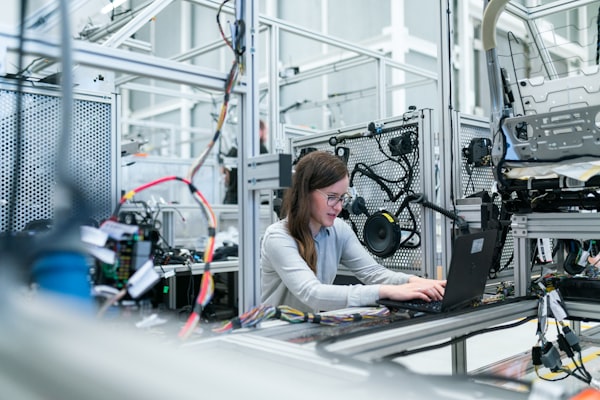 Taking your time during unboxing can prevent damage and help you keep track of all components.
Unboxing Your Kit: First Impressions Matter
The moment that box arrives is exciting! But before you tear into it, remember that a little patience now can save a lot of headaches later. Your robotics kit contains many small, delicate, and sometimes identical-looking parts. A systematic unboxing process ensures everything is accounted for and undamaged.
Start by finding a clean, spacious, and well-lit area. This isn't the time for a cramped desk or a dark corner. Lay down a clean cloth or mat if you have one. This helps prevent tiny screws from rolling away into oblivion. Open the box carefully, looking for any immediate signs of damage to the packaging or contents.
Your Unboxing & Initial Setup Checklist
Use this interactive checklist to guide you through the initial steps of getting your robotics kit ready. Mark each item as you complete it!
Getting Started Right
0 of 6 completed A well-organized workspace is crucial for efficient and enjoyable robot building.
Organizing Your Workspace: A Robotics Lab at Home
Think of your workspace as a mini-laboratory. Organization isn't just about neatness; it's about efficiency and preventing errors. Having a designated spot for each type of component – screws, wires, circuit boards, motors – will save you countless minutes searching and reduce the risk of losing critical pieces.
Consider using small plastic containers, tackle boxes, or even muffin tins to sort parts. Labeling these containers can be incredibly helpful, especially for kits with many similar-looking fasteners. Keep your instruction manual open and easily accessible, perhaps on a stand, so you don't have to constantly pick it up and put it down.
An organized workspace dramatically reduces build time, minimizes frustration, and helps you develop good engineering habits. It also makes troubleshooting much easier if you know exactly where each component should be. Plus, it's safer – fewer loose parts mean fewer tripping hazards or items falling into sensitive electronics.
 Familiarize yourself with common components like microcontrollers, motors, and sensors.
Understanding Your Components: What's What?
Before you start connecting anything, take a moment to identify the major components in your kit. Most robotics kits share common elements, even if their specific designs vary. You'll likely find a microcontroller (the robot's 'brain'), motors (for movement), sensors (for detecting its environment), and a power source (batteries or a power supply).
Refer to your kit's manual, which usually includes a detailed component list with diagrams. Pay attention to the names and shapes of parts like servo motors, DC motors, breadboards, wires, and various sensors (e.g., ultrasonic, line-following). Understanding what each part is designed to do will make the assembly process much more intuitive and less like simply following a recipe.
For a deeper dive into what makes up a robot, check out our guide on What Parts Make Up a Robotics Kit?
Component Identification Quick Check
Test your knowledge! Can you identify these common robotics components?
Which component is typically considered the 'brain' of your robot, executing programmed instructions?
The Impact of a Good Start
 Your instruction manual is your most valuable tool during the assembly process.
Following the Instructions: Your Robot's Blueprint
Every robotics kit comes with an instruction manual, and it's your most important tool. Resist the urge to 'wing it,' especially with your first kit. These manuals are designed to guide you step-by-step, often with clear diagrams and specific warnings. Read each step thoroughly before you perform it, and double-check your work.
Pay close attention to details like screw sizes, wire colors, and component orientation. Many components, especially integrated circuits and LEDs, are polarized, meaning they must be inserted in a specific direction. Incorrect insertion can lead to malfunction or even permanent damage. If a step seems unclear, re-read it, look at the diagrams, and don't hesitate to search for online tutorials or community forums specific to your kit.
First Assembly Steps: Let's Build!
Ready to get your hands dirty? This interactive wizard will walk you through the typical initial assembly stages for many beginner robotics kits.
Mount the Main Chassis
Most robots start with a base or chassis. This is the structural foundation upon which all other components will be mounted. Identify the main chassis plate(s) and the necessary screws and standoffs. Carefully align the parts and secure them, ensuring all connections are snug but not overtightened. Overtightening can strip threads or crack plastic.
Example: If your kit is a wheeled robot, this step often involves attaching the bottom plate to the side frames or motor mounts. Ensure everything is level and stable.
Attach Motors and Wheels/Tracks
Next, you'll typically attach the motors to the chassis. Pay close attention to the orientation of the motors and how they connect to the drive shafts. Once motors are in place, secure the wheels or tracks. Ensure they spin freely without obstruction. If your kit uses gears, make sure they mesh correctly without binding.
Example: For a two-wheeled robot, you'll attach two DC gear motors to the chassis, then press-fit or screw the wheels onto the motor shafts. Don't forget any caster wheels or ball casters for balance!
Install the Microcontroller Board
Now it's time for the 'brain.' Locate your microcontroller board (e.g., Arduino, ESP32, proprietary board) and mount it securely to the chassis using standoffs and screws. Ensure it's positioned where wires can easily reach other components without excessive strain or clutter. Avoid bending pins or applying too much force.
Example: An Arduino Uno might mount to a dedicated spot on the chassis with four small screws and plastic standoffs, keeping it elevated from the surface.
Connect Initial Wiring (Power & Motors)
With the main components mounted, begin connecting the essential wiring. Start with power connections to the microcontroller and motor driver, then connect the motors to the motor driver. Double-check all polarities (+/-) and ensure wires are routed neatly and securely, away from moving parts. Use zip ties or cable clips if provided.
Example: Connect the battery pack to the main power input of your motor driver, then connect the motor driver's output terminals to your DC motors. Ensure the microcontroller also receives power, often via a separate connection or from the motor driver itself.
 Always double-check polarity before connecting any power source to your robot.
Powering Up Your Robot: The Moment of Truth
You've assembled your robot, and now it's time for the exciting part: bringing it to life! Connecting the power source is a critical step that requires careful attention to detail. Most beginner kits use AA/AAA batteries, a rechargeable LiPo battery pack, or a USB power bank. Always ensure your power source matches the voltage requirements specified in your kit's manual.
Before connecting, do a final visual inspection of all your wiring. Are there any loose connections? Are any wires pinched? Is everything connected to the correct pins or terminals? Incorrect wiring, especially with power, can short-circuit components and cause irreversible damage. When you're confident, connect the power source. Many kits will have an indicator LED that lights up, signaling that the microcontroller is receiving power.
What type of power source does your kit primarily use?
AA/AAA Battery Tips
Ensure you're using fresh, high-quality alkaline or rechargeable NiMH batteries. Check the battery holder for correct polarity (+/-) before inserting. If your robot doesn't power on, try new batteries or double-check the battery holder's connections to the main board.
LiPo Battery Pack Tips
LiPo batteries offer high energy density but require careful handling. Always use a LiPo-compatible charger and never overcharge or over-discharge. Connect the battery to the designated LiPo input on your robot's board, ensuring correct polarity. If your kit includes a LiPo, it often comes with a specific connector type (e.g., JST, XT30).
USB Power Tips
Many microcontrollers can be powered directly via a USB cable from a computer or a USB wall adapter. This is convenient for initial programming and testing. Ensure your USB cable is data-capable if you also plan to upload code. For mobile operation, a USB power bank can be used.
Beyond Assembly: What's Next for Your Robot?
Once your robot is physically assembled and powered on, the real fun begins: programming! Most beginner kits come with sample code or guided programming tutorials to help you make your robot perform its first movements or actions. This is where your robot truly comes to life, responding to your commands.
Don't be discouraged if your robot doesn't work perfectly on the first try. Troubleshooting is a fundamental part of robotics and learning. Revisit your wiring, check your code, and consult your manual or online resources. Every challenge overcome is a valuable learning experience.
Ready to make your robot move? Dive into our guide: How Do I Make My Robot Move? Understanding Robot Programming. If you encounter issues, our My Robot Isn't Working! Common Fixes & Troubleshooting page is there to help.
This kit is perfect for beginners, featuring clear instructions, modular components, and comprehensive online tutorials to guide you through every first step and beyond.
Further Reading