

What You'll Learn in This Guide
The Robot's Senses
Discover how various sensors allow robots to perceive their environment, much like our own senses of sight, touch, and hearing.
The Robot's Muscles
Explore actuators, the components that enable robots to move, grasp, and interact physically with the world around them.
The Sensor-Actuator Loop
Understand the critical feedback loop where sensor data informs actuator actions, creating intelligent robotic behavior.
Making Smart Choices
Learn how to select the right sensors and actuators for your specific robot project, considering performance and budget.
 Sensors are the 'eyes and ears' of a robot, gathering crucial data from its environment.
How Do Robots See, Hear, and Feel? Understanding Sensors
Imagine trying to navigate a room blindfolded. You'd bump into things, struggle to find objects, and generally be quite ineffective. Robots face a similar challenge without sensors. Sensors are essentially the input devices of a robot, designed to detect and measure physical quantities from the robot's surroundings or its own internal state.
They convert real-world phenomena like light, sound, temperature, distance, or pressure into electrical signals that the robot's control system can understand and process. This data is the foundation for any intelligent robotic behavior, allowing the robot to perceive, understand, and react to its environment.
Robots employ a vast array of sensors, each suited for a particular type of detection. Here are some of the most common:
- Proximity Sensors: Detect the presence of nearby objects without physical contact (e.g., ultrasonic, infrared).
- Light Sensors: Measure ambient light levels or detect specific light sources (e.g., photoresistors, photodiodes).
- Temperature Sensors: Measure heat or cold in the environment (e.g., thermistors, thermocouples).
- Touch/Contact Sensors: Detect physical contact with an object (e.g., bumper switches, force sensors).
- Encoders: Measure rotational or linear position and speed, crucial for motor control.
- Gyroscopes & Accelerometers: Measure orientation, angular velocity, and linear acceleration, providing data for balance and movement.
- Cameras (Vision Sensors): Capture images or video for object recognition, navigation, and mapping.
Exploring the World of Robot Sensors
Let's dive a bit deeper into some of the most frequently used sensors you'll encounter in robotics, especially in beginner kits and hobby projects. Understanding their principles will help you choose the right 'senses' for your robot.
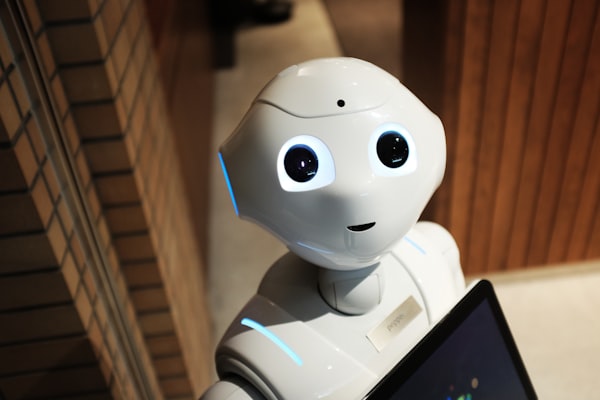 Actuators are the 'muscles' that translate electrical signals into physical motion.
How Do Robots Move and Manipulate? The Power of Actuators
If sensors are how a robot perceives, actuators are how it acts. An actuator is a component that converts energy (typically electrical, but also hydraulic or pneumatic) into mechanical motion. They are the 'muscles' that allow a robot to move its limbs, grasp objects, drive wheels, or perform any physical task.
Without actuators, a robot would be a passive observer, unable to interact with its environment. The choice of actuator depends heavily on the required motion, force, speed, and precision for a given robotic application. From tiny hobby servos to powerful industrial motors, actuators are diverse and fundamental to robotics.
Is a camera a sensor or an actuator?
Choosing the Right Muscles: A Look at Actuator Types
Just as there are many types of sensors, there's a variety of actuators, each with its strengths and ideal applications. Understanding these differences is key to designing a robot that moves effectively and efficiently.
| Actuator Type | Key Characteristic | Typical Use Cases | Pros | Cons |
|---|---|---|---|---|
| DC Motors | Continuous rotation, variable speed/power | Wheeled robots, fans, simple rotating mechanisms | Simple to control, high speed, relatively inexpensive | Less precise positioning without encoders, can be noisy |
| Servo Motors | Precise angular positioning (0-180° or 0-360°), high torque at low speeds | Robot arms, steering mechanisms, camera gimbals | Excellent precision, easy to control position, compact | Limited range of motion, can be less powerful than DC motors for continuous rotation |
| Stepper Motors | Precise step-by-step rotation, holds position without power | 3D printers, CNC machines, precise linear motion systems | Very high precision, excellent holding torque, open-loop control possible | Complex control, lower speed than DC motors, can lose steps under heavy load |
| Solenoids | Linear push/pull motion (on/off) | Door locks, simple plungers, robotic grippers (basic) | Simple, fast, robust | Only two states (on/off), limited force and stroke length |
What kind of movement does your robot need?
Consider DC Motors
For continuous rotation, like driving wheels on a mobile robot, standard DC motors are often the best choice. Pair them with encoders for accurate speed and distance control.
Consider Servo Motors
If you need to move a robot arm to a specific angle or control a camera's pan and tilt, servo motors offer excellent precision and ease of control for angular positioning.
Consider Stepper Motors
For applications requiring extremely precise, repeatable movements in discrete steps, such as in CNC machines or robotic grippers that need to hold a position firmly, stepper motors are ideal.
Consider Solenoids
For simple, on/off linear actions like activating a latch or a basic pushing mechanism, solenoids are a straightforward and effective solution.
The Brains and Brawn: How Sensors and Actuators Work Together
The true magic of robotics happens when sensors and actuators work in harmony, forming what's known as a feedback loop. This loop is the foundation of intelligent robot behavior. Here's how it generally works:
- Sense: Sensors gather data from the environment (e.g., an ultrasonic sensor detects an obstacle 30cm away).
- Process: The robot's microcontroller (the 'brain') receives this data and processes it according to its programmed logic (e.g., "If obstacle is closer than 40cm, then turn left").
- Act: Based on the processed data and logic, the microcontroller sends commands to the actuators (e.g., "Turn the left motor forward, and the right motor backward for 1 second").
- Repeat: The sensors continuously monitor the environment, providing new data, and the loop continues, allowing the robot to adapt and respond dynamically.
This constant cycle of sensing, processing, and acting is what enables robots to navigate complex environments, perform intricate tasks, and even learn over time. It's a fundamental concept in robotics, linking the robot's perception to its actions.
Making Smart Choices: What to Consider
Selecting the right sensors and actuators is crucial for your robot's success. Here are some key factors to keep in mind:
Your Sensor & Actuator Selection Checklist
0 of 5 completedSensors and Actuators in Action: Real-World Robots
To truly appreciate the power of sensors and actuators, let's look at how they're used in some familiar robotic applications:
- Autonomous Vacuum Cleaners: These robots use a combination of ultrasonic and IR proximity sensors to detect walls and obstacles, cliff sensors to avoid falling down stairs, and encoders on their wheels to track distance and position. Their actuators are primarily DC motors for driving and a brush motor for cleaning.
- Industrial Robotic Arms: Found in factories, these arms use high-precision encoders on every joint to ensure exact positioning for tasks like welding or assembly. Force sensors in their grippers allow them to handle delicate objects without crushing them. Powerful servo motors provide the necessary torque and speed for heavy-duty operations.
- Hobby Drones: Drones rely heavily on IMUs (accelerometers and gyroscopes) to maintain stable flight, GPS sensors for navigation, and often ultrasonic or vision sensors for obstacle avoidance and landing. Their actuators are brushless DC motors connected to propellers for lift and control.
These examples highlight how the specific combination of sensors and actuators is tailored to the robot's intended function, demonstrating the versatility and importance of these fundamental components.
This kit includes ultrasonic, IR, light, and touch sensors, perfect for experimenting with different ways your robot can perceive its environment and react intelligently.
Ideal for robotic arms or precise steering, this pack of high-torque servo motors offers excellent control and durability for your next actuated project.
Ready to Bring Your Robot to Life?
Understanding sensors and actuators is a huge step in building more capable and intelligent robots. By carefully selecting these components, you empower your creations to interact with the world in meaningful ways.
Comparing Robotics Kits: What Features Matter Most?
Dive deeper into kit features, including the types of sensors and actuators they offer.
How Do I Make My Robot Move? Understanding Robot Programming
Learn how to write the code that translates sensor data into actuator commands.
Ready to Buy? How to Choose Your Perfect Robotics Kit
Get practical advice on selecting a robotics kit that aligns with your goals and skill level.
Further Reading