

What You'll Learn About Robot Movement
The Basics of Robot Instructions
Discover what programming truly means for a robot and how it translates into physical actions, from simple movements to complex tasks.
Block vs. Text Coding
Explore the two primary ways to program robots: visual block-based coding for beginners and powerful text-based languages for advanced control.
Core Movement Commands
Learn the fundamental commands like 'forward,' 'turn,' and 'stop' that form the building blocks of any robot's motion sequence.
Planning Robot Behaviors
Understand how to combine simple commands into logical sequences, loops, and conditions to create intelligent and autonomous robot actions.
 Robots execute precise movements based on carefully crafted programs.
What Exactly Is Robot Programming?
At its heart, robot programming is simply giving your robot a set of instructions to follow. Think of it like writing a recipe for a chef: you provide a step-by-step guide on what ingredients to use, in what order, and for how long. For a robot, these 'ingredients' are its motors, sensors, and other components, and the 'steps' are the commands that tell it how to interact with the world.
These instructions dictate everything from how fast a wheel spins to when a gripper opens or closes. Without a program, a robot is just a collection of parts. With a program, it becomes an intelligent machine capable of performing tasks, navigating environments, and even making decisions.
Every robot needs a 'brain' to process its program. This brain is typically a microcontroller, a small computer on a single integrated circuit. Common examples include Arduino, Raspberry Pi, and specialized boards found in many robotics kits. The microcontroller reads your program, interprets the instructions, and sends signals to the robot's motors and other components to make them act. It's the central hub that brings your code to life.
How Do Robots Understand Your Instructions? Block vs. Text Coding
When you're starting out, you'll primarily encounter two main ways to 'speak' to your robot: block-based coding and text-based coding. Both achieve the same goal – telling the robot what to do – but they approach it in very different ways, each with its own advantages.
Block-Based Coding: Visual & Intuitive
Block-based coding environments, like Scratch or Google's Blockly, are fantastic for beginners. Instead of typing out lines of code, you drag and drop colorful, interlocking blocks that represent commands. Each block performs a specific action, such as 'move forward for 1 second' or 'turn left by 90 degrees'.
This visual approach eliminates syntax errors (typos that break code) and helps you focus on the logic of your program. It's like building with LEGOs – you snap pieces together to create a structure. Many beginner robotics kits, especially those for younger learners, heavily feature block-based programming because it makes complex concepts accessible and fun.
Text-Based Coding: Powerful & Flexible
Text-based coding involves writing instructions using a specific programming language, such as Python, C++, or JavaScript. This is how professional engineers and advanced hobbyists program robots. It offers much greater flexibility and control, allowing for highly complex algorithms and custom behaviors that might be difficult or impossible with blocks.
While it has a steeper learning curve due to syntax rules and abstract concepts, mastering a text-based language opens up a world of possibilities in robotics and beyond. Languages like Python are particularly popular in robotics for their readability and extensive libraries. If you're curious about which languages are most common, check out our guide on Which Coding Language Should I Learn for My Robot?
Hybrid Approaches: The Best of Both Worlds
Some robotics platforms offer a hybrid approach, allowing you to start with block-based coding and then transition seamlessly to text-based code. This is an excellent way to bridge the gap, as you can see the text code generated by your blocks, helping you understand the underlying syntax. As you gain confidence, you can then start modifying the text code directly.
This progressive learning path is ideal for those who want to ease into text-based programming without feeling overwhelmed. It provides a visual safety net while still exposing you to the structure and logic of traditional coding languages.
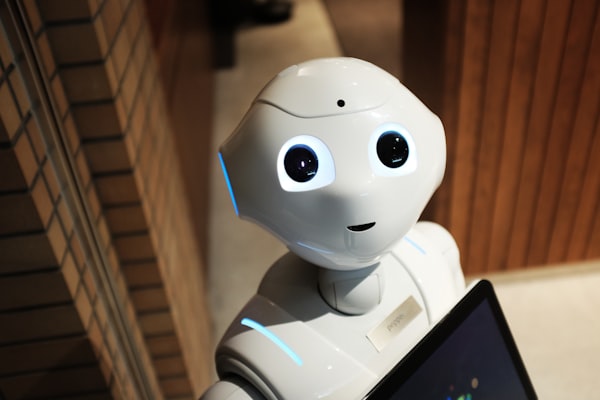 Basic commands like 'forward' and 'turn' are the foundation of robot movement.
The Core Commands: Making Your Robot Move
Regardless of whether you're using blocks or text, the fundamental commands for making a robot move are surprisingly simple. Most robots with wheels will respond to variations of these core instructions:
- Move Forward: Tells the robot to drive straight ahead. You'll often specify a duration (e.g., 'forward for 2 seconds') or a distance (e.g., 'forward 10 cm').
- Move Backward: The opposite of forward, making the robot reverse. Again, duration or distance is usually specified.
- Turn Left/Right: Instructs the robot to rotate. This can be a specific angle (e.g., 'turn right 90 degrees') or a duration (e.g., 'turn left for 1 second').
- Stop: Halts all movement. Essential for precise control and preventing collisions.
- Set Speed: Many robots allow you to control how fast they move, often on a scale from 0 (stopped) to 100 (maximum speed).
By combining these basic commands, you can create surprisingly complex paths and maneuvers. The key is to break down a larger movement goal into a series of these smaller, manageable steps.
Planning Your Robot's Journey: Algorithms & Logic
Programming isn't just about knowing the commands; it's about arranging them in a logical order to achieve a desired outcome. This logical sequence of steps is called an algorithm. For robots, algorithms often involve:
Define Your Robot's Goal
Before writing any code, clearly define what you want your robot to do. For example: "Move forward 30cm, turn right, then move forward another 20cm." Having a clear objective makes the programming process much smoother.
Break Down into Simple Actions
Decompose your goal into the smallest possible movement commands. For our example, this would be: 1. Move forward. 2. Turn right. 3. Move forward again. This step is crucial for translating human intent into robot-understandable instructions.
Write the Commands (Code)
Now, translate each simple action into the specific programming commands for your robot. If using blocks, drag and drop 'move forward (30cm)', 'turn right (90 degrees)', 'move forward (20cm)'. If using text, write the corresponding lines of code.
Test and Refine
Upload your program to the robot and observe its behavior. Did it do exactly what you expected? If not, identify where it went wrong, adjust your commands, and test again. This iterative process of testing and debugging is fundamental to programming.
Why Understanding Robot Programming Matters for Beginners
Learning to program a robot isn't just about making it move; it's about developing critical thinking, problem-solving skills, and a deeper understanding of how technology shapes our world. These foundational skills are invaluable, whether you pursue a career in robotics or simply enjoy the satisfaction of bringing your creations to life.
Choosing Your First Programming Style
Deciding which programming approach to start with can feel daunting, but it largely depends on your prior experience and what you hope to achieve. This interactive tool can help guide your decision:
What's your current coding experience level?
Perfect for New Coders: Block-Based Programming
If you're just starting, block-based programming is your ideal entry point. It's visual, forgiving, and focuses on logic rather than syntax. Look for kits that explicitly mention Scratch, Blockly, or similar drag-and-drop interfaces. You'll build confidence quickly and see your robot respond immediately to your commands.
Designed for absolute beginners, this kit features intuitive block-based programming and clear, step-by-step tutorials to get your robot moving in minutes.
Ready for More: Consider Hybrid or Simple Text-Based
With some coding background, you might enjoy a hybrid kit that lets you switch between blocks and text, or a kit that uses a beginner-friendly text language like Python. This allows you to leverage your existing skills while learning robotics-specific concepts. You'll appreciate the added control and flexibility.
Aiming High: Text-Based Programming is Your Path
If your goal is to delve deep into advanced robotics, AI, or custom hardware, starting with a text-based language like Python or C++ is the way to go. While challenging, it provides the most powerful tools for complex projects and aligns with industry standards. Many advanced kits offer robust support for these languages.
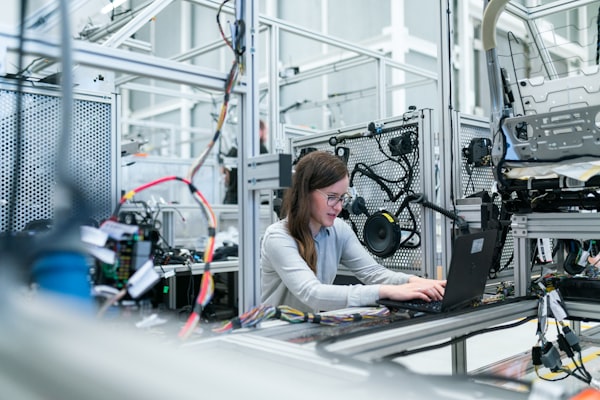 Sensors allow robots to perceive their environment and react intelligently.
Beyond Basic Movement: Adding Intelligence with Sensors
Once you've mastered basic movement, the next exciting step is to make your robot react to its environment. This is where sensors come in. Sensors are like the robot's eyes, ears, and touch, allowing it to gather information about the world around it. Common sensors include:
- Ultrasonic Sensors: Measure distance to objects (like a bat's sonar).
- Infrared (IR) Sensors: Detect nearby objects or follow lines.
- Light Sensors: Measure ambient light levels.
- Touch Sensors: Act like a button, detecting physical contact.
By integrating sensor data into your program using conditional statements (e.g., "IF ultrasonic sensor detects an object closer than 10cm, THEN stop and turn"), you can create robots that avoid obstacles, follow lines, or respond to light. This is where your robot truly starts to become 'smart'. To dive deeper into how these components work, explore our guide on How Do Robots Sense and Act? Sensors & Actuators Demystified.
Testing and Debugging: The Programmer's Best Friend
No program works perfectly the first time. Testing and debugging are integral parts of the programming process. Testing involves running your code on the robot and observing its behavior. Debugging is the process of finding and fixing errors (often called 'bugs') in your code.
Quick Check: Test Your Understanding
Which programming approach is generally recommended for absolute beginners in robotics?
Ready to Make Your Robot Move?
You've taken the first step in understanding how to bring your robot to life through programming. The journey from a static collection of parts to an autonomous, moving machine is incredibly rewarding. Remember to start simple, experiment, and don't be afraid to make mistakes – they're part of the learning process!
This kit offers a seamless transition from block-based to Python programming, perfect for growing your skills as you gain confidence in making your robot move and interact.
Continue Your Robotics Journey:
Further Reading