

Why Start Your Robotics Journey with a Beginner Project?
Embarking on your first robotics project can feel daunting, but it doesn't have to be. Starting with a well-chosen beginner project is like learning to ride a bike with training wheels – it builds confidence, teaches fundamental skills, and sets you up for bigger challenges. These projects are designed to be achievable, affordable, and most importantly, fun!
Master Core Concepts
Learn about microcontrollers, basic sensors, motors, and simple programming logic without getting overwhelmed.
Build Practical Skills
Gain hands-on experience with wiring, circuit building, debugging code, and basic mechanical assembly.
Achieve Quick Wins
See your robot come to life relatively quickly, providing motivation and a sense of accomplishment.
It's Incredibly Fun!
Experience the joy of creation and problem-solving as you bring your robotic ideas to reality.
 A well-organized breadboard is a beginner's best friend for prototyping circuits.
What Makes a Robotics Project Beginner-Friendly?
A truly beginner-friendly robotics project isn't just simple; it's thoughtfully designed to introduce core concepts without overwhelming you. It typically involves readily available, affordable components and clear, step-by-step instructions. The goal is to minimize frustration and maximize learning, allowing you to focus on understanding how each part contributes to the whole.
Look for projects that have a clear, achievable outcome, require minimal specialized tools, and offer plenty of online resources or community support. These characteristics ensure you can successfully complete your first robot and feel confident tackling more complex challenges down the line.
Your Beginner Project Checklist
Use this checklist to evaluate potential projects and ensure they align with a beginner's learning curve.
Project Readiness Checklist
0 of 5 completedOur Top Picks: Easy Robotics Projects to Get Started
We've hand-picked a selection of projects that are perfect for beginners. Each one offers a unique learning experience, introduces different components, and provides a solid foundation for future builds. Click through the tabs to explore each project in detail!
1. The Classic Line Follower Robot
The line follower is a quintessential beginner project, teaching you the basics of sensor input, motor control, and simple decision-making logic. Your robot will use infrared (IR) sensors to detect a dark line on a light surface and follow it autonomously. It's incredibly satisfying to watch your creation navigate a track!
Key Components: Arduino Uno or compatible microcontroller, DC gear motors, motor driver (L298N or similar), IR line tracking sensors (2-3), wheels, chassis, battery pack. Understand these components better.
This kit includes all the essential components for your first line follower, pre-selected for compatibility and ease of use.
2. The Smart Obstacle Avoider Robot
Building on the concepts of the line follower, the obstacle avoider introduces you to proximity sensing and more complex conditional logic. Your robot will use an ultrasonic sensor (like the HC-SR04) to detect objects in its path and autonomously change direction to avoid collisions. This project is a fantastic way to learn about environmental interaction.
Key Components: Arduino Uno/Nano, DC gear motors, motor driver, ultrasonic sensor (HC-SR04), servo motor (for sensor panning, optional), wheels, chassis, battery pack. Compare different sensor types for your robot.
A comprehensive kit with an Arduino Uno, breadboard, wires, and various sensors, perfect for this project and many others.
3. The Desktop Mini Robotic Arm
If you're more interested in manipulation and mechanical movement, a mini robotic arm is an excellent choice. This project focuses on controlling multiple servo motors to achieve precise movements, mimicking the functionality of industrial robotic arms on a smaller scale. You'll learn about angles, inverse kinematics (simplified), and sequential control.
Key Components: Arduino Uno/Nano, 3-4 micro servo motors (SG90 or MG90S), custom or pre-made acrylic/3D-printed arm structure, joystick module (for control, optional), battery pack. Dive deeper into how servo motors work.
These affordable and versatile micro servos are perfect for small robotic arms and other precise movement projects.
4. The Simple Remote Control Car
Take control of your robot with a simple remote control car project. This introduces you to wireless communication (often via a basic RF module or Bluetooth) and direct motor control. You'll learn how to send commands from a remote transmitter to a receiver on your car, making it move forward, backward, and turn. It's a great entry point into teleoperation.
Key Components: Arduino Uno/Nano, DC gear motors, motor driver, RF 433MHz transmitter/receiver pair (or Bluetooth module), joystick module (for remote), wheels, chassis, battery packs (one for car, one for remote). Explore different movement systems for your robot.
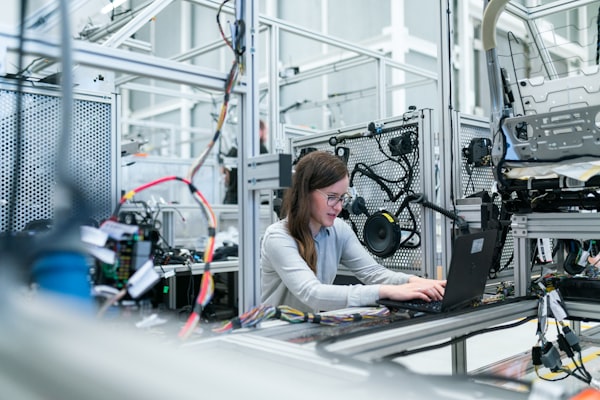 Essential tools for robotics include a multimeter, wire strippers, and a breadboard.
What Essential Tools Do You Need to Get Started?
You don't need a full workshop to begin building robots. Many beginner projects can be assembled with just a few basic tools. A good quality breadboard is invaluable for prototyping circuits without soldering, allowing you to easily rearrange components. Jumper wires are essential for connecting everything.
A multimeter is your best friend for troubleshooting, helping you check voltages and continuity. Wire strippers and small screwdrivers are also very useful. While soldering isn't strictly necessary for your very first project, a basic soldering iron and solder will open up many more possibilities as you progress.
The Impact of Starting Small: Real Numbers
Don't underestimate the power of a simple project. It's the foundation for everything that follows.
Still Undecided? Let's Find Your Perfect Project
With so many exciting options, choosing your first project can still be tough. Answer a quick question below, and we'll point you towards a project type that aligns with your primary learning goal.
What's your primary goal for your first robotics project?
Focus on Coding: Line Follower Robot
If you're eager to dive into programming logic, the Line Follower Robot is ideal. It requires precise conditional statements to interpret sensor data and control motors, giving you a solid foundation in algorithmic thinking for robotics.
Focus on Mechanics: Mini Robotic Arm
For those fascinated by mechanical movement and manipulation, the Mini Robotic Arm is a perfect fit. You'll learn about servo control, joint movements, and the physical construction of a multi-axis system.
Focus on Interaction: Obstacle Avoider Robot
If you want your robot to sense and react to its surroundings, the Obstacle Avoider Robot is your best bet. It teaches you how to use proximity sensors and implement decision-making based on real-world input.
Focus on Control: Simple RC Car
For those who want to command their creation, the Simple RC Car is excellent. You'll explore wireless communication and direct control over motors, giving you immediate feedback on your commands.
Beyond the Basics: What's Next for Your Robotics Journey?
Completing your first beginner project is a huge milestone! It's not just about the robot you built, but the knowledge and confidence you gained. From here, the possibilities are endless. You can modify your existing robot, combine functionalities (e.g., a line follower that also avoids obstacles), or embark on an entirely new, more complex build.
Consider exploring different sensor types, experimenting with more powerful microcontrollers like the Raspberry Pi, or delving into advanced programming techniques. The key is to keep experimenting, learning, and building!
Once you've mastered the basics, you might want to explore components like stepper motors for precise positioning, LIDAR sensors for advanced mapping, or even cameras for computer vision. Each new component opens up a world of new project possibilities, from autonomous navigation to object recognition. Don't be afraid to research and integrate new technologies into your builds!
Continue Your Robotics Journey
Ready for the next step? Explore more resources to plan, build, and showcase your robotics projects.
Building Your First Robot: A Step-by-Step Plan
Get a structured framework for planning and executing your robotics projects.
See What Others Have Built: Community Showcase
Find inspiration and connect with other robotics enthusiasts.
What's Your Robotics Budget? A Project Cost Calculator
Estimate the expenses for your next robotics adventure with our interactive tool.