

What Will You Discover in This Guide?
Robot Categories Explained
Get a clear overview of the main types of robots, from smart home devices to complex industrial systems, and understand their core purposes.
Match Your Goals to a Robot
Learn how to align your personal interests, skill level, and project aspirations with the ideal robot platform for a rewarding experience.
Key Selection Factors
Understand critical considerations like budget, complexity, and available tools to make an informed decision and avoid common pitfalls.
Actionable Next Steps
Get practical advice and links to further resources to confidently move from choosing your robot to starting your first build or project.
 Robotics combines engineering, programming, and creativity into one exciting field.
Why Should You Start Your Robotics Journey?
Robotics is more than just building machines; it's about problem-solving, creativity, and understanding the technology that shapes our world. For beginners, it offers a unique blend of hands-on learning and intellectual challenge, making complex concepts tangible and fun. Whether you're curious about how things work, want to develop new skills, or simply enjoy tinkering, robotics provides an accessible entry point into engineering and computer science.
Starting with a robot project can ignite a passion for STEM fields, teach valuable analytical thinking, and even open doors to future career opportunities. It's a journey of discovery where every challenge overcome builds confidence and expertise. The best part? You don't need to be an expert to begin. With the right guidance, anyone can find a robot project that fits their interests and skill level.
What's your primary goal for your first robot project?
Perfect for Fun & Hobby Projects!
If you're looking to build something just for the joy of it, a hobby robot is a fantastic choice. These projects often involve custom designs, 3D printing, and experimenting with various sensors and actuators. You'll learn a lot about mechanics, electronics, and basic programming in a low-pressure environment. Consider platforms like Arduino or Raspberry Pi for maximum flexibility. You might enjoy exploring whether to build or buy your robot for these kinds of projects.
Ideal for Learning & Education!
Educational robots are designed to teach fundamental STEM concepts in an engaging way. They often come as kits with clear instructions, making them perfect for beginners, students, or parents. You'll gain practical experience in coding, engineering principles, and problem-solving. Look for kits that offer guided lessons and a supportive community. Check out our comparison of STEM robot kits to find the best fit.
Great for Home Automation!
For those interested in making their living space smarter, home robots offer convenience and practical applications. These can range from robotic vacuums and lawnmowers to more advanced smart assistants or security bots. While many are pre-built, understanding their underlying technology can be a fascinating entry point. Explore our comparison of home robots to see what's available.
Ready for Robotics Competitions!
If you thrive on challenge and teamwork, competition robotics is an exhilarating path. These robots are built to perform specific tasks under pressure, often requiring robust design, precise programming, and strategic thinking. Joining a team or starting with a competition-ready kit can provide an incredible learning experience. Platforms like VEX or FIRST Robotics are popular choices.
Excellent for Prototyping & Innovation!
For the aspiring inventor or engineer, prototyping robots allow you to bring new ideas to life. These projects focus on developing novel functionalities, testing new sensors, or creating custom solutions to specific problems. You'll delve deep into design, fabrication, and advanced programming. Open-source hardware like Arduino and Raspberry Pi are foundational tools for this path, as discussed in our guide on Arduino vs. Raspberry Pi.
Understanding the Main Robot Categories
Before diving into specific models, it's helpful to understand the broad categories of robots available today. Each category serves different purposes and comes with its own set of challenges and rewards. Knowing these distinctions will help you narrow down your choices and find a project that truly resonates with your aspirations.
| Category | Primary Goal | Typical User | Complexity (Beginner Scale) | Example Project/Product |
|---|---|---|---|---|
| Home Robots | Convenience, automation of chores | Homeowners, tech enthusiasts | Low (mostly pre-built) | Robotic Vacuum Cleaner |
| Educational Robots | Learning STEM concepts, coding | Students, educators, parents | Low to Medium (kit-based) | Programmable STEM Kit (e.g., mBot) |
| Hobby & Prototyping Robots | Creative expression, custom builds | Makers, hobbyists, inventors | Medium to High (DIY focus) | Custom 3D-printed rover |
| Competition Robots | Task completion, strategic challenges | Students, teams, competitive builders | Medium to High (performance-driven) | VEX Robotics competition bot |
| Industrial & Professional Robots | Efficiency, precision, safety | Engineers, businesses | High (specialized) | Automated factory arm |
While industrial robots are fascinating, they are typically not a starting point for beginners due to their cost and complexity. Our focus here will be on the first four categories, which offer excellent opportunities for learning and engagement.
Key Considerations for Your First Robot Project
Choosing your first robot isn't just about picking a cool design; it's about aligning the project with your resources and expectations. Use this checklist to guide your decision-making process and ensure a smooth, enjoyable experience.
Your Robot Selection Checklist
0 of 6 completed Home robots simplify daily tasks, offering convenience and smart integration.
Home Robots: Smart Living Made Easy
For many, the first encounter with robotics is through a home robot. These devices are designed to make daily life more convenient, automating tasks that once required human effort. Think robotic vacuum cleaners, automated lawnmowers, or even smart assistants that respond to voice commands. They are typically pre-built and user-friendly, requiring minimal setup and no programming knowledge to get started.
While you might not be building these from scratch, understanding how they work can be a fascinating entry point into robotics. You can explore their sensors, navigation systems, and how they interact with smart home ecosystems. If your goal is to enhance your living space with intelligent automation, a home robot is an excellent choice. For a deeper dive, explore our comparison of popular home robots.
While basic home robots are plug-and-play, the field of home robotics is rapidly expanding. More advanced projects might involve building your own security patrol robot, a robotic arm for assisting with tasks, or even a companion robot with AI capabilities. These projects often require knowledge of microcontrollers (like Arduino or Raspberry Pi), various sensors (ultrasonic, IR, cameras), and more complex programming. They bridge the gap between consumer products and custom-built hobby robots, offering a rich learning experience for those ready to delve deeper into the mechanics and code.
Consider exploring how robots work by understanding their essential parts if you're interested in customizing or building your own smart home devices.
Educational Robots: Learning by Doing
Educational robots are specifically designed to introduce students and beginners to the fundamentals of robotics, programming, and engineering. These often come as kits with modular components and step-by-step instructions, making the learning process structured and accessible. They are fantastic for developing critical thinking, problem-solving skills, and fostering an interest in STEM (Science, Technology, Engineering, and Mathematics) fields.
Many educational kits use visual programming languages like Scratch or block-based coding, which are intuitive for beginners, before transitioning to text-based languages like Python or C++. They provide a safe and engaging environment to experiment with motors, sensors, and control logic. If your primary goal is to learn and teach, an educational robot kit is an unparalleled starting point. We have a comprehensive comparison of STEM robot kits to help you choose.
This kit is perfect for beginners, offering guided lessons, block-based coding, and easy assembly to teach core robotics and programming concepts.
 Educational robot kits make learning STEM concepts fun and interactive for all ages.
The Impact of STEM Robotics Education
Investing in robotics education is investing in the future, equipping learners with essential skills for a rapidly evolving world.
 Hobby robotics allows for endless customization and creative expression.
Hobby & Prototyping Robots: Unleash Your Creativity
If you're driven by curiosity and a desire to build something truly unique, hobby and prototyping robots are your playground. This category encompasses everything from simple remote-controlled cars you modify to complex autonomous systems built from scratch. Here, the focus is on experimentation, custom design, and bringing your own innovative ideas to life. You'll often find yourself delving into electronics, mechanical design, and advanced programming.
Platforms like Arduino, Raspberry Pi, and various microcontrollers are staples in this space, offering immense flexibility for customization. You might use 3D printing to create custom parts, integrate a wide array of sensors (like those discussed in our practical guide to sensors), and write your own code from the ground up. This path is incredibly rewarding for those who enjoy the process of creation and problem-solving. Consider our guide on whether to build or buy your robot to help kickstart your custom project.
This kit provides a versatile microcontroller, a variety of sensors, and actuators, perfect for custom hobby projects and rapid prototyping.
Which robot category is best suited for learning programming and engineering fundamentals in a structured way?
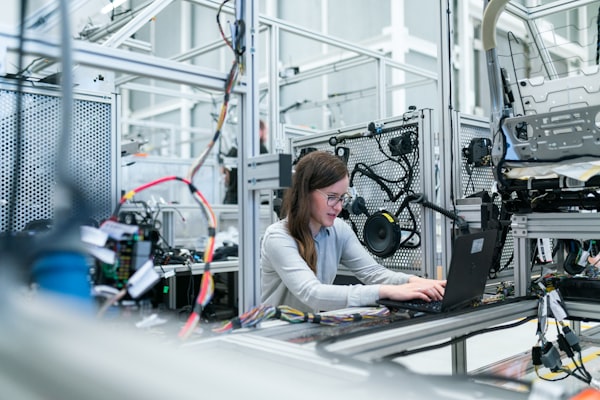 Robotics competitions foster teamwork, innovation, and problem-solving skills.
Competition Robots: The Thrill of the Challenge
For those who thrive in a competitive environment, building a robot for a competition offers an exhilarating experience. Organizations like FIRST Robotics, VEX Robotics, and RoboCup host events where teams design, build, and program robots to perform specific tasks or compete head-to-head. These challenges push participants to innovate, think strategically, and work collaboratively under pressure.
Competition robots often require a higher level of engineering and programming sophistication. You'll learn about robust mechanical design, efficient power systems (see our guide on how to power your robot), precise sensor integration, and advanced control algorithms. It's an excellent way to apply theoretical knowledge to real-world problems and develop invaluable teamwork and communication skills. Many competition platforms offer starter kits that provide a solid foundation for beginners to enter the competitive arena.
Designed for aspiring competitors, this kit provides a durable chassis, powerful motors, and programmable controller, ready for customization and competitive challenges.
Industrial & Professional Robots: Powering the Future
While not typically a starting point for beginners, understanding industrial and professional robots provides crucial context for the broader field of robotics. These are the workhorses of modern industry, performing tasks with incredible precision, speed, and endurance in manufacturing, logistics, healthcare, and exploration. From assembly line robotic arms to autonomous guided vehicles (AGVs) in warehouses, these machines are designed for efficiency, safety, and reliability in demanding environments.
Working with industrial robots usually requires specialized training and advanced engineering knowledge. However, the principles learned from hobby or educational robotics — such as motor control, sensor feedback, and programming logic — are directly transferable. As you advance in your robotics journey, you might find yourself exploring these complex systems. To see more about what robots can achieve, check out our guide on real-world robot applications.
Industrial robots are the backbone of modern manufacturing and logistics.
Where Should Your Robotics Journey Begin?
The best robot for your first project is one that aligns with your interests, skill level, and available resources. Don't be afraid to start small and build your knowledge gradually. The most important thing is to get started and enjoy the process of learning and creation.