

Beyond Science Fiction: What Robots Are Doing Today?
Robots are no longer just a concept from futuristic movies; they are an integral part of our daily lives, often working behind the scenes. From streamlining complex manufacturing processes to assisting in our homes, these machines are designed to perform tasks with precision, efficiency, and often, a level of safety humans cannot achieve. Understanding their diverse capabilities is the first step to appreciating their impact and even envisioning your own robotics projects.
Automating Homes
From vacuuming floors to managing smart devices, home robots simplify chores and enhance convenience, making daily life easier.
Transforming Industry
Industrial robots handle repetitive, dangerous, or high-precision tasks, boosting productivity and improving workplace safety.
Enhancing Education
Educational robots make STEM concepts tangible and engaging, fostering critical thinking and problem-solving skills in learners of all ages.
Exploring New Frontiers
From deep-sea exploration to space missions, robots venture into environments too hazardous or inaccessible for humans.
 Robots use an array of sensors to perceive and interact with their environment.
How Do Robots Understand Their World?
At the core of any robot's ability to perform tasks is its capacity to perceive its surroundings. This 'understanding' comes from a sophisticated array of sensors that act as the robot's eyes, ears, and touch. These sensors collect data about light, sound, distance, temperature, and even chemical composition, feeding it back to the robot's 'brain' – its microcontroller or computer.
Without accurate sensory input, a robot would be blind and deaf, unable to navigate, manipulate objects, or respond to changes in its environment. The type and number of sensors a robot employs are directly related to its intended application, from simple obstacle avoidance to complex object recognition and manipulation.
Common robot sensors include ultrasonic sensors for distance, infrared sensors for proximity, cameras for vision, accelerometers for orientation, and force sensors for grip strength. Each plays a vital role in enabling a robot to interact intelligently with its world. To learn more, check out our guide on Which Sensor Does Your Robot Need?
Key Capabilities: What Makes a Robot Useful?
Beyond just sensing, robots possess several core capabilities that make them invaluable tools across various sectors. These aren't just about raw power, but about intelligent application of mechanics and programming.
What Kind of Robot Application Interests You Most?
Robotics is a vast field, and your interest might lie in different areas. Let's explore some common scenarios to help you narrow down your focus and see where you might fit in.
What's your primary interest in robotics?
Perfect for Home Automation & Assistance
If you're fascinated by robots that make daily life easier, from smart vacuum cleaners to personal assistants, this is your area. These robots often focus on user-friendliness, safety, and integration with existing smart home ecosystems. They're designed to be helpful companions rather than heavy-duty workers.
Ideal for beginners interested in home automation, offering advanced navigation and app control for effortless cleaning.
Explore more options in our Comparing Home Robots guide.
Optimized for Industrial & Commercial Efficiency
For those interested in large-scale automation, manufacturing, logistics, or even specialized commercial services like inspection, industrial robotics is the path. These robots prioritize strength, speed, precision, and durability, often operating in structured environments with minimal human interaction.
Designed for precision assembly and material handling in industrial settings, showcasing robust engineering.
Ideal for Learning & STEM Education
If your goal is to understand robotics principles, learn programming, or teach others, educational robots are perfect. They are often modular, programmable, and come with curriculum support, making complex concepts accessible and fun. This category spans from simple kits for young children to advanced platforms for university students.
A versatile kit perfect for learning coding, electronics, and mechanical design, suitable for all skill levels.
Compare different options in our Comparing STEM Robot Kits guide.
Great for Hobby & Prototyping
For the makers, inventors, and enthusiasts who love to build, experiment, and bring their unique ideas to life, hobby robotics offers endless possibilities. This often involves custom designs, integrating various components, and a strong focus on creativity and problem-solving. It's where you can truly push the boundaries of what's possible with off-the-shelf parts.
A flexible platform with a wide range of compatible modules, perfect for custom hobby projects and rapid prototyping.
 Home robots are becoming increasingly sophisticated, integrating with smart home ecosystems.
Robots in Your Home: More Than Just Vacuum Cleaners?
While robotic vacuum cleaners like the Roomba are perhaps the most common example, home robotics extends far beyond floor cleaning. We're seeing a rise in personal assistant robots, security robots, and even robotic lawnmowers. These devices aim to automate mundane tasks, provide companionship, or enhance safety and monitoring within your living space.
The trend is towards greater intelligence and connectivity, with robots integrating seamlessly into smart home ecosystems. Imagine a robot that not only cleans but also monitors air quality, waters plants, or even reminds you of appointments. The goal is to create a more comfortable, efficient, and secure home environment.
Comparing Robot Roles: Home vs. Industrial vs. Educational
While all robots share fundamental principles, their design, capabilities, and cost vary significantly depending on their primary application. Let's look at a quick comparison of what you can expect from robots in different domains.
Home Robot Characteristics
Designed for ease of use, safety around humans, and aesthetic appeal. They typically perform light-duty tasks and integrate with smart home systems.
| Feature | Typical Home Robot |
|---|---|
| Primary Goal | Convenience, assistance, entertainment |
| Complexity | Moderate (user-friendly interfaces) |
| Cost Range | $100 - $2,000 |
| Key Components | Sensors (IR, ultrasonic), small motors, Wi-Fi, battery |
| Safety | High (designed for human interaction) |
Industrial Robot Characteristics
Built for heavy-duty, high-precision, and often dangerous tasks in manufacturing, logistics, and other industrial settings. Durability and performance are paramount.
| Feature | Typical Industrial Robot |
|---|---|
| Primary Goal | Efficiency, precision, safety in hazardous tasks |
| Complexity | High (advanced programming, robust mechanics) |
| Cost Range | $20,000 - $100,000+ |
| Key Components | Heavy-duty motors, advanced vision systems, high-precision actuators, industrial controllers |
| Safety | High (often caged or with strict safety protocols) |
Educational Robot Characteristics
Focus on teaching STEM concepts through hands-on experience. They are often modular, programmable, and designed for experimentation and learning.
| Feature | Typical Educational Robot |
|---|---|
| Primary Goal | Learning, skill development, engagement |
| Complexity | Low to High (scalable for different age groups) |
| Cost Range | $50 - $1,000 |
| Key Components | Microcontrollers (Arduino, Raspberry Pi), various sensors, small motors, modular parts |
| Safety | Very High (designed for student use) |
The Impact of Robotics: Key Figures
Robotics is a rapidly expanding field with significant economic and societal impact. Here are some figures that highlight its growth and importance.
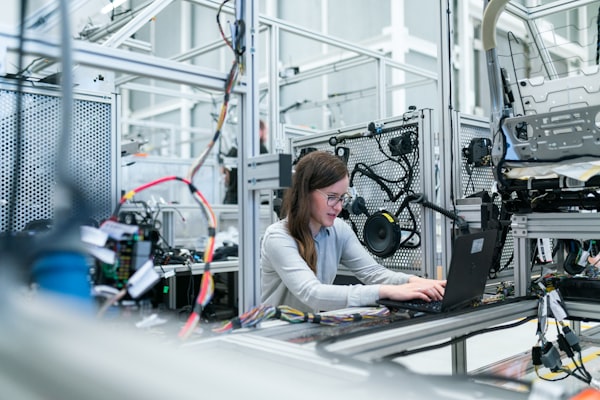
 Building your own robot is a rewarding way to understand its capabilities firsthand.
Building Your Own Robot: Where to Start?
If exploring these applications has sparked your interest in building your own robot, you're in for an exciting journey! Starting a robotics project can seem daunting, but with the right guidance, it's incredibly rewarding. The first step is often to define what you want your robot to do. This will dictate the components, programming, and complexity of your build.
Whether you're aiming for a simple line-following robot, a remote-controlled vehicle, or a more complex automated system, breaking down the project into manageable steps is key. Consider starting with a pre-made kit to learn the basics before venturing into custom designs.
Ready to Explore Robotics? Your Next Steps
Now that you have a clearer picture of what robots can do, it's time to think about your own robotics journey. Use this checklist to guide your initial exploration.
Your Robotics Exploration Checklist
0 of 4 completedStarting with a clear goal and understanding the basics will make your entry into robotics much smoother. If you're ready to pick your first project, our guide Which Robot is Right for Your First Project? is a great next step.
Continue Your Robotics Journey
Ready to dive deeper into the world of robotics? Explore these related guides to expand your knowledge and find your next project.
Where Should Your Robotics Journey Begin?
A comprehensive hub to guide you through the exciting world of robotics, from beginner to advanced projects.
How Do Robots Work? Understanding Their Essential Parts
Demystify the inner workings of robots by exploring the fundamental components that bring them to life.
Building Safely: Your Essential Robot Safety Checklist
Ensure your robotics projects are safe and secure with our comprehensive guide to best practices and precautions.