

What Should You Look For in a STEM Robot Kit?
Picking the perfect STEM robot kit isn't just about the robot itself; it's about finding the right learning experience. We'll break down the essential elements that make a kit truly educational and engaging, ensuring your investment sparks curiosity and builds real skills.
Age & Skill Level
Matching the kit to the user's developmental stage ensures the challenges are just right – not too easy, not too frustrating.
Learning Objectives
Whether it's coding fundamentals, engineering principles, or problem-solving, clarity on goals guides your choice.
Programming Style
From visual block-based coding to text-based languages, the interface should grow with the learner's abilities.
Expandability & Community
A good kit offers room to grow, with additional sensors, motors, and a supportive online community for inspiration.
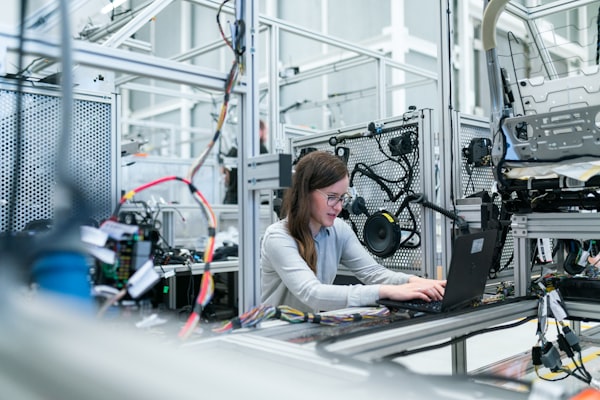 Hands-on learning with a robotics kit fosters critical thinking and creativity.
Why Should Kids Learn Robotics? The Benefits of STEM Kits
Robotics isn't just about building machines; it's a powerful gateway to understanding science, technology, engineering, and mathematics (STEM) in a tangible, exciting way. For young learners, STEM robot kits transform abstract concepts into interactive experiences, making learning both fun and memorable.
Engaging with robotics helps develop crucial 21st-century skills. Children learn problem-solving by troubleshooting their robot's movements, critical thinking by designing efficient code, and creativity by imagining new functionalities. These kits also introduce fundamental programming logic, mechanical design, and basic electronics, laying a solid foundation for future academic and career paths in a rapidly evolving technological world.
What Kind of Robot Kit is Best for Different Ages?
STEM robot kits come in a wide variety, each designed with specific age groups and learning styles in mind. Understanding these categories is the first step to making an informed decision. Let's explore the common types you'll encounter.
Block-Based Kits: Visual Learning for Young Minds
These kits are perfect for introducing fundamental programming concepts without the complexity of syntax. Using drag-and-drop visual blocks (like Scratch or Blockly), children can intuitively command their robots to move, sense, and react. They focus on sequencing, loops, and conditionals, building logical thinking skills. Construction is often snap-together or simple, emphasizing immediate play and experimentation.
- Key Features: Large, durable parts; intuitive visual programming; immediate feedback.
- Best For: Developing computational thinking, cause-and-effect understanding, and early problem-solving.
- Examples: Kits with simple motors, light sensors, and sound outputs.
Entry-Level Text Coding Kits: Bridging to Real-World Code
For older children ready to transition from visual blocks, these kits introduce simplified text-based programming languages, often based on Python or Arduino's C++. They typically involve more complex assembly, integrating various sensors (ultrasonic, line-following, touch) and actuators (servos, DC motors). Learners begin to understand variables, functions, and more intricate control structures, preparing them for advanced programming.
- Key Features: Microcontroller-based; supports Python/C++; includes diverse sensors; modular construction.
- Best For: Learning basic syntax, understanding hardware-software interaction, and project-based learning.
- Examples: Kits that build wheeled robots, robotic arms, or automated systems.
Advanced & Prototyping Kits: Unleashing Innovation
Designed for teenagers and adults, these kits often utilize powerful microcontrollers like Arduino or Raspberry Pi, offering full access to text-based programming (Python, C++, Java). They encourage open-ended design, custom fabrication, and integration with external components. These kits are ideal for those looking to delve into complex robotics, AI, machine learning, or competitive robotics, providing a platform for true innovation and prototyping.
- Key Features: High-performance microcontrollers; extensive sensor/actuator options; open-source compatibility; strong community support.
- Best For: Advanced programming, complex engineering challenges, competitive robotics, and custom project development.
- Examples: Kits for autonomous vehicles, advanced robotic arms, or IoT-connected devices.
 Understanding the internal components helps in choosing a kit with longevity.
What Specific Features Should You Prioritize?
Beyond the general kit type, several specific features will significantly impact the learning experience and the kit's longevity. Considering these points will help you narrow down the best options for your specific needs.
Ready to Choose? Use Our Kit Selection Checklist!
Before you commit to a kit, run through this checklist to ensure it aligns perfectly with your expectations and the learner's needs. Tick off each item as you evaluate potential options.
Your STEM Robot Kit Selection Checklist
0 of 7 completedHow Do Popular STEM Robot Kits Stack Up?
To give you a clearer picture, let's compare a few common types of STEM robot kits you might encounter. While specific brands vary, these categories represent the general offerings in the market.
| Feature | Beginner Block-Based Kit | Intermediate Modular Kit | Advanced Microcontroller Kit |
|---|---|---|---|
| Recommended Age | 5-9 years | 10-14 years | 14+ years |
| Programming Language | Visual Block Coding (e.g., Scratch-like) | Simplified Python / C++ (Arduino IDE) | Python, C++, Java (Arduino, Raspberry Pi) |
| Assembly Complexity | Snap-together, minimal tools | Modular, some screw assembly | Detailed, electronic wiring, custom builds |
| Typical Sensors | Touch, Light, Sound | Ultrasonic, Line-following, IR, Gyro | All above + Camera, Accelerometer, Force, GPS |
| Expandability | Limited to specific brand modules | Good, with compatible modules | Excellent, open-source hardware, custom components |
| Learning Focus | Sequencing, basic logic, motor control | Algorithmic thinking, sensor integration, control flow | Advanced programming, AI, IoT, complex problem-solving |
| Typical Price Range | $50 - $150 | $150 - $350 | $300 - $800+ |
 A strong community and expandability keep the learning journey exciting.
Why Does Expandability and Community Matter for Long-Term Learning?
A great STEM robot kit isn't a one-and-done purchase; it's a platform for continuous learning. Kits that offer expandability allow users to add new sensors, motors, or even custom-designed parts as their skills grow. This prevents the kit from becoming obsolete quickly and encourages more complex, creative projects.
Equally important is the presence of a vibrant community. Online forums, user groups, and open-source resources provide a wealth of project ideas, troubleshooting tips, and peer support. This collaborative environment fosters a sense of belonging and empowers learners to tackle more ambitious challenges. For those interested in deeper dives into the 'brains' of their robots, understanding the differences between platforms like Arduino vs. Raspberry Pi can open up even more possibilities for customization and advanced projects.
Quick Check: Test Your STEM Kit Knowledge!
See how well you've absorbed the key considerations for choosing a STEM robot kit with this quick quiz.
Which programming method is generally recommended for children aged 5-9?
Still Undecided? Let's Find Your Perfect Kit!
Answer a simple question about your primary goal, and we'll point you towards the type of kit that best suits your needs.
What's the primary goal for your STEM robot kit?
Perfect for Fun & Exploration!
If the goal is to spark initial interest and provide hours of engaging play, a beginner-friendly, block-based kit is ideal. These kits prioritize ease of assembly and intuitive programming, allowing for immediate gratification and creative experimentation without steep learning curves. Look for colorful, durable components and clear, visual instructions.
Designed for ages 6+, this kit features snap-together parts and visual block coding, perfect for first-time builders to explore basic robotics concepts through play.
Optimized for Structured Learning & Skill Building!
For those aiming to build foundational coding and engineering skills, an intermediate modular kit is an excellent choice. These kits often introduce simplified text-based programming (like Python or C++), more diverse sensors, and require a bit more thought in assembly. They are designed to support curriculum-aligned learning and project-based challenges.
Ideal for ages 10+, this kit uses a custom Python-based IDE and includes ultrasonic, line-following, and gyro sensors, perfect for structured lessons in robotics and programming logic.
Ideal for Advanced Projects & Prototyping!
If you're looking to dive deep into complex robotics, competitive challenges, or custom prototyping, an advanced microcontroller-based kit is your best bet. These kits leverage powerful platforms like Arduino or Raspberry Pi, offering full programming flexibility and extensive expandability. They are suited for learners who are comfortable with electronics and ready for open-ended design.
Featuring an Arduino-compatible board and a wide array of advanced sensors, this kit empowers ages 14+ to design, code, and build sophisticated robotic systems for competition or personal projects.
Why Investing in Robotics Education Matters
The skills gained from robotics education are more relevant than ever, preparing learners for a future driven by technology and innovation.
What's Next on Your Robotics Learning Path?
Choosing the right STEM robot kit is a fantastic first step into the world of robotics. But the journey doesn't end there! There's always more to explore, build, and learn. Consider these next steps to continue fostering a passion for technology and innovation.
Continue Your Robotics Journey
Explore more guides and comparisons from the iBuyRobotics Learning Center:
Which Robot is Right for Your First Project?
A comprehensive guide to help you select your initial robotics endeavor.
Buyer GuidesShould You Build Your Own Robot or Buy a Pre-Built One?
Weigh the pros and cons of building versus buying your next robot.
Buyer GuidesArduino vs. Raspberry Pi: Which Brain for Your Robot?
A detailed comparison of two popular microcontroller platforms for robotics.
Further Reading