

What You'll Discover in This Advanced Guide
The Power of Sensor Fusion
Understand how combining data from different sensor types overcomes individual limitations, leading to more reliable and comprehensive environmental awareness for your robot.
AI for Deeper Perception
Explore how artificial intelligence and machine learning algorithms interpret fused sensor data to enable advanced capabilities like object recognition, semantic segmentation, and predictive understanding.
Real-World Applications
See practical examples of sensor fusion and AI perception in autonomous vehicles, industrial automation, and advanced robotics, inspiring your next project.
Building Your Own System
Gain actionable insights and a practical checklist to begin designing and implementing your own advanced perception systems, from sensor selection to data processing.
 Individual sensors, while powerful, have inherent limitations that fusion aims to overcome.
Why Can't One Sensor Do It All? The Limits of Single-Sensor Perception
Imagine trying to navigate a complex environment with only one sense – say, just hearing. You'd miss a lot of crucial information, right? Robots face a similar challenge when relying on a single sensor type. Each sensor, whether it's a camera, a lidar, or an ultrasonic sensor, has its own strengths and weaknesses.
For instance, a camera provides rich visual data but struggles in low light or with depth perception. A lidar offers precise distance measurements but can be affected by fog or rain. Ultrasonic sensors are great for short-range obstacle detection but lack detail. These individual limitations create 'blind spots' or inaccuracies that can hinder a robot's ability to make informed decisions.
- Noise and Interference: Environmental factors can introduce errors into sensor readings.
- Limited Field of View: Most sensors can only 'see' in a specific direction or range.
- Environmental Dependency: Performance can degrade significantly in adverse conditions (e.g., rain, fog, direct sunlight).
- Ambiguity: A single sensor might not provide enough context to differentiate between similar objects or situations.
- Latency: Some sensors have inherent delays in data acquisition and processing.
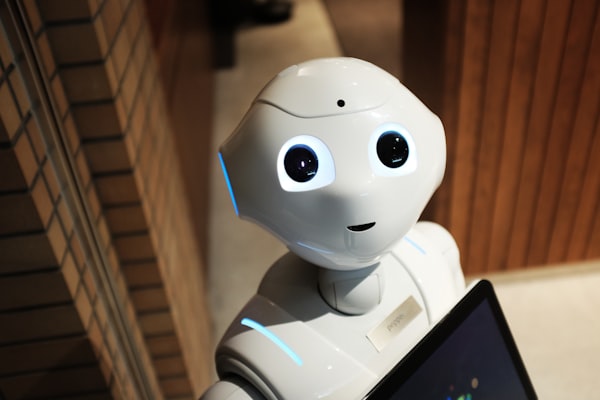 Sensor fusion combines diverse data streams to create a more complete picture.
What Exactly is Sensor Fusion and Why is it Essential?
Sensor fusion is the process of combining data from multiple sensors to achieve a more accurate, reliable, and comprehensive understanding of the environment than could be obtained from any single sensor alone. Think of it as your brain combining input from your eyes, ears, and sense of touch to understand the world around you.
By integrating diverse data streams, sensor fusion helps overcome the individual limitations we just discussed. For example, a robot might use a camera for object identification, a lidar for precise depth mapping, and an Inertial Measurement Unit (IMU) for its own orientation and movement. Fusing these inputs provides a robust, real-time model of the robot's surroundings and its own state.
This enhanced perception is crucial for tasks requiring high precision and reliability, such as autonomous navigation, object manipulation, and human-robot interaction. It's the foundation upon which truly intelligent robotic behavior is built. To learn more about processing raw sensor data, check out our Sensor Data Processing Tutorial.
How Do Robots Combine Sensor Data? Common Fusion Techniques
The magic of sensor fusion lies in the algorithms that intelligently combine disparate data. These techniques range from simple averaging to complex probabilistic models. Choosing the right method depends on your application, the types of sensors, and the desired level of accuracy and robustness.
Kalman Filter (KF): The Workhorse of State Estimation
The Kalman Filter is a powerful algorithm that estimates the state of a dynamic system (like a robot's position and velocity) from a series of noisy measurements. It's particularly effective for linear systems and assumes that measurement and process noise are Gaussian (normally distributed).
How it works: It operates in a predict-update cycle. It predicts the next state based on the previous state and a system model, then updates this prediction using new sensor measurements, weighting them based on their uncertainty. This iterative process provides an optimal estimate of the system's true state.
Use cases: Widely used for tracking objects, robot localization, and navigation where system dynamics are well-understood and linear. For example, fusing IMU data with GPS readings for drone navigation.
Extended Kalman Filter (EKF): Handling Non-Linearity
The Extended Kalman Filter is an extension of the KF designed to handle non-linear systems. Since most real-world robotic systems are non-linear, the EKF is far more commonly used than the basic KF.
How it works: It linearizes the non-linear system models around the current state estimate using a technique called Taylor series expansion. This allows it to apply the Kalman Filter's principles to non-linear problems. However, this linearization introduces approximations, which can sometimes lead to instability or suboptimal performance if the non-linearity is very strong.
Use cases: A staple in robotics for simultaneous localization and mapping (SLAM), fusing data from cameras, lidar, and IMUs for autonomous vehicles, and complex robot arm control.
Particle Filter (PF): Robustness for Highly Non-Linear Systems
Particle Filters, also known as Sequential Monte Carlo methods, are a class of algorithms that can handle highly non-linear and non-Gaussian systems, making them very robust for complex perception tasks.
How it works: Instead of tracking a single estimate, a particle filter represents the system's state using a set of 'particles' (samples). Each particle represents a possible state of the system. As new measurements come in, the particles are weighted based on how well they match the measurements, and then resampled. This allows the filter to track multiple hypotheses about the system's state simultaneously.
Use cases: Excellent for robot localization in environments with significant uncertainty (e.g., indoor navigation with sparse landmarks), object tracking in cluttered scenes, and situations where the probability distributions are not Gaussian. For a deeper dive into how different sensors contribute to navigation, explore our Robot Navigation Framework.
This board integrates a high-precision IMU with an onboard microcontroller pre-programmed with EKF algorithms, making it ideal for robust orientation and motion tracking in your fusion projects.
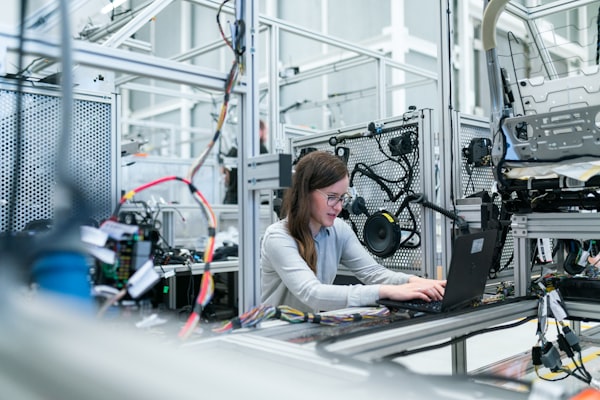 AI perception allows robots to interpret complex visual and spatial data, not just measure it.
Moving Beyond Raw Data: What is AI Perception?
While sensor fusion excels at combining raw data to create a more accurate state estimate, AI perception takes this a step further. It's about interpreting that rich, fused data to understand the environment in a human-like way – recognizing objects, understanding their context, and even predicting future events.
AI perception leverages machine learning models, particularly deep learning, to extract high-level semantic information from sensor data. Instead of just knowing there's an obstacle at X distance, an AI-powered system can identify it as a 'person,' a 'chair,' or a 'doorway,' and understand its implications for the robot's actions. This transforms raw measurements into meaningful insights, enabling truly intelligent decision-making.
For a deeper dive into visual sensors, check out our Cameras, Color & Light Sensors guide.
How Does AI Help Robots Understand Their World? Key Capabilities
Which of these is a primary goal of sensor fusion, rather than AI perception?
Real-World Impact: Where is Sensor Fusion & AI Perception Used?
The combination of sensor fusion and AI perception is at the heart of many cutting-edge robotic applications, driving innovation across industries.
From self-driving cars navigating complex city streets to industrial robots precisely handling delicate components, these technologies are enabling unprecedented levels of autonomy and capability.
Accelerate your AI perception projects with this kit, featuring a high-resolution camera, a powerful embedded AI processor, and pre-trained models for common object detection tasks.
Ready to Build? Your Advanced Perception System Checklist
Embarking on an advanced perception project can seem daunting, but breaking it down into manageable steps makes it achievable. Use this checklist to guide your development process.
Your Advanced Perception Project Checklist
0 of 6 completedThe Future is Intelligent: Next Steps in Robot Perception
The journey into advanced robot perception is continuously evolving. As computational power increases and new sensor technologies emerge, the capabilities of sensor fusion and AI perception will only grow. We're moving towards robots that don't just 'see' but truly 'understand' their environment, enabling more natural interactions and complex autonomous behaviors.
Consider exploring emerging fields like neuromorphic computing for ultra-efficient AI processing, or event-based cameras that offer incredibly low latency data for dynamic environments. The principles of fusing diverse data and applying intelligent algorithms will remain central to these advancements.
For demanding AI perception tasks, this compact module provides the processing power needed to run complex deep learning models directly on your robot, enabling real-time decision making.
Continue Your Learning Journey
Ready to deepen your understanding of robot perception? Explore these related guides and tutorials.
Making Sense of Sensor Data: A Beginner's Processing Tutorial
Learn the fundamental steps to clean, filter, and prepare your raw sensor data for analysis and fusion.
How Do Robots Interpret the World Visually? Cameras, Color & Light Sensors
Explore the foundational principles of visual perception, essential for advanced AI applications.
Choosing the Right Sensors for Robot Navigation: A Decision Guide
Apply your knowledge to practical navigation challenges and select the optimal sensor configurations.
Further Reading