

What You'll Learn About Robot Vision
The Core Principles of Distance Sensing
Discover the fundamental physics behind how robots measure distance, from light to sound waves.
Infrared (IR) Sensors Explained
Understand how IR light helps robots detect nearby objects, perfect for close-range avoidance.
Ultrasonic Sensors: Using Sound to Navigate
Learn how sound waves bounce off objects, giving your robot a sense of its surroundings.
LiDAR: Advanced Laser Mapping
Explore how LiDAR creates detailed 3D maps, essential for complex navigation and autonomy.
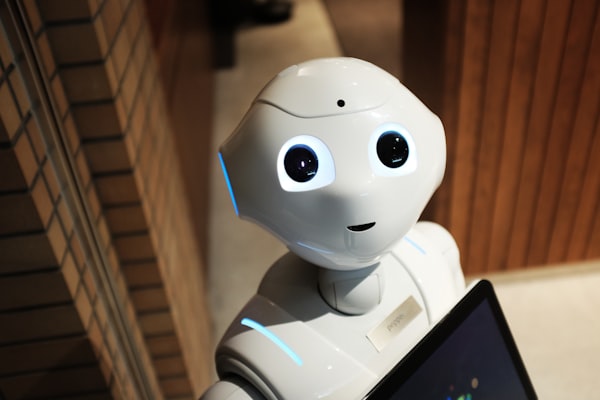
 A robot chassis equipped with multiple sensors for environmental perception.
How Do Robots 'See' Distance? The Core Idea
Imagine trying to walk through a dark room without touching anything. You'd probably extend your hands, listen for echoes, or maybe even use a flashlight. Robots do something similar, but with specialized electronic 'senses' called distance sensors. These sensors are crucial for tasks like obstacle avoidance, navigation, and even mapping their environment.
At its heart, distance sensing for robots usually involves sending out a signal – be it light, sound, or a laser pulse – and then measuring how long it takes for that signal to return after bouncing off an object. This 'time-of-flight' principle is fundamental to many distance sensing technologies, allowing a robot to calculate how far away an object is based on the speed of the signal.
Time-of-Flight (ToF) is a method for measuring distance by timing how long it takes for a signal (like light or sound) to travel from the sensor to an object and back. Since the speed of the signal is known (e.g., speed of light or sound), the distance can be calculated with a simple formula: Distance = (Speed × Time) / 2 (divided by two because the signal travels there and back). This principle is used in many advanced sensors, including LiDAR and some ultrasonic modules.
 A compact infrared distance sensor, commonly used in small robotics projects.
Infrared (IR) Sensors: Simple & Effective for Close Encounters
Infrared (IR) sensors are among the most common and cost-effective distance sensors for robots, especially for basic obstacle avoidance. They work by emitting a beam of infrared light and then detecting the reflection of that light off an object. The amount of reflected light, or the angle at which it returns, helps the sensor determine how far away the object is.
There are two main types: **reflective IR sensors** (which measure intensity) and **triangulation IR sensors** (which measure angle). Reflective sensors are great for very short distances, often used for line following or detecting if something is directly in front of them. Triangulation sensors, like the popular Sharp GP2Y0A series, offer a more reliable distance measurement over a slightly longer range by using the angle of the reflected light to calculate distance.
Advantages of Infrared Sensors
- Cost-Effective: Generally the cheapest option for basic distance sensing.
- Fast Response: Light travels quickly, so they provide near-instant readings.
- Compact Size: Small form factor, easy to integrate into tight spaces.
- Low Power Consumption: Ideal for battery-powered robots.
Limitations of Infrared Sensors
- Limited Range: Typically effective only for short distances (a few centimeters to ~80cm).
- Affected by Ambient Light: Strong sunlight can interfere with readings.
- Surface Dependent: Dark, fuzzy, or highly reflective surfaces can cause inaccurate readings.
- Narrow Field of View: Often detect only what's directly in front of them.
Where IR Sensors Shine
IR sensors are excellent for:
- Close-range obstacle detection: Preventing bumps into walls or furniture.
- Line following: Differentiating between light and dark lines on the floor.
- Edge detection: Keeping robots from falling off tables or ledges.
- Simple proximity sensing: Detecting if an object is 'present' or 'not present'.
This popular analog IR sensor offers a reliable 10-80cm detection range, making it perfect for hobby robots needing basic obstacle avoidance without breaking the bank.
 An HC-SR04 ultrasonic sensor, a common choice for hobbyist robotics.
Ultrasonic Sensors: Using Sound to Map Your World
If IR sensors are like a robot's eyes, ultrasonic sensors are like its ears, using sound to detect objects. These sensors emit high-frequency sound waves (beyond human hearing) and then listen for the echo. By measuring the time it takes for the sound to travel to an object and bounce back, the sensor calculates the distance.
The most common ultrasonic sensor for hobbyists is the HC-SR04, which has separate transmitter and receiver transducers. They are generally less affected by ambient light or object color compared to IR sensors, making them a robust choice for many indoor and some outdoor applications. However, they can struggle with soft, sound-absorbing materials or objects at extreme angles.
 A spinning LiDAR unit actively scanning its environment to create a point cloud.
LiDAR: Precision Mapping for Advanced Robotics
LiDAR, which stands for Light Detection and Ranging, is the most advanced of these three distance sensing technologies. It uses pulsed laser light to measure distances to objects. The principle is similar to ultrasonic sensors, but instead of sound, it uses light, which travels much faster and can be focused into a much narrower beam, offering superior accuracy and resolution.
Many LiDAR units rotate, scanning their surroundings to create a 'point cloud' – a detailed 2D or 3D map of the environment. This capability makes LiDAR indispensable for complex tasks like simultaneous localization and mapping (SLAM), autonomous navigation in dynamic environments, and high-precision obstacle avoidance in industrial settings. While more expensive, the data quality and range offered by LiDAR are unmatched for sophisticated robotic applications.
Want to dive deeper into how different sensors stack up for specific tasks? Check out our dedicated comparison: IR vs. Ultrasonic vs. Lidar: Best Sensors for Obstacle Avoidance?
Which distance sensor is likely best for your robot project?
For Simple Obstacle Avoidance: IR or Ultrasonic
For basic tasks like preventing bumps or following a wall, both IR and Ultrasonic sensors are excellent, cost-effective choices. IR is great for very close detection and line following, while Ultrasonic offers a slightly longer range and is less affected by light. Consider your budget and the specific environment.
For Indoor Mapping & Navigation: Ultrasonic or Entry-Level LiDAR
If you need more than just obstacle avoidance, such as creating a basic map or navigating a complex indoor space, ultrasonic sensors can provide good data. For higher precision and more detailed mapping, an entry-level 2D LiDAR unit would be a significant upgrade, offering robust performance in varying indoor conditions.
For Precision Outdoor Navigation: LiDAR
For demanding outdoor applications, especially those requiring high accuracy, long range, and detailed environmental mapping (like autonomous vehicles or drones), LiDAR is the clear winner. Its ability to perform well in various lighting conditions and generate dense point clouds makes it ideal for complex outdoor navigation and safety.
Quick Comparison: IR vs. Ultrasonic vs. LiDAR
Let's put these three sensor types side-by-side to help you visualize their strengths and weaknesses.
| Feature | Infrared (IR) | Ultrasonic | LiDAR |
|---|---|---|---|
| Principle | Emits IR light, detects reflection/angle | Emits sound waves, detects echo time | Emits laser pulses, measures time-of-flight |
| Typical Range | 1cm - 80cm | 2cm - 400cm (4m) | 5cm - 100m+ |
| Accuracy | Moderate (affected by surface/light) | Good (can be affected by soft surfaces) | Excellent (high precision) |
| Field of View | Narrow beam | Conical beam (wider than IR) | Narrow beam, often scanned 360° |
| Environmental Impact | Affected by ambient light, surface color | Affected by soft materials, wind, temperature | Generally robust, some fog/rain impact |
| Cost (Relative) | Low | Low to Medium | High |
| Data Output | Analog voltage or digital distance | Digital distance (pulse width) | High-resolution point cloud (2D/3D) |
Which sensor type would be most suitable for a robot navigating a dusty, industrial warehouse with varying light conditions and requiring precise mapping?
Real-World Applications: Where Do These Sensors Live?
Understanding how these sensors work is one thing, but seeing them in action truly highlights their importance. Distance sensors are the unsung heroes behind many robotic capabilities we take for granted:
Key Considerations for Sensor Selection
Choosing the right distance sensor isn't just about understanding how they work; it's about matching their capabilities to your robot's specific needs and environment.
For projects needing reliable indoor distance sensing up to 6.45 meters with a wider beam, this ultrasonic sensor offers excellent performance and noise rejection, making it a step up from basic modules.
Sensor data from multiple sources is often combined for a more complete understanding.
Beyond the Basics: Sensor Fusion for Enhanced Perception
While individual distance sensors are powerful, the most sophisticated robots often combine data from multiple sensor types – a technique known as 'sensor fusion'. By integrating information from IR, ultrasonic, LiDAR, and even cameras, a robot can build a much more robust and accurate understanding of its environment than any single sensor could provide alone.
For instance, a robot might use IR for immediate close-range collision avoidance, ultrasonic for general mid-range object detection, and LiDAR for long-range mapping and navigation. This layered approach allows robots to handle a wider variety of situations and environments with greater reliability and intelligence. Learning how to process and combine this data is a key step in advanced robotics development. Explore more about this in our guide on Choosing the Right Sensors for Robot Navigation.
Ready to Equip Your Robot with Vision?
Now that you understand the core principles and differences between IR, ultrasonic, and LiDAR sensors, you're well-equipped to make informed decisions for your next robotics project. Each sensor has its niche, and choosing wisely will significantly impact your robot's ability to perceive and interact with its world.
For those ready to step into advanced mapping and navigation, the RPLIDAR A1M8 offers a cost-effective 360-degree LiDAR solution, providing high-quality 2D point cloud data for robust environmental perception.
Continue Your Learning Journey:
Further Reading