Why Is Choosing the Right Sensor So Important?
Sensors are your robot's eyes, ears, and touch. They gather crucial information about the environment, enabling your robot to navigate, interact, and perform its tasks effectively. A mismatch between your project's needs and your sensor's capabilities can lead to inaccurate data, unreliable performance, and frustrating development cycles.
Selecting the optimal sensor isn't just about finding one that "works"; it's about finding the one that excels in your specific application, balancing performance, cost, and complexity.
Accuracy & Reliability
The right sensor provides consistent, precise data, crucial for critical tasks like navigation or object manipulation.
Cost-Effectiveness
Avoid overspending on features you don't need or underspending on sensors that won't meet performance demands.
Environmental Resilience
Ensure your sensor can withstand the operating conditions, whether it's dust, water, light, or temperature.
Seamless Integration
Consider compatibility with your robot's microcontroller and the complexity of data processing required.
Many beginners make the mistake of choosing the cheapest sensor, or one that's popular, without fully understanding its limitations. Forgetting to account for environmental factors like ambient light or dust, neglecting power consumption, or underestimating data processing requirements are also common pitfalls. Always consider the full lifecycle of your sensor's operation.
 A diverse array of sensors, each designed for a specific perception task.
What Does Your Robot Need to 'Sense'?
Before diving into technical specifications, let's clarify your robot's primary perception goals. Different tasks demand different types of sensory input. Understanding this core requirement will significantly narrow down your options.
Are you building a robot that needs to avoid bumping into walls, follow a specific path, pick up delicate objects, or recognize faces? Each scenario points to a distinct category of sensors. Think about the fundamental information your robot needs to gather from its surroundings.
What's your robot's primary perception goal?
Obstacle Avoidance: Distance is Key
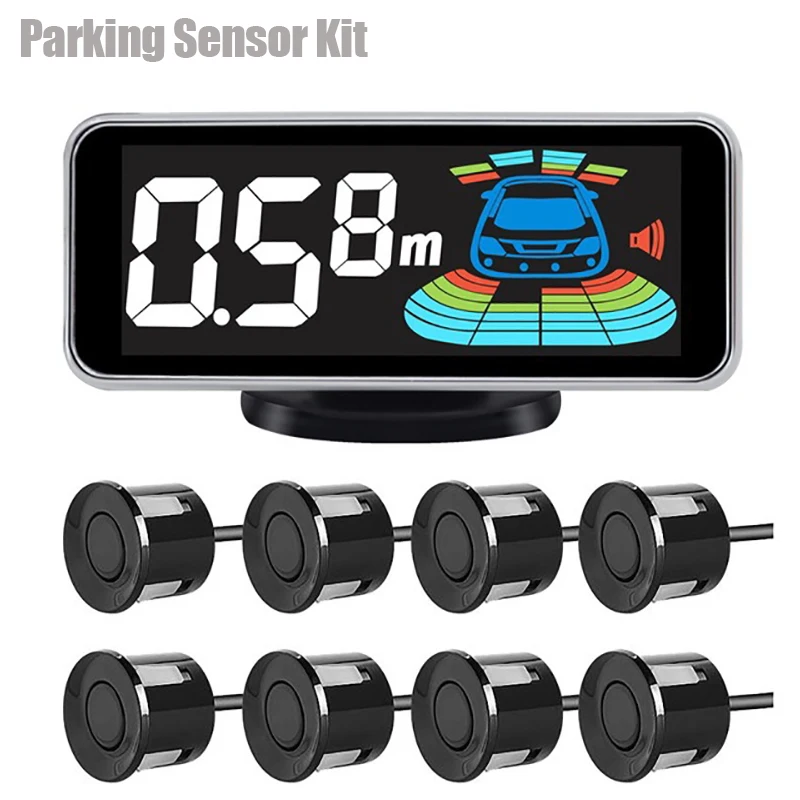
For obstacle avoidance, your robot needs to detect objects and their proximity. This typically involves distance sensors like ultrasonic, infrared (IR), or lidar. The choice depends on range, accuracy, and environmental factors. Consider how far your robot needs to "see" and how precise that measurement needs to be. Learn more about obstacle avoidance sensors.
Excellent for basic obstacle detection in hobby projects, offering good range and ease of use at an affordable price.
Object Interaction / Touch: Feeling the World
For tasks involving gripping, pushing, or detecting contact, force and touch sensors are indispensable. This includes tactile switches, force-sensitive resistors (FSRs), and load cells. The sensitivity, durability, and form factor will be key. Consider the nature of the interaction – is it simple contact detection or precise force measurement?
Ideal for detecting varying levels of pressure, perfect for robotic grippers or sensitive touch interfaces.
Object Recognition / Vision: Interpreting Visual Data
When your robot needs to "see" and understand its environment visually, vision, color, and light sensors come into play. Cameras (CSI, USB), color sensors, and ambient light sensors provide rich visual data. Processing this data often requires more computational power. Think about resolution, frame rate, and the lighting conditions your robot will operate in.
A versatile camera for visual perception tasks, offering high resolution and broad compatibility with popular robot platforms.
Let's Narrow It Down: Your Project's Specifics
Now that we've identified your robot's primary sensing goal, let's refine the selection based on critical technical and environmental factors. This interactive wizard will walk you through the most important questions to consider.
What is the required sensing range or distance?
How far away does your robot need to detect objects or measure its environment?
What kind of environment will your robot operate in?
Environmental factors significantly impact sensor performance and durability.
How much accuracy and precision do you need?
Accuracy refers to how close a measurement is to the true value, precision to the consistency of repeated measurements.
What is your budget for this sensor?
Sensor prices can vary widely. Be realistic about your financial constraints.
What type of output signal do you prefer?
Consider how the sensor communicates data to your microcontroller. Analog vs. Digital Sensors: What's the Difference?
How complex is your integration capability?
Some sensors require more advanced coding and hardware setup than others.
Your Recommended Sensor Profile!
Based on your selections, here's a general profile of sensors that would suit your project. Remember, this is a starting point for further research!
General Recommendations:
Based on your choices, we'd generally suggest looking into a combination of:
- For short-range, low-cost indoor obstacle avoidance: IR proximity sensors.
- For medium-range, moderate accuracy indoor/outdoor navigation: Ultrasonic sensors or entry-level Lidar.
- For high-accuracy, long-range mapping and navigation: Advanced Lidar or Stereo Vision Cameras.
- For precise motion tracking: High-resolution Encoders and advanced IMUs.
- For object interaction: Force-Sensitive Resistors (FSRs) or Tactile Switches.
- For visual recognition: CSI or USB Cameras with appropriate processing.
Remember to cross-reference these with specific product datasheets and user reviews.
Exploring Common Sensor Technologies
Let's take a closer look at some of the most common sensor types you'll encounter in robotics. Each has its strengths and weaknesses, making them suitable for different applications.
Ultrasonic Sensors: Sound Waves for Distance
Ultrasonic sensors emit high-frequency sound waves and measure the time it takes for the echo to return. This "time-of-flight" principle allows them to calculate distance. They are generally affordable and effective for medium-range obstacle detection, less affected by color or transparency than IR. However, they can be susceptible to soft surfaces that absorb sound, and their wide beam angle can lead to false readings in cluttered environments.
Best for: General obstacle avoidance, simple distance measurement, water level detection.
Infrared (IR) Sensors: Light for Proximity
IR sensors work by emitting infrared light and detecting the reflection. The amount of reflected light, or the angle at which it returns, indicates proximity. They are compact, fast, and very common for short-range obstacle detection and line following. They are, however, highly sensitive to ambient light conditions and surface color/reflectivity (darker surfaces absorb more IR, appearing further away). Compare IR vs. Ultrasonic vs. Lidar.
Best for: Line following, very short-range proximity detection, simple object counting.
Lidar Sensors: Laser Mapping
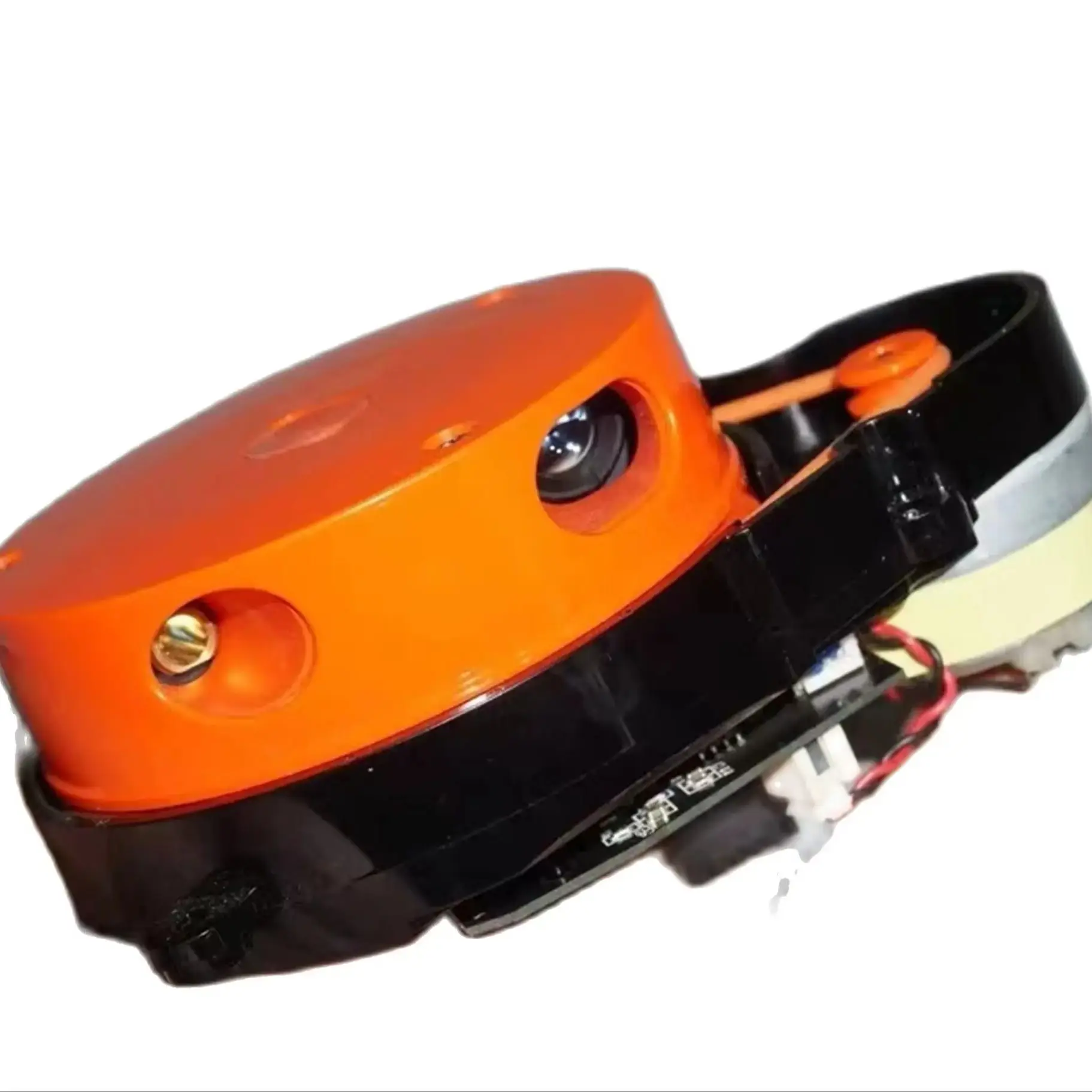
Lidar (Light Detection and Ranging) sensors uses pulsed laser light to measure distances to objects. By rotating or scanning, they can create detailed 2D or 3D maps of an environment. Lidar offers high accuracy, long range, and is less affected by ambient light than IR. The trade-off is typically higher cost and more complex data processing. They are crucial for advanced navigation and simultaneous localization and mapping (SLAM).
Best for: High-accuracy mapping, complex navigation, autonomous vehicle applications.
IMU (Inertial Measurement Unit): Robot's Sense of Motion
An IMU combines accelerometers, gyroscopes, and often magnetometers to measure a robot's orientation, acceleration, and angular velocity in 3D space. They are fundamental for understanding how a robot is moving and its current attitude. While they don't directly sense the environment, they provide critical data for navigation, balancing, and control. They are prone to drift over time, requiring fusion with other sensor data for long-term accuracy.
Best for: Robot balancing, drone stabilization, dead reckoning navigation, gesture recognition.
Cameras: The Robot's Eyes
Cameras capture visual information, allowing robots to perform tasks like object recognition, facial detection, color sorting, and visual odometry. They provide a rich dataset but require significant computational power for processing. Different types exist, from simple webcams to high-resolution global shutter cameras and stereo vision systems for depth perception. Dive deeper into vision sensors.
Best for: Object detection, visual navigation, quality inspection, human-robot interaction.
Force & Touch Sensors: The Robot's Skin
This category includes a variety of sensors that detect physical contact or pressure. Force-Sensitive Resistors (FSRs) provide analog output proportional to applied force, while simple tactile switches offer binary (on/off) contact detection. Load cells measure precise weight or force. These are vital for robots that need to interact physically with their environment, such as grippers, manipulators, or robots requiring collision detection.
Best for: Gripper feedback, collision detection, weight measurement, sensitive object handling.
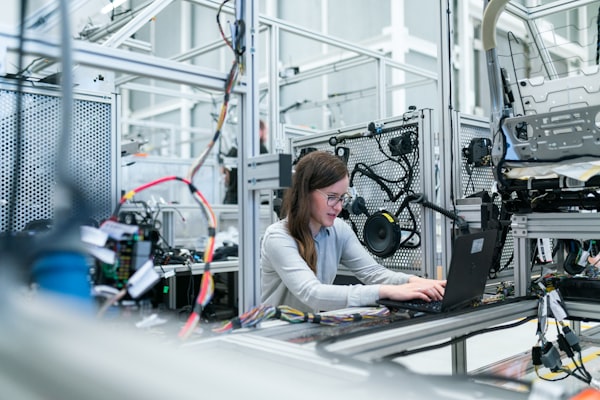 A robotic arm equipped with multiple sensors for precise manipulation and environmental awareness.
Beyond the Specs: Real-World Sensor Selection
While technical specifications are crucial, practical considerations often make or break a project. Think about the physical integration, power demands, and the processing power required for your chosen sensors.
Your Final Sensor Selection Checklist
Use this checklist to ensure you've covered all your bases before making a purchase.
Pre-Purchase Review
0 of 7 completedThe Power of Perception: Why Your Choice Matters
A well-chosen sensor suite is the foundation of an intelligent and capable robot. It directly impacts performance, safety, and the overall success of your project.
Which sensor type is generally best for creating a detailed 2D map of an unknown room?
Ready to Build Your Robot's Senses?
Choosing the right sensor is a foundational step in any robotics project. By carefully considering your robot's purpose, environment, and technical requirements, you can make informed decisions that lead to robust and intelligent robotic systems.
Continue your learning journey with these related guides:
Unlock Your Robot's Senses
Explore the ultimate guide to robot perception and sensory systems.
Read More →Which Sensor Type Is Right?
A comprehensive overview of different sensor technologies and their applications.
Read More →Sensors for Robot Navigation
A decision guide for selecting sensors crucial for effective robot navigation.
Read More →