

What You'll Master in This Guide
Understanding Perception
Demystify what a robot's perception system truly is and why it's the cornerstone of intelligent robotic behavior.
Matching Sensors to Needs
Learn to identify the specific sensory inputs your robot requires based on its intended tasks and environment.
Integration & Optimization
Discover best practices for combining different sensor types and processing their data for robust performance.
Confident Decision Making
Gain the confidence to select the ideal sensor suite, avoiding common pitfalls and ensuring your robot's success.
 A robot's perception system is its window to the world.
What Exactly Is a Robot's Perception System?
Think of your robot's perception system as its entire set of senses – its eyes, ears, and touch. It's not just one sensor, but a combination of hardware (sensors) and software (algorithms) that work together to gather information from the environment, interpret it, and make it useful for the robot's brain.
This system allows a robot to understand its surroundings, detect obstacles, identify objects, measure distances, and even feel forces. Without a robust perception system, a robot is essentially blind and deaf, unable to perform even the simplest tasks intelligently.
Quick Check: Testing Your Perception Basics
Which of these is NOT typically considered part of a robot's perception system?
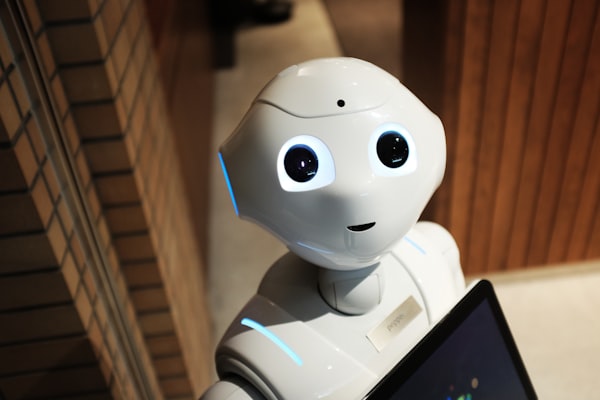 Different robot tasks demand different sensory capabilities.
What Does Your Robot Need to "See" and "Feel"?
Before diving into specific sensors, the most critical step is to clearly define your robot's mission. What environment will it operate in? What tasks must it perform? The answers to these questions will dictate the type and complexity of its perception system.
For instance, a robot designed for indoor navigation needs to detect walls and furniture, while an outdoor agricultural robot might need to identify crop health and navigate uneven terrain. A robot arm for assembly requires precise object detection and force feedback. Each scenario demands a tailored approach to sensing.
Find Your Robot's Ideal Perception Path
Use this interactive tool to narrow down the best sensor categories for your robot's primary function.
What is your robot's primary goal?
Manipulation & Interaction Focus
Precise interaction requires Vision Sensors (cameras) for object recognition and pose estimation, and Force/Touch Sensors (tactile, force-torque) for delicate gripping and collision detection. These allow your robot to 'feel' its way through tasks.
Essential for robotic arms needing to handle objects with varying pressure and detect contact.
Inspection & Analysis Focus
For detailed inspection, Vision Sensors (high-resolution cameras, thermal cameras) are paramount. You might also integrate Distance Sensors (Lidar, structured light) for 3D mapping and precise measurement. The goal is to gather rich data about the environment or target.
A high-resolution camera with integrated processing for detailed visual analysis and object identification.
Human Interaction Focus
Robots interacting with humans need a blend of sensors for safety and understanding. Vision Sensors (facial recognition, gesture tracking), Distance Sensors (safe proximity detection), and even Audio Sensors (voice commands) are key. Safety is paramount, so redundant sensing is often employed.
Designed for collaborative robots, ensuring safe operation around human co-workers.
Key Sensor Categories for Your Robot's Brain
Let's break down the primary types of sensors that form the backbone of most robot perception systems. Understanding their strengths and weaknesses is crucial for making informed choices.
Distance Sensors: How Far Away Is That?
These sensors measure the distance to objects, crucial for obstacle avoidance, mapping, and navigation. Common types include:
- Ultrasonic: Emits sound waves and measures the time for the echo to return. Good for basic obstacle detection, but can be affected by soft surfaces or narrow openings.
- Infrared (IR): Emits IR light and measures the reflection. Cost-effective for short-range detection, but susceptible to ambient light and surface reflectivity.
- Lidar: Uses pulsed laser light to measure distances. Provides highly accurate 2D or 3D maps of the environment, excellent for complex navigation and mapping, but typically more expensive.
For a deeper dive, check out our comparison of IR, Ultrasonic, and Lidar for obstacle avoidance.
Vision Sensors: Giving Your Robot Eyes
Vision sensors, primarily cameras, allow robots to 'see' and interpret visual information. This includes:
- Monocular Cameras: Standard 2D images for object recognition, color detection, and basic tracking.
- Stereo Cameras: Two cameras mimic human eyes to provide depth perception, enabling 3D reconstruction and more accurate object localization.
- Depth Cameras (e.g., Time-of-Flight, Structured Light): Directly measure depth information, creating 3D point clouds, ideal for complex object manipulation and environment understanding.
These are vital for tasks like facial recognition, quality inspection, and picking items from a bin.
Force & Touch Sensors: How Robots Feel
These sensors provide tactile feedback, allowing robots to interact physically with their environment safely and effectively. They are essential for delicate manipulation and human-robot collaboration.
- Tactile Sensors: Detect contact and pressure, often used in grippers to determine if an object has been grasped.
- Force-Torque Sensors: Measure forces and torques applied at a joint or end-effector, crucial for compliant motion, assembly tasks, and collision detection.
- Proximity Sensors: While often grouped with distance, some capacitive or inductive proximity sensors detect the presence of objects without physical contact, useful for detecting metallic parts or human presence.
Motion Sensors: Knowing Where and How Fast
Motion sensors are critical for a robot's self-awareness, providing data on its own position, orientation, and velocity. This is fundamental for navigation and control.
- Encoders: Measure the rotational position or speed of motors and wheels, providing odometry data for estimating distance traveled.
- Inertial Measurement Units (IMUs): Combine accelerometers and gyroscopes to measure linear acceleration and angular velocity, giving the robot its orientation in space. Some include magnetometers for heading.
- GPS/GNSS: Provides global positioning outdoors, though accuracy can vary and it's not suitable for indoor use.
Combining these often leads to more robust localization through techniques like sensor fusion.
Integrating Your Sensors: More Than Just Plugging In
 Careful integration and data processing are vital for a functional perception system.
Once you've selected your sensors, the real work of building a perception system begins. Integration involves not just physically connecting the sensors, but also writing the software to read their data, process it, and make it usable for your robot's decision-making algorithms.
Key considerations include:
- Data Fusion: Combining data from multiple sensors to get a more complete and accurate picture of the environment. For example, fusing IMU data with wheel encoder data for better localization.
- Calibration: Ensuring your sensors provide accurate readings. This often involves specific procedures to correct for biases or environmental factors.
- Processing Power: High-resolution cameras or Lidar systems generate a lot of data, requiring significant processing power from your robot's onboard computer.
Don't underestimate the importance of robust software. Our Sensor Data Processing Tutorial can help you get started.
Your Perception System Pre-Integration Checklist
Before you finalize your sensor purchases and begin wiring, run through this checklist to ensure you haven't missed any critical steps.
Perception System Readiness
0 of 6 completedThe Impact of a Well-Designed Perception System
Common Questions About Robot Perception
It's natural to have questions when building something as complex as a robot's senses. Here are some common inquiries we receive:
How many sensors do I really need?
The number of sensors depends entirely on your robot's complexity and task. A simple line-follower might only need a couple of IR sensors, while an autonomous car could have dozens of cameras, radar, lidar, and ultrasonic sensors. Start with the minimum required for your core functionality and expand as needed.
Can I mix and match different sensor brands?
Absolutely! Most robotics projects involve integrating components from various manufacturers. The key is to ensure compatibility with your microcontroller or single-board computer (e.g., correct voltage, communication protocols like I2C, SPI, UART). You'll be responsible for writing or adapting the drivers for each sensor.
What's the biggest challenge in building a perception system?
Often, the biggest challenge isn't selecting the sensors, but effectively processing and interpreting the data they provide. Sensor noise, environmental interference, and the computational demands of algorithms like SLAM (Simultaneous Localization and Mapping) or object recognition can be complex. Proper calibration and robust software are crucial.
How do I choose between analog and digital sensors?
Analog sensors provide a continuous range of values, often simpler for basic readings but require an Analog-to-Digital Converter (ADC). Digital sensors output discrete values (on/off, or data packets), are less susceptible to noise, and often easier to interface with modern microcontrollers. Your choice depends on the precision needed and your microcontroller's capabilities. Our Analog vs. Digital Sensors guide explains this in detail.
Ready to Empower Your Robot's Senses?
You've now explored the core concepts behind building a robust perception system for your robot. From understanding different sensor types to planning for integration and data processing, you have the knowledge to make confident decisions.
Remember, the best perception system is one that perfectly aligns with your robot's mission and environment. Don't be afraid to experiment, iterate, and refine your choices as your project evolves. The iBuyRobotics team is here to support you every step of the way.