

Why Does Calibration Matter for Your Robot?
Imagine your robot trying to navigate a room, but its distance sensors consistently report objects are closer or further than they actually are. Or perhaps its internal compass (IMU) thinks it's turning when it's moving straight. Without accurate sensor data, your robot's decisions become unreliable, leading to collisions, incorrect movements, and failed tasks. Calibration is the essential process of fine-tuning your sensors to provide precise and trustworthy readings, bridging the gap between raw sensor output and real-world measurements.
Enhanced Accuracy
Ensure your robot's perception aligns with reality, reducing measurement errors and improving decision-making.
Increased Reliability
Build confidence in your robot's performance, knowing its sensor data is consistent and dependable across different environments.
Safer Operation
Prevent collisions and unexpected behaviors by ensuring obstacle detection and navigation sensors are precisely tuned.
Optimal Performance
Achieve the full potential of your robot's capabilities, from precise manipulation to efficient autonomous navigation.
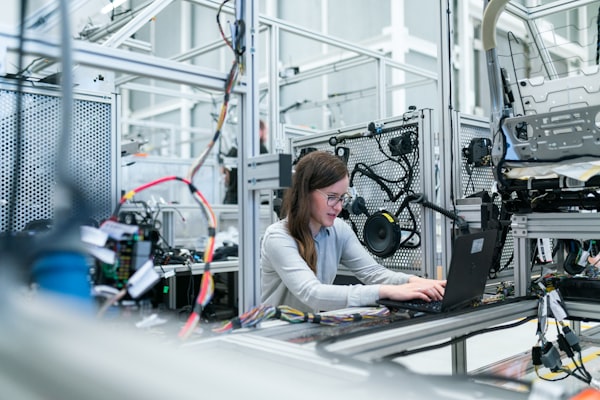
 A robot arm equipped with multiple sensors, highlighting the need for integrated calibration.
What Causes Sensor Readings to Go Wrong?
Even the highest quality sensors aren't perfect out of the box. Several factors can introduce inaccuracies into their readings. Understanding these sources of error is the first step toward effective calibration. These issues can range from inherent manufacturing tolerances to the dynamic environment your robot operates in.
Common culprits include manufacturing variations, which mean no two sensors are exactly alike, and environmental factors like temperature, humidity, or electromagnetic interference. Over time, sensors can also experience 'drift,' where their baseline readings slowly shift. This is why periodic recalibration is often necessary to maintain peak performance.
Random Noise: Unpredictable fluctuations in readings, often due to thermal effects or electronic interference. This can be mitigated with averaging or filtering techniques.
Bias Error: A consistent offset in readings, where the sensor always reads slightly high or low. This is a primary target for calibration, often corrected by adding or subtracting a fixed value.
Scale Factor Error: When the sensor's output changes proportionally to the actual value, but not with a 1:1 ratio. For example, a sensor might read 1.1V for every 1V change. This requires a multiplicative correction.
Non-linearity: The sensor's output doesn't change linearly with the input, especially at the extremes of its measurement range. More complex calibration models (e.g., polynomial fitting) are needed here.
How Do I Calibrate My Robot's Sensors?
Calibration isn't a one-size-fits-all process, but a general workflow applies to most sensor types. It involves establishing known reference points, collecting data, modeling the sensor's error, and then applying corrections. This systematic approach ensures you address the specific inaccuracies of your sensor.
Prepare Your Environment & Tools
Before you begin, ensure your calibration environment is stable and free from interference. Gather any necessary reference tools, such as a tape measure, a level surface, or a known magnetic field source. Make sure your robot's power supply is stable and your sensor is securely mounted. A consistent setup is crucial for reliable data collection.
Collect Raw Sensor Data
Place your sensor at various known reference points or orientations. For each point, record the actual, true value (e.g., actual distance, actual angle) and the corresponding raw reading from your sensor. Collect a sufficient number of data points across the sensor's operating range to accurately capture its behavior. Repeat readings at each point to account for random noise.
Model the Sensor's Error
Using the collected data, create a mathematical model that describes the relationship between your sensor's raw output and the true physical value. This often involves techniques like linear regression for bias and scale factor correction, or more complex polynomial fitting for non-linear sensors. The goal is to find a function that transforms the raw reading into an accurate measurement.
Apply Correction Factors
Once you have your error model, implement it in your robot's software. This typically means applying the calculated offsets, scale factors, or transformation matrices to the raw sensor data before it's used by your robot's control system. Ensure these corrections are applied consistently and efficiently within your code.
Validate and Refine
After applying the corrections, test your sensor again using new, known reference points that were not part of your initial data collection. Compare the corrected sensor readings to the true values. If there are still significant discrepancies, you may need to refine your error model or collect more data. Iteration is key to achieving optimal accuracy.
Getting Accurate Readings from Distance Sensors
Distance sensors, like ultrasonic and infrared (IR) sensors, are fundamental for obstacle avoidance and navigation. Calibrating them ensures your robot accurately perceives its surroundings. For ultrasonic sensors, the speed of sound is a key factor, which can be affected by temperature. IR sensors, on the other hand, are more susceptible to ambient light and surface reflectivity.
A common approach involves placing the sensor at several known distances from a flat, non-reflective target. Record the actual distance and the sensor's raw output. Plotting these points will often reveal a non-linear relationship, especially for IR sensors. You can then use polynomial regression to create a lookup table or a mathematical function to convert raw voltage or pulse width into accurate distance measurements.
 An ultrasonic sensor, commonly used for distance measurement, requires careful calibration.
Mastering IMU Calibration for Stable Navigation
Inertial Measurement Units (IMUs) are critical for understanding your robot's orientation, acceleration, and angular velocity. They typically combine accelerometers, gyroscopes, and sometimes magnetometers. Each of these components has its own calibration needs to provide accurate data for tasks like balancing, navigation, and motion tracking. Without proper IMU calibration, your robot might drift off course or misinterpret its own movements.
For a deeper dive into how these sensors work, check out our guide on How Do Robots Know Where They Are & How Fast They're Moving?. Proper calibration ensures the data from these individual sensors is fused correctly, leading to a stable and reliable estimate of your robot's state.
Accelerometer Calibration: Removing Bias
Accelerometers measure linear acceleration, including the force of gravity. Calibration typically involves finding the bias (offset) for each axis. Place the IMU in six known orientations (e.g., +X up, -X up, +Y up, etc.) and record the raw readings. In each orientation, one axis should ideally read +1g or -1g (for gravity), and the other two should read 0g. Any deviation from these ideal values indicates a bias that needs to be subtracted from future readings. This process helps ensure that when your robot is stationary, its accelerometer reports zero acceleration.
Gyroscope Calibration: Zero-Rate Offset
Gyroscopes measure angular velocity. The primary calibration for gyroscopes is finding the 'zero-rate offset' or bias. When the gyroscope is perfectly still, it should ideally report zero angular velocity on all axes. However, due to manufacturing imperfections and temperature, it will often show small, non-zero readings. To calibrate, simply keep the IMU perfectly still for a period (e.g., 30 seconds) and average the readings for each axis. This average value is your bias, which you then subtract from all subsequent gyroscope readings. This ensures that when your robot isn't rotating, its gyroscope accurately reflects that.
Magnetometer Calibration: Hard & Soft Iron Distortion
Magnetometers measure magnetic field strength, used for compass headings. They are susceptible to 'hard iron' and 'soft iron' distortions. Hard iron distortion is caused by permanent magnetic fields near the sensor (e.g., motors, batteries), creating a constant offset. Soft iron distortion is caused by permeable materials that distort the Earth's magnetic field, leading to elliptical readings. Calibration involves rotating the IMU through all axes in a figure-eight pattern, collecting data, and then fitting an ellipse or sphere to the data points. The center of the sphere/ellipse gives the hard iron offset, and the transformation to make it a perfect sphere gives the soft iron correction. This ensures accurate compass readings, crucial for absolute orientation.
Beyond the Basics: Advanced Calibration Insights
While basic calibration addresses common errors, advanced techniques can push your robot's precision even further. Consider these factors for high-performance applications.
This high-resolution IMU offers superior stability and lower drift, making your calibration efforts even more effective for critical navigation tasks.
Ready to Calibrate? Your Essential Checklist
Before you embark on your calibration journey, use this checklist to ensure you've covered all the bases. A thorough preparation will save you time and frustration in the long run, leading to more accurate and reliable sensor performance.
Your Sensor Calibration Checklist
0 of 6 completedIf you encounter issues during this process, our Sensor Troubleshooting FAQ might have the answers you need.
Troubleshooting Calibration: What Can Go Wrong?
Even with a systematic approach, calibration can sometimes present challenges. Understanding common pitfalls and how to address them can save you significant time and effort. It's not always about finding the perfect mathematical model, but sometimes about identifying external factors or fundamental sensor limitations.
Why are my readings still off after calibration?
Several reasons could cause this. First, check if your calibration data covered the full operating range of the sensor. Extrapolating beyond your calibration points can lead to inaccuracies. Second, ensure your mathematical model (e.g., linear vs. polynomial) is appropriate for the sensor's behavior. Third, environmental factors like temperature changes or electromagnetic interference might be affecting the sensor after calibration, requiring dynamic compensation or recalibration in the operating environment.
How often should I recalibrate my sensors?
The frequency of recalibration depends on the sensor type, its operating environment, and the required precision. High-precision applications or sensors exposed to harsh conditions (e.g., extreme temperatures, vibrations) may require more frequent recalibration. For hobby projects, recalibrating after significant environmental changes or if you notice performance degradation might suffice. Industrial robots often have scheduled maintenance for recalibration.
Can I automate the calibration process?
Yes, for many sensors, especially in industrial settings, calibration can be highly automated. This often involves using robotic arms to precisely position the sensor relative to known targets, or using specialized fixtures that provide controlled environments. Software algorithms can then automatically collect data, compute correction factors, and apply them. This reduces human error and speeds up the calibration process significantly.
 Precision tools are essential for establishing accurate reference points during calibration.
Achieving Robotic Precision
Calibrating your robot's sensors is a fundamental skill that elevates your robotics projects from functional to truly precise. By systematically addressing sensor inaccuracies, you empower your robot to perceive its world with greater clarity and make more intelligent, reliable decisions. This attention to detail is what separates a good robot from a great one.
Remember that calibration is an ongoing process, not a one-time fix. Regular checks and recalibrations, especially after significant changes to the robot's hardware or operating environment, will ensure sustained accuracy. Embrace the iterative nature of calibration, and you'll unlock a new level of performance in your robotic creations.
This kit provides precise reference targets and software tools to streamline the calibration of your ultrasonic and IR distance sensors.
Continue Your Robotics Journey
Ready to explore more about how sensors power your robot's intelligence? Dive into these related guides and tutorials to expand your knowledge and build even more capable robots.
How to Build a Line-Following Robot
Learn how to select, integrate, and program sensors for precise line-following behavior.
Read Guide →Making Sense of Sensor Data
A beginner's tutorial on processing raw sensor data to extract meaningful information for your robot.
Start Tutorial →My Sensor Isn't Working! Common Issues & Fixes
Troubleshoot common sensor problems and find quick solutions to get your robot back on track.
Read FAQ →Further Reading