

What You'll Learn in This Guide
Core Sensor Types
Understand the fundamental categories of sensors crucial for robot navigation: distance, motion, and vision.
Environment Matching
Learn how to match sensor capabilities to your robot's operating environment, whether it's indoors, outdoors, or a mix.
Performance & Budget
Evaluate sensors based on critical factors like accuracy, range, update rate, power consumption, and your project budget.
Sensor Fusion Strategies
Discover how combining different sensor types can create a more robust and reliable perception system for your robot.
 Robots face complex challenges in dynamic, real-world environments.
Why is Robot Navigation So Tricky?
Building a robot that can reliably navigate its environment is one of the most fundamental and challenging tasks in robotics. It's not just about moving from point A to point B; it's about understanding the surroundings, avoiding unexpected obstacles, knowing where you are, and planning a safe path forward. This requires your robot to 'perceive' the world, much like we do with our senses.
The complexity arises from dynamic environments, varying lighting conditions, unexpected objects, and the need for real-time decision-making. A single sensor rarely provides all the necessary information, leading us to the concept of sensor fusion – combining data from multiple sources for a more complete picture.
Dynamic Obstacles: People, other robots, or moving objects can appear unexpectedly, requiring quick detection and re-planning.
Localization Drift: Over time, a robot's estimate of its own position can become inaccurate due to sensor noise or cumulative errors.
Varying Conditions: Light changes, rain, fog, or even different surface textures can significantly impact sensor performance.
Computational Load: Processing vast amounts of sensor data in real-time requires powerful onboard computing, which can be a constraint for smaller robots.
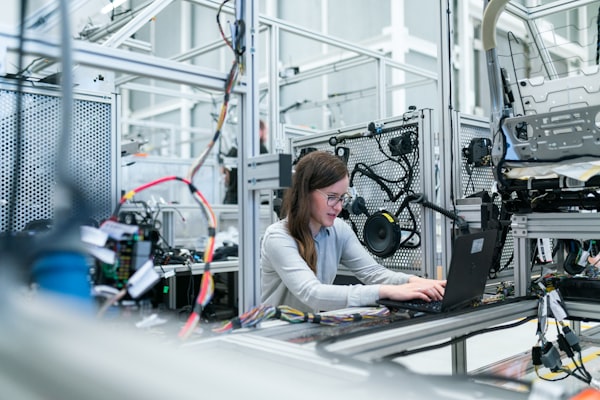 A diverse array of sensors provides different types of data for robot perception.
Understanding the Core Sensor Categories
Before diving into specific sensors, it's helpful to categorize them by what they primarily measure. For navigation, we generally focus on three main types:
Each category has its strengths and weaknesses, and often, the best solution involves a thoughtful combination. For a deeper dive into specific types, check out our guide to distance sensors or our explanation of motion sensors.
Where Will Your Robot Operate? The First Big Decision
The environment your robot will navigate is arguably the most critical factor in sensor selection. Different settings present unique challenges and opportunities for various sensor technologies.
What's your robot's primary operating environment?
Indoors: Precision & Detail are Key
For indoor environments like homes, offices, or warehouses, you'll need sensors that perform well in controlled lighting, can map complex layouts, and detect smaller obstacles. Lidar, depth cameras, and ultrasonic sensors are strong contenders here. GPS is generally unreliable indoors.
Consider a 2D or 3D Lidar for robust mapping and obstacle avoidance, complemented by an IMU for odometry. For very tight spaces or small object detection, ultrasonic sensors can be a cost-effective addition.
Excellent for indoor 2D mapping and obstacle avoidance with a 12-meter range and 5.5 Hz scan rate, ideal for service robots.
Outdoors: Robustness Against Elements & Long Range
Outdoor navigation demands sensors that can handle varying sunlight, rain, dust, and longer detection ranges. GPS becomes highly valuable here for global positioning, often paired with Lidar or radar for local obstacle detection.
High-resolution 3D Lidar or radar is crucial for detecting obstacles like trees, curbs, or other vehicles. Vision cameras can provide rich contextual information, but need robust image processing to handle changing light. An RTK-GPS module offers superior accuracy over standard GPS.
Compact and robust, offering 360° 3D perception up to 100 meters, perfect for outdoor autonomous vehicles and mapping.
Mixed Environments: Versatility is Key
Robots operating in both indoor and outdoor settings require a versatile sensor suite. This often means combining the strengths of both indoor and outdoor sensor types, and implementing sophisticated sensor fusion algorithms to switch or blend data sources.
A common setup might include a 3D Lidar for detailed local mapping, an IMU for continuous odometry, and a robust GPS/RTK system for outdoor global positioning. Vision cameras can add valuable context in both environments, provided they have good dynamic range capabilities.
Key Performance Factors to Consider
Beyond the environment, several technical specifications will guide your sensor choices. Understanding these helps you balance performance with cost and complexity.
Lidar sensors provide precise depth information by emitting laser pulses.
Deep Dive: Distance Sensors for Obstacle Avoidance
Distance sensors are your robot's primary tool for understanding its immediate surroundings and avoiding collisions. They measure the distance to objects in their path, providing crucial data for safe navigation.
Common types include:
- Ultrasonic Sensors: Emit sound waves and measure the time it takes for the echo to return. They are affordable, robust against light changes, but have a wider beam angle, leading to less precise object localization.
- Infrared (IR) Sensors: Emit IR light and measure the reflection. They are compact and inexpensive but highly susceptible to ambient light interference and surface reflectivity.
- Lidar (Light Detection and Ranging): Uses pulsed lasers to measure distances. Offers high accuracy, long range, and can create detailed 2D or 3D maps of the environment. Lidar is generally more expensive and can be affected by fog or heavy rain.
- Depth Cameras (e.g., Intel RealSense, Microsoft Azure Kinect): Use structured light or time-of-flight to generate a depth map of the scene. They provide rich 3D data but have a limited range and can struggle in bright sunlight.
Want to compare specific models? Check out our detailed IR vs. Ultrasonic vs. Lidar comparison.
 IMUs combine accelerometers and gyroscopes to track orientation and motion.
Deep Dive: Motion Sensors for Localization & Mapping
Motion sensors are vital for your robot to understand its own movement, orientation, and position within an environment. This self-awareness is critical for tasks like odometry (estimating position based on wheel rotations) and SLAM (Simultaneous Localization and Mapping).
Key motion sensor types include:
- Encoders: Attached to motors or wheels, they measure rotation, providing data for odometry. They are highly accurate for relative movement but prone to cumulative error over long distances or slippery surfaces.
- Inertial Measurement Units (IMUs): Typically combine accelerometers (measure linear acceleration), gyroscopes (measure angular velocity), and sometimes magnetometers (measure magnetic field for heading). IMUs provide high-frequency data on orientation and short-term movement, crucial for stabilizing robots and correcting odometry drift.
- GPS (Global Positioning System): Provides global coordinates outdoors. Standard GPS has an accuracy of a few meters, while RTK-GPS (Real-Time Kinematic) can achieve centimeter-level accuracy with a base station.
- Wheel Odometry: While not a sensor itself, it's a technique that uses wheel encoders to estimate a robot's position and orientation. It's simple and effective for short distances but accumulates error.
For more on how these sensors help your robot understand its movement, explore our guide to motion sensors.
Vision sensors provide rich contextual data, enabling advanced perception tasks.
Deep Dive: Vision Sensors for Advanced Perception
Vision sensors, primarily cameras, offer the richest data stream for a robot, enabling complex tasks beyond simple obstacle avoidance. They are crucial for object recognition, semantic mapping (understanding what objects are in the environment), and advanced human-robot interaction.
Types of vision sensors:
- Monocular Cameras: Standard 2D cameras, providing color or grayscale images. Excellent for object detection, recognition, and visual odometry when combined with sophisticated algorithms.
- Stereo Cameras: Two cameras spaced apart, mimicking human binocular vision. They can calculate depth information by comparing the two images, similar to how our brains perceive 3D.
- Thermal Cameras: Detect infrared radiation (heat) emitted by objects. Useful for seeing in low light or fog, detecting living beings, or identifying heat sources.
- Event Cameras: A newer technology that only records changes in pixel intensity, making them very fast and efficient for detecting motion.
While vision sensors provide unparalleled detail, they require significant computational power for processing and are highly sensitive to lighting conditions. Robust algorithms are essential to extract meaningful information reliably.
Advanced Perception Requirements Checklist
0 of 4 completedSensor Fusion: The Power of Combining Data
No single sensor is perfect. Each has its limitations. The magic happens when you combine their strengths through a process called sensor fusion. By integrating data from multiple, diverse sensors, your robot can achieve a more comprehensive, robust, and reliable understanding of its environment and its own state.
"Sensor fusion isn't just about adding more sensors; it's about intelligently combining their complementary data to overcome individual weaknesses. It's how we build truly resilient autonomous systems."
— Dr. Anya Sharma, Lead Robotics Engineer, iBuyRobotics R&D
Putting It All Together: Common Navigation Scenarios
Let's look at how different sensor combinations are typically chosen for various robot navigation tasks.
| Scenario | Primary Goal | Recommended Sensor Suite | Why This Combination? |
|---|---|---|---|
| Simple Indoor Obstacle Avoidance (e.g., vacuum robot) | Avoid collisions, navigate basic layouts | Ultrasonic/IR array, Wheel Encoders | Cost-effective, simple to implement. Encoders for odometry, ultrasonic/IR for close-range obstacle detection. |
| Indoor Mapping & Navigation (e.g., delivery robot in office) | Build maps, localize within maps, avoid dynamic obstacles | 2D Lidar, IMU, Wheel Encoders, (Optional: Depth Camera) | Lidar for accurate mapping and long-range obstacle detection. IMU/Encoders for robust odometry. Depth camera for richer object data. |
| Outdoor Autonomous Driving (e.g., agricultural robot) | Precise global positioning, detect diverse obstacles, path planning | RTK-GPS, 3D Lidar, Radar, IMU, Stereo Cameras | RTK-GPS for high-accuracy global position. Lidar/Radar for robust obstacle detection in varying conditions. IMU for motion tracking. Cameras for semantic understanding. |
| Complex Human-Robot Interaction (e.g., companion robot) | Understand human presence, gestures, and environment | Depth Camera, Microphone Array, IMU, Force/Touch Sensors | Depth camera for human tracking and gesture recognition. Microphones for voice commands. IMU for self-motion. Force/touch for safe physical interaction. |
Ready to Choose? Your Interactive Decision Path
Let's walk through a structured process to help you pinpoint the ideal sensor combination for your specific robot project. Follow these steps to narrow down your options.
What's Your Robot's Primary Navigation Goal?
What is the most important task your robot needs to accomplish regarding navigation?
Describe Your Robot's Operating Environment
Where will your robot spend most of its time?
What's Your Budget & Complexity Tolerance?
Consider both the financial cost and the complexity of integration and programming.
Your Recommended Sensor Combinations
Based on your choices, here are some sensor recommendations:
- Goal: Obstacle Avoidance, Environment: Indoor, Budget: Low: Ultrasonic sensors (HC-SR04) for basic detection, IR sensors for close-range. Simple wheel encoders for odometry.
- Goal: Localization & Tracking, Environment: Outdoor, Budget: Medium: Standard GPS for global position, IMU for orientation, wheel encoders for local odometry.
- Goal: Mapping & SLAM, Environment: Indoor, Budget: High: 2D Lidar (e.g., RPLIDAR), high-quality IMU, wheel encoders. Consider a depth camera for richer 3D data.
- Goal: Advanced Perception, Environment: Mixed, Budget: High: 3D Lidar (e.g., Velodyne Puck), RTK-GPS, high-end IMU, Stereo/Depth Cameras. This enables robust SLAM, object recognition, and precise navigation.
- (More specific recommendations would appear here based on actual choices, requiring JavaScript logic to dynamically generate.)
This is a starting point. For a more detailed, personalized recommendation, try our Interactive Sensor Selection Calculator!
Where to Go Next in Your Robotics Journey?
Choosing the right sensors is a significant step, but it's just one piece of the puzzle. Continue your learning with these related guides and tools:
Sensor Selection Calculator
Use our advanced tool to get tailored sensor recommendations based on your project's specific parameters.
Launch Calculator →Your Robot Perception Capstone
Ready for a challenge? Apply your knowledge to a comprehensive project building a perception system.
Start Capstone →Making Sense of Sensor Data
Learn the basics of processing and interpreting the raw data from your robot's sensors.
Read Tutorial →