

What Key Areas Should You Consider?
Application & Purpose
Understanding what tasks your humanoid will perform is the first step. This dictates everything from mobility to sensor requirements.
Hardware & Mechanics
From robust actuators to durable chassis materials, the physical build determines a robot's strength, agility, and longevity.
Software & Intelligence
The robot's 'brain' – its operating system, AI capabilities, and programming interfaces – defines how it perceives, learns, and interacts.
Cost & Support
Beyond the initial purchase, consider maintenance, software updates, and the availability of technical support and community resources.
 Advanced humanoid robots are designed for complex interactions and tasks.
Why Is Defining Your Humanoid's Role So Important?
Before diving into technical specifications, it's crucial to clearly define the primary purpose and intended applications for your humanoid robot. Will it be a research platform, an educational tool, a service assistant, or something else entirely? The answer to this question will guide every subsequent decision, from its size and mobility to its sensor suite and processing power.
A robot designed for delicate manipulation in a lab will have vastly different requirements than one built for robust navigation in a public space. Thinking through real-world scenarios helps prioritize features and avoid overspending on capabilities you won't use, or underspending on critical functions. For a deeper dive into what humanoids can do, explore our guide on What Can Humanoid Robots Do Today? Real-World Applications.
What Do You Need Your Humanoid To Do?
Use this interactive checklist to clarify your primary requirements. Checking these boxes will help narrow down your options significantly.
Your Humanoid Requirements Checklist
0 of 7 completed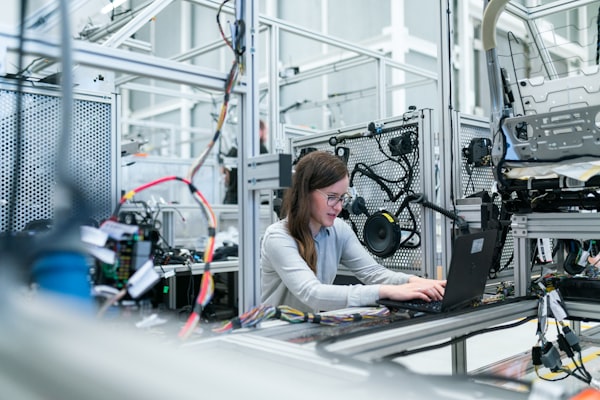 The internal mechanics, especially actuators, define a robot's strength and precision.
What Hardware Specifications Really Matter?
The physical components of a humanoid robot are its foundation. Key hardware considerations include the number of Degrees of Freedom (DoF), the type of actuators, sensor arrays, and the overall build quality. These elements directly impact the robot's ability to move, interact with its environment, and perform tasks reliably.
For instance, a higher DoF generally means more agile and human-like movement, crucial for complex manipulation or expressive gestures. Actuator choice affects speed, torque, and precision. Understanding these core components is vital for matching the robot to your application. You can learn more about these fundamental parts in our guide to Understanding Robot Anatomy: Joints, Sensors, & Brains.
Comparing Actuator Technologies
Actuators are the 'muscles' of your humanoid. Different types offer distinct advantages and disadvantages in terms of power, precision, and cost.
Electric Servo Motors: Precision & Control
Electric servo motors are the most common choice for humanoid robots due to their excellent precision, control, and relatively compact size. They offer good torque-to-weight ratios and are highly programmable, making them ideal for intricate movements and dynamic balancing. However, they can be less powerful than hydraulic systems for very heavy loads and may generate heat during continuous high-load operation.
- Pros: High precision, good control, energy efficient, relatively quiet.
- Cons: Lower power density than hydraulics, can overheat under sustained heavy load.
- Best For: General purpose humanoids, research, education, delicate manipulation.
Hydraulic Actuators: Raw Power & Strength
Hydraulic actuators use incompressible fluid to generate immense force, making them suitable for heavy-duty applications where strength and high power density are paramount. Robots like Boston Dynamics' Atlas utilize hydraulics for their incredible dynamic movements and ability to handle significant impacts. The trade-off is increased complexity, weight, potential for leaks, and higher maintenance requirements.
- Pros: Extremely high power and force, excellent dynamic response.
- Cons: Complex, heavy, potential for leaks, higher maintenance, noisy.
- Best For: Industrial tasks, heavy lifting, highly dynamic and robust movements.
Pneumatic Actuators: Speed & Simplicity
Pneumatic actuators operate using compressed air, offering fast response times and a simpler design compared to hydraulics. They are often lighter and can be very cost-effective. However, they typically provide less precise control than electric servos and lower force than hydraulics, making them less common for the primary joints of advanced humanoids, but useful for grippers or simpler movements.
- Pros: Fast, lightweight, simple design, cost-effective.
- Cons: Less precise control, lower force output, requires air compressor.
- Best For: Simple, fast movements, grippers, educational kits.
 The robot's software and AI are its 'brain,' enabling perception and decision-making.
How Smart Does Your Humanoid Need To Be? Software & AI Capabilities
Beyond the physical form, a humanoid robot's intelligence is defined by its software and AI. This includes its operating system (often ROS - Robot Operating System), perception algorithms, navigation capabilities, and human-robot interaction (HRI) frameworks. The level of autonomy, learning capabilities, and ease of programming are critical factors.
Do you need advanced machine learning for object recognition, natural language processing for conversation, or complex path planning for dynamic environments? Consider the available APIs, SDKs, and community support for development. A robust software ecosystem can significantly accelerate your project. For more on how robots perceive their world, check out How Do Humanoid Robots Sense and Act?
Ideal for those prioritizing software development and AI research, featuring an open-source ROS-compatible platform and extensive SDKs.
Key Performance Metrics to Watch
What's Your Primary Humanoid Application?
Different applications demand different feature sets. Use this decision tool to get tailored recommendations.
What's the main goal for your humanoid robot?
For Research & Development:
Prioritize high Degrees of Freedom, open-source software (like ROS), extensive sensor arrays, and robust APIs for custom programming. Look for models with modular designs for easy upgrades and experimentation. High payload capacity and dynamic balancing are often key. Consider the DIY vs. Pre-Built framework for maximum customization.
For Education & Learning:
Focus on ease of programming, clear documentation, and safety features. A balance of mobility and manipulation is good, but extreme performance isn't usually necessary. Cost-effectiveness and a strong community for support are also beneficial. Models with visual programming interfaces can be great for beginners.
For Service & Assistance:
Emphasis should be on reliable navigation, human-robot interaction capabilities (voice, facial recognition), long battery life, and a friendly, non-threatening appearance. Durability and ease of maintenance are also important for continuous operation in public or semi-public environments.
For Entertainment & Interaction:
Focus on expressive movements (high DoF in upper body/head), engaging HRI, and aesthetic design. While robust mechanics are good, the primary goal is captivating interaction rather than heavy-duty task performance. Programmable gestures and sound are often key.
What Sensors Are Essential for Humanoid Robots?
Sensors are the robot's eyes, ears, and touch. A comprehensive sensor suite allows a humanoid to perceive and interact intelligently with its environment.
 Battery capacity and power management are crucial for a robot's operational endurance.
How Long Can Your Humanoid Operate? Power & Endurance
A humanoid robot is only as useful as its operational uptime. Battery life, charging time, and power management systems are critical, especially for mobile applications. Consider the energy demands of its actuators, sensors, and onboard processing. Some advanced humanoids can even perform 'hot swaps' of batteries to minimize downtime.
For applications requiring continuous operation, look into robots with efficient power consumption profiles or options for external power sources. The balance between battery capacity (and thus weight) and desired operating time is a key design challenge. For a comprehensive look at costs, including operational expenses, visit our Humanoid Robot Cost Calculator.
Engineered for extended operational periods, featuring high-capacity swappable battery packs and optimized power management for continuous tasks.
What Does 'Degrees of Freedom' Really Mean?
Degrees of Freedom (DoF) is a fundamental concept in robotics, directly impacting a humanoid's dexterity and range of motion.
In robotics, a Degree of Freedom (DoF) refers to an independent parameter that defines the state of a robot's configuration. Essentially, it's the number of independent ways a robot can move. For a humanoid, this typically refers to the number of joints it has that can move independently.
A human arm, for example, has many DoF: shoulder (3 DoF for rotation), elbow (1 DoF for flexion/extension), wrist (2-3 DoF for flexion/extension and rotation), and fingers (multiple DoF). A humanoid robot with 20-30 DoF can perform a wide range of movements, from walking and balancing to grasping objects and expressing gestures. More DoF generally means greater dexterity and human-like movement, but also increased complexity in control and higher cost.
Consider a robot's DoF in relation to its intended tasks. If it needs to pick up objects from various angles, a high DoF in its arms and hands is crucial. If it primarily navigates and interacts verbally, fewer DoF might be acceptable. For more on how these movements are achieved, see How Do Humanoid Robots Actually Move and Interact?
Quick Check: Humanoid Power
Test your understanding of power sources for humanoid robots.
Which actuator type is generally preferred for high-precision, delicate manipulation in humanoid robots?
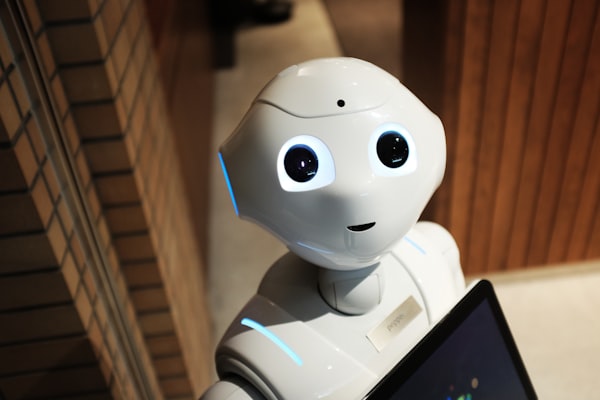 Safety protocols and robust design are paramount for human-robot coexistence.
Are Humanoid Robots Safe? Considering Safety & Compliance
Safety is a non-negotiable feature, especially for humanoids intended to operate alongside people. Look for robots designed with inherent safety mechanisms, such as force-limited joints, emergency stop buttons, and collision detection systems. Compliance with relevant safety standards (e.g., ISO 13482 for personal care robots) is also a strong indicator of a well-engineered and safe product.
Beyond physical safety, consider data privacy and ethical implications, particularly for robots with advanced AI and data collection capabilities. A reputable manufacturer will provide clear documentation on safety features and operational guidelines. For a deeper dive into this crucial topic, read our article: Are Humanoid Robots Safe? Addressing Common Concerns.
Built with advanced safety features, including force-feedback joints and integrated emergency protocols, ideal for collaborative environments.
Ready to Explore Further?
Choosing the right humanoid robot is a significant investment. By carefully considering your application, hardware needs, software requirements, and safety features, you'll be well-equipped to make an informed decision. Don't hesitate to compare models and consult with experts.