

What Will We Explore About Humanoid Safety?
The idea of intelligent machines sharing our spaces brings up important questions. At iBuyRobotics, we believe in transparency and education. This guide will help you understand the core principles that make modern humanoid robots safe, secure, and ethically sound companions.
Physical Interaction Safety
How robots are engineered with soft materials, collision detection, and emergency protocols to protect humans in shared environments.
Data Privacy & Security
Understanding how humanoid robots collect, process, and protect your personal data, from visual input to voice commands.
Ethical Design & Use
Exploring the moral frameworks and guidelines that govern the development and deployment of intelligent humanoid systems.
Future Integration & Trust
How ongoing research and community involvement are shaping a future where humanoids are trusted, beneficial members of society.
 Modern humanoid robots are designed with rounded edges and compliant materials to minimize injury risk.
How Are Humanoid Robots Designed to Be Physically Safe?
Physical safety is paramount in humanoid robot design, especially as they move from controlled industrial settings to shared human environments. Engineers focus on several key areas to ensure safe interaction. This includes the choice of materials, the mechanics of movement, and sophisticated sensor systems that act as the robot's 'eyes' and 'skin'.
Many modern humanoids incorporate compliant (flexible) materials and rounded edges to reduce the impact force in case of accidental contact. Beyond physical form, advanced software plays a critical role, enabling robots to detect and react to their surroundings in real-time, preventing collisions before they happen.
Emergency stop (E-stop) systems are a fundamental safety feature in all industrial and many personal robots. They are typically hardware-based, meaning they operate independently of the robot's main control software. When activated, an E-stop immediately cuts power to the robot's motors, bringing it to a complete halt. This can be triggered by a physical button, a safety sensor detecting an intrusion into a hazardous zone, or even a software anomaly that exceeds predefined safety parameters. The goal is to ensure the robot ceases all motion instantly, preventing potential harm.
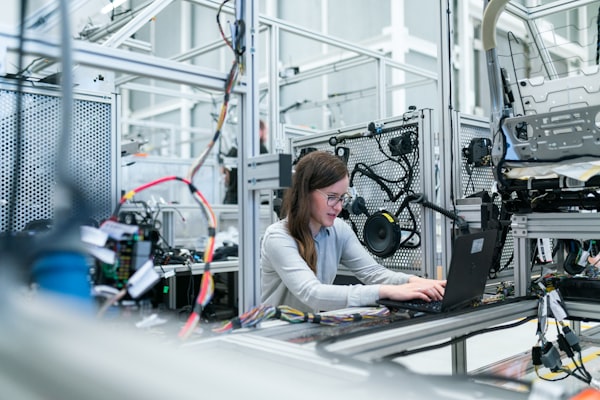 Data encryption and local processing are key to protecting user privacy in humanoid robots.
What About My Privacy and Data Security with Humanoids?
Humanoid robots, equipped with cameras, microphones, and various sensors, interact with their environment and, by extension, with you. This raises valid questions about data collection and privacy. Reputable manufacturers prioritize privacy by design, implementing measures like anonymization, encryption, and local data processing to minimize risks.
Many robots are designed to process sensitive data on the device itself, reducing the need to send it to cloud servers. When cloud processing is necessary, data is typically anonymized and encrypted. Users also have control over what data is collected and shared, often through clear consent mechanisms and privacy settings. Understanding these features is crucial for feeling secure with your robot companion.
Does my humanoid robot record everything it sees and hears?
Not typically. Most humanoid robots are designed to process sensory input for specific tasks (e.g., navigation, object recognition, voice command interpretation) rather than continuous, raw recording. Any data that is stored is usually anonymized or aggregated, and explicit consent is required for any personal data collection. Always check your robot's privacy settings and user manual for specifics.
Who owns the data collected by my robot?
Generally, you, the user, retain ownership of your personal data. Robot manufacturers act as data processors and are bound by privacy laws (like GDPR or CCPA) to protect it. They typically use data to improve robot performance, provide services, or for research, but always under strict privacy protocols. Reviewing the manufacturer's privacy policy is always recommended.
Can my robot be hacked?
Like any internet-connected device, a robot can theoretically be vulnerable to cyber threats. However, reputable manufacturers employ robust cybersecurity measures, including encryption, secure boot processes, and regular software updates to patch vulnerabilities. Keeping your robot's software up-to-date and using strong network security practices significantly reduces this risk.
What Are the Ethical Considerations for Humanoid Robots?
Beyond physical safety and data privacy, the integration of humanoid robots into society raises profound ethical questions. These range from potential impacts on employment and social interaction to the very definition of companionship and responsibility. Addressing these concerns proactively is vital for responsible development.
Key ethical discussions revolve around accountability (who is responsible when a robot makes a mistake?), bias in AI algorithms, and the potential for over-reliance or emotional attachment. Organizations like the IEEE and various national bodies are actively developing ethical guidelines and standards to navigate these complex issues. For a deeper dive, explore our dedicated page on Ethical AI: What Should We Consider with Humanoid Robots?
Your Responsible Humanoid Ownership Checklist
0 of 4 completed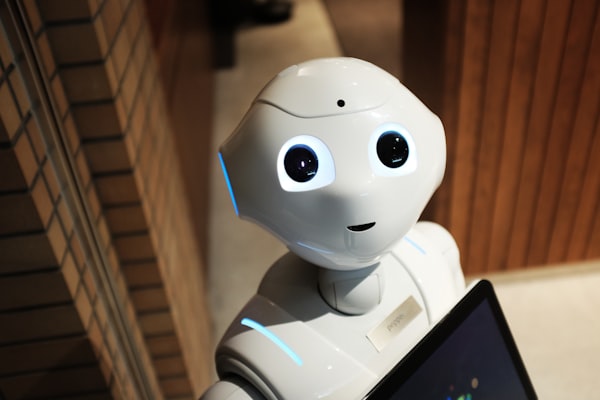 Humanoid robots are increasingly deployed safely in controlled environments like healthcare and logistics.
Are There Real-World Examples of Safe Humanoid Use?
Absolutely. Humanoid robots are already making a positive impact in various sectors, demonstrating their safety and utility in practical applications. In manufacturing, collaborative robots (cobots) work alongside humans, equipped with advanced sensors that halt operation if a human enters their workspace. In healthcare, humanoids assist with patient monitoring, logistics, and even companionship, operating under strict safety protocols.
Educational institutions use humanoids to teach programming and robotics, providing hands-on experience in a controlled and safe environment. These deployments are often guided by international safety standards, such as ISO 13482 for personal care robots, which outlines requirements for safe design and risk assessment. These standards ensure that robots are rigorously tested and certified before interacting with the public.
Which of these is a key principle for humanoid robot physical safety?
How Does iBuyRobotics Ensure Safety and Trust?
At iBuyRobotics, safety isn't just a feature; it's a foundational principle embedded in every stage of our robot development and deployment. We are committed to providing reliable, secure, and ethically designed humanoid solutions.
Engineered with advanced collision avoidance, redundant safety systems, and robust data encryption, the Guardian Series is designed for maximum safety in shared environments.
What Are Common Misconceptions About Robot Safety?
Media portrayals often fuel anxieties about robots, depicting scenarios far removed from current reality. It's important to distinguish between science fiction and the carefully engineered, purpose-driven machines available today. Humanoid robots are not autonomous entities with their own will; they operate based on complex programming and predefined parameters, always with human oversight.
Concerns about robots 'taking over' or becoming uncontrollable are largely unfounded in the context of current technology. Modern robotics development is heavily focused on human-robot collaboration and augmentation, not replacement or domination. Safety protocols, ethical guidelines, and legal frameworks are continuously evolving to ensure that robots remain tools that serve humanity, not masters.
What's Next for Safe Humanoid Integration?
The field of humanoid robotics is rapidly advancing, with continuous innovation aimed at enhancing safety, privacy, and ethical integration. Future developments will likely focus on even more sophisticated AI ethics, explainable AI, and adaptive safety systems that learn and adjust to dynamic environments.
Ready to Explore More About Humanoid Robots?
Understanding the safety and ethical landscape of humanoid robots is just the beginning. Dive deeper into the world of humanoids with our comprehensive learning resources.
Further Reading