

What Will We Explore Together?
Ancient Dreams & Early Automata
Uncover the earliest human desires to create artificial beings, from mythical legends to the first mechanical wonders that mimicked life.
Science Fiction's Powerful Influence
See how authors and filmmakers shaped our perception of robots, inspiring generations of engineers and scientists.
Pioneers & Breakthroughs
Meet the brilliant minds and groundbreaking machines that transformed theoretical concepts into tangible robotic systems.
The Modern Humanoid Era
Understand the current state of humanoid robotics, their incredible capabilities, and the exciting challenges ahead.
 Early concepts of artificial beings often blurred the lines between myth and mechanical ingenuity.
Where Did the Idea of Human-Like Machines Begin?
The dream of creating artificial beings that resemble humans is as old as civilization itself. Long before silicon chips and servo motors, ancient myths and legends spoke of automatons imbued with life. Think of Talos, the giant bronze protector of Crete in Greek mythology, or the clay Golem of Jewish folklore. These stories reflect a deep-seated human fascination with replicating ourselves.
As early as the 3rd century BC, engineers like Hero of Alexandria designed intricate mechanical devices, often powered by steam or hydraulics, that could perform simple actions. Fast forward to the Renaissance, and figures like Leonardo da Vinci sketched designs for a mechanical knight, capable of sitting up, waving its arms, and moving its jaw. These weren't robots in the modern sense, but they were crucial steps in imagining and attempting to build machines that mimicked human form and function.
One of the most famous early automatons was "The Turk," a chess-playing machine unveiled in 1770 by Wolfgang von Kempelen. It toured Europe for decades, defeating notable opponents like Napoleon Bonaparte and Benjamin Franklin. While incredibly sophisticated for its time, it was eventually revealed to be an elaborate hoax, with a human chess master cleverly hidden inside. "The Turk" highlights the enduring human desire for intelligent machines, even if the technology wasn't quite there yet.
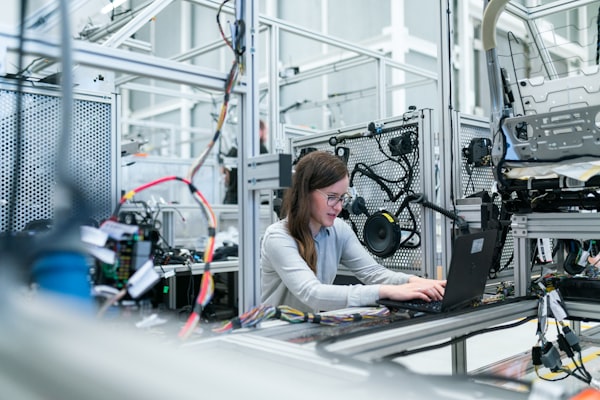 Science fiction played a pivotal role in popularizing the concept of robots and shaping public imagination.
How Did Science Fiction Shape Our Robot Dreams?
The 20th century brought the term "robot" into our vocabulary, thanks to Czech playwright Karel Čapek. In his 1920 play R.U.R. (Rossum's Universal Robots), he introduced the word "robot" (derived from the Czech word "robota," meaning forced labor or drudgery) to describe artificial human-like workers. This play not only coined the term but also explored the complex ethical implications of creating sentient machines, themes that resonate deeply even today.
Later, science fiction grandmaster Isaac Asimov further cemented robots in popular culture. His short stories, starting in the 1940s, introduced the "Three Laws of Robotics," a set of ethical guidelines designed to prevent robots from harming humans. While fictional, these laws have profoundly influenced real-world discussions about AI ethics and safety. Asimov's work moved robots beyond mere mechanical servants, portraying them as complex characters capable of thought, loyalty, and even moral dilemmas.
Who Were the Early Pioneers in Building Real Humanoids?
The mid-20th century marked a significant shift from fictional robots to tangible, albeit rudimentary, machines. Researchers began to tackle the immense engineering challenges of creating robots that could move and interact with the world.
Which play first introduced the term "robot" to the world?
What Were the Major Milestones in Humanoid Robot Development?
The journey of humanoid robots is marked by continuous innovation, with each generation building upon the last. Here's a look at some pivotal moments and influential robots:
| Robot Model | Year Introduced | Key Breakthrough | Impact & Significance |
|---|---|---|---|
| WABOT-1 | 1973 | First full-scale humanoid robot capable of bipedal locomotion, vision, and speech. | Demonstrated the feasibility of complex human-like robotics, inspiring future research in Japan and globally. |
| ASIMO (Honda) | 2000 | Advanced bipedal walking, running, stair climbing, and sophisticated human interaction. | Became a global icon for humanoid robotics, showcasing fluid motion and practical assistance capabilities. |
| Atlas (Boston Dynamics) | 2013 (initial), 2016 (hydraulic), 2020 (electric) | Unprecedented dynamic balance, agility, and complex manipulation in unstructured environments. | Pushed the boundaries of robust, dynamic locomotion and manipulation, often seen performing parkour. |
| Sophia (Hanson Robotics) | 2016 | Realistic facial expressions, AI-driven conversation, and social interaction capabilities. | Sparked public debate on AI sentience and the role of social robots, becoming a media personality. |
Start your own journey into robotics with a kit designed for learning fundamental principles of movement and programming, inspired by these historical breakthroughs.
Why Does This History Matter for Today's Robots?
Understanding the past helps us appreciate the incredible progress and anticipate the future of humanoid robotics. Here are some impactful numbers:
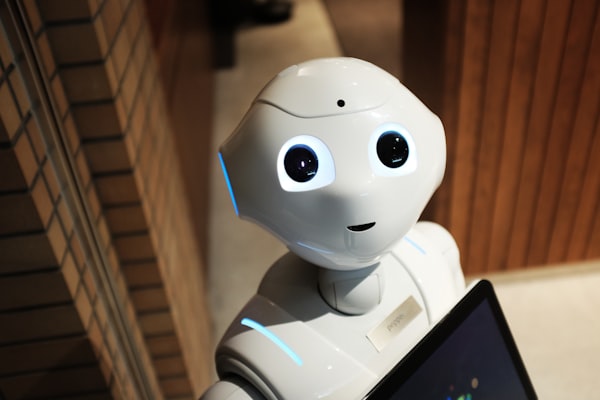 Today's humanoids are capable of complex tasks, from dynamic movement to nuanced social interaction.
What Can Modern Humanoids Do, and What Challenges Remain?
Today's humanoid robots are a far cry from their early ancestors. Robots like Boston Dynamics' Atlas can perform incredible feats of agility, balance, and manipulation, navigating complex terrains and even performing parkour. Others, like Hanson Robotics' Sophia, focus on social interaction, using advanced AI to engage in conversations and display realistic facial expressions. These advancements are driven by breakthroughs in artificial intelligence, machine learning, sensor technology, and advanced materials.
However, significant challenges persist. Achieving truly human-level dexterity, especially in unstructured environments, remains a hurdle. Power sources and battery life are critical limitations for extended operation. The cost of developing and manufacturing advanced humanoids is still high, limiting widespread adoption. Furthermore, as humanoids become more capable, ethical considerations around their integration into society, job displacement, and potential for autonomous decision-making become increasingly important. You can dive deeper into these topics in our guide: What Exactly Are Humanoid Robots & Why Do They Matter? and explore Ethical AI: What Should We Consider with Humanoid Robots?
What Does the Future Hold for Humanoid Robots?
The trajectory of humanoid robotics points towards an exciting future. We can anticipate robots becoming even more agile, intelligent, and integrated into our daily lives. Imagine humanoids assisting in elder care, performing dangerous tasks in disaster zones, or even serving as companions in our homes. Advances in soft robotics, more efficient power systems, and increasingly sophisticated AI will continue to blur the lines between science fiction and reality.
The next decade will likely see humanoids move beyond research labs and into more practical, widespread applications. The focus will shift towards making them more affordable, robust, and user-friendly, enabling a new era of human-robot collaboration.
Future Humanoid Features You'd Like to See
0 of 4 completedExplore the cutting edge with a platform designed for researchers and developers pushing the boundaries of AI, locomotion, and human-robot interaction.
Which company is famous for its highly dynamic and agile humanoid robot, Atlas?
Ready to Learn More About Humanoid Robots?
The history of humanoids is just the beginning. Dive deeper into the world of human-like machines with our related guides and articles:
What Exactly Are Humanoid Robots & Why Do They Matter?
Get a foundational understanding of what defines a humanoid robot and their significance.
Explore Now →What Can Humanoid Robots Do Today? Real-World Applications
Discover the practical uses and exciting applications of humanoids across various industries.
See Applications →How Do Humanoid Robots Actually Move and Interact?
Unpack the engineering marvels behind bipedal locomotion, balance, and interaction systems.
Understand Movement →Further Reading