

What Exactly Are Humanoid Robots?
Humanoid robots are machines designed to resemble the human body, often with a torso, head, two arms, and two legs. Their form factor isn't just for aesthetics; it's about enabling them to operate in environments built for humans, using tools and navigating spaces just like we do. From walking and grasping to communicating and learning, these robots are engineered to mimic human capabilities, opening up a vast array of possibilities for their application.
Human-like Form
Designed to navigate and interact with environments built for people, making them versatile for various tasks.
Advanced AI & Sensors
Equipped with sophisticated AI for learning, decision-making, and a suite of sensors for perceiving their surroundings.
Complex Mobility
Capable of bipedal locomotion, intricate grasping, and dynamic balancing, mimicking human movement patterns.
Adaptive Interaction
Designed for safe and intuitive interaction with humans, learning from feedback and adapting to new situations.
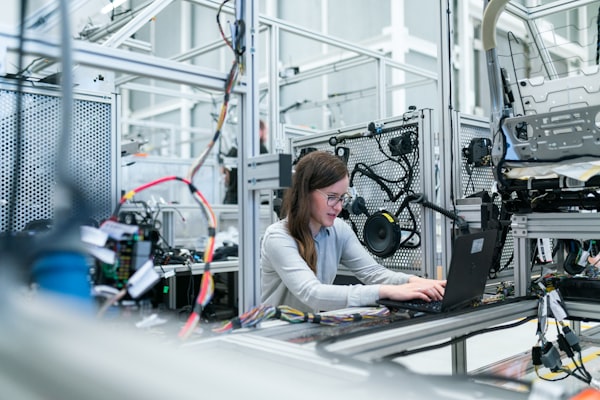 Modern humanoid robots are designed for intricate tasks, showcasing advanced dexterity.
Why Do Humanoid Robots Matter to Us?
The development of humanoid robots isn't just a technological marvel; it's a step towards a future where intelligent machines can seamlessly integrate into our daily lives. They hold the promise of assisting in dangerous or repetitive tasks, providing companionship, aiding in education, and even exploring environments too hazardous for humans. Their human-like form allows for intuitive interaction and the potential to use existing infrastructure, making their integration smoother than other robotic forms.
Understanding their capabilities and limitations is crucial as we navigate this evolving landscape. From manufacturing floors to elder care, humanoids are poised to redefine how we work, live, and interact with technology.
The long-term vision for humanoid robots extends beyond simple task execution. Researchers and engineers aim for robots that can truly understand context, adapt to unforeseen circumstances, and even exhibit a form of social intelligence. This involves breakthroughs in areas like natural language processing, emotional recognition, and ethical decision-making, pushing the boundaries of what AI can achieve. The goal is not to replace humans, but to augment our capabilities and create a more efficient, safer, and perhaps even more connected world.
What Can Humanoid Robots Do Today?
While the ultimate vision for humanoids is still unfolding, their current capabilities are already impressive and diverse. They are moving beyond research labs into practical applications, demonstrating their value across various sectors.
Want to see more examples? Explore our detailed guide on What Can Humanoid Robots Do Today? Real-World Applications.
Which of these is NOT a primary reason for designing robots with a humanoid form?
 The complex internal systems of a humanoid robot, combining electronics and mechanics.
How Do Humanoid Robots Actually Work?
Beneath their human-like exterior, humanoid robots are marvels of engineering, integrating sophisticated hardware with advanced software. Their ability to move, perceive, and make decisions relies on a complex interplay of components. Understanding these core systems helps demystify how they achieve their impressive feats.
From the motors that power their joints to the sensors that act as their eyes and ears, every part plays a critical role. The 'brain' of the robot, often a powerful onboard computer, processes all this information, enabling it to execute tasks and learn from its environment. For a deeper dive into the mechanics, check out How Do Humanoid Robots Actually Move and Interact?
How Do They Move?
Humanoid robots achieve bipedal walking and complex arm movements through a network of powerful actuators (motors) and intricate joint designs. Advanced control algorithms manage balance, gait, and force distribution, allowing them to navigate uneven terrain and perform delicate manipulations. This is often supported by gyroscopes and accelerometers, similar to those in your smartphone, to maintain stability.
How Do They Perceive the World?
Equipped with an array of sensors, humanoids gather data about their surroundings. Cameras provide vision, lidar and radar offer depth perception and obstacle detection, while tactile sensors on their hands allow for delicate gripping. Microphones enable auditory perception, and force sensors in their feet help them maintain balance and understand ground contact. This sensory input is continuously fed to the robot's central processing unit.
How Do They Make Decisions?
The 'brain' of a humanoid robot is its onboard computer system, running sophisticated AI and control software. This software interprets sensor data, plans movements, and executes tasks. Machine learning algorithms allow them to adapt to new situations, learn from experience, and even understand human commands and gestures. Real-time processing is critical for dynamic tasks like walking or interacting with moving objects.
The Impact of Humanoids: A Glimpse into the Future
The potential impact of humanoid robots is vast, touching upon various aspects of society and industry. Here are some key areas where they are expected to make a significant difference:
Choosing Your Humanoid: Where Do You Start?
Considering a humanoid robot for research, education, or even personal projects? The options can seem overwhelming. It's essential to define your primary goals and budget before diving into specific models. Different humanoids excel in different areas, from highly agile research platforms to more accessible educational kits.
What's your primary interest in humanoid robots?
For Advanced Research:
You'll need a highly programmable, robust platform with open-source capabilities and extensive sensor integration. Look for models with advanced SDKs and strong community support for complex algorithm development. Consider platforms like the iBuyRobotics 'Sentinel' series for unparalleled flexibility and performance.
An advanced research platform with modular design, high-torque actuators, and open-source software for cutting-edge development.
For STEM Education:
Focus on user-friendly interfaces, clear documentation, and curriculum-ready resources. Durability and safety are also key. Educational humanoids often come with visual programming tools to engage students of all levels. The iBuyRobotics 'Pathfinder' series is an excellent starting point.
Designed for classrooms, this kit offers easy assembly, block-based programming, and comprehensive lesson plans for robotics education.
For Personal Projects/Hobbies:
Consider DIY kits or entry-level pre-built models that offer a balance of functionality and affordability. Look for good online communities and tutorials. These are great for learning the basics of robotics and programming without a massive initial investment. Our 'Explorer' series is perfect for enthusiasts.
A compact, affordable humanoid kit ideal for hobbyists and beginners to explore robotics and programming fundamentals.
For a more in-depth guide, visit our page on Choosing Your Humanoid: What Features Should You Look For?
Addressing Common Questions & Concerns
As humanoid robots become more prevalent, it's natural to have questions and even some concerns. Transparency and education are key to understanding their role in our future. Here, we tackle some frequently asked questions.
Are humanoid robots safe to be around?
Safety is a paramount concern in humanoid robot design. Modern humanoids incorporate numerous safety features, including soft materials, force-sensing skin, and advanced collision avoidance systems. They are programmed to operate within defined safety parameters and often have emergency stop functions. For more details, see Are Humanoid Robots Safe? Addressing Common Concerns.
Will humanoid robots take our jobs?
Historically, new technologies have always shifted job markets rather than simply eliminating jobs. Humanoid robots are expected to automate repetitive, dangerous, or physically demanding tasks, freeing humans to focus on roles requiring creativity, critical thinking, and complex problem-solving. They will also create new jobs in robotics development, maintenance, and supervision.
What are the ethical considerations for humanoid robots?
Ethical considerations are a crucial part of humanoid robot development. These include questions about privacy, accountability, bias in AI, and the psychological impact of human-robot interaction. iBuyRobotics is committed to promoting responsible AI development. Learn more on our Ethical AI: What Should We Consider with Humanoid Robots? page.
Are You Ready for a Humanoid Future?
The journey into the world of humanoid robots is exciting and full of potential. To help you prepare and understand what's next, here's a quick checklist of things to consider as these advanced machines become more integrated into our world.
Your Humanoid Readiness Checklist
0 of 4 completedReady to Dive Deeper? Your Next Steps
This hub page is just the beginning of your exploration into humanoid robots. We've designed a comprehensive learning path to guide you through every aspect, from fundamental concepts to advanced applications and ownership considerations.
Understand the Fundamentals
Start with the basics: what defines a humanoid robot, and what are its core components? This foundational knowledge will set you up for understanding more complex topics.
Recommended Reading: What Exactly Are Humanoid Robots & Why Do They Matter?
Explore Movement & Interaction
Once you grasp the basics, delve into how these incredible machines move, sense, and interact with their environment and with us. This is where the engineering truly shines.
Recommended Reading: How Do Humanoid Robots Actually Move and Interact?
Consider Ownership & Impact
Ready to think about bringing a humanoid into your world? Learn about choosing the right model, understanding costs, and the broader societal implications.
Recommended Reading: Choosing Your Humanoid: What Features Should You Look For?
Continue Your Humanoid Journey
Ready to explore specific aspects of humanoid robotics? Dive into our curated collection of articles and guides:
What Exactly Are Humanoid Robots?
Get a foundational understanding of humanoid design, purpose, and the core technologies that make them possible.
How Do Humanoid Robots Actually Move?
Explore the intricate mechanics, sensors, and algorithms that enable humanoids to walk, balance, and manipulate objects.
Choosing Your Humanoid: What Features?
A practical guide to selecting the right humanoid robot based on your project, budget, and technical requirements.
Further Reading