

What You'll Discover in This Guide
Define Your Purpose
Understand how your intended use case — from research to personal assistance — dictates the ideal robot specifications.
Compare Key Specifications
Get a clear breakdown of critical features like mobility, dexterity, sensor arrays, and processing power across different models.
Evaluate Cost vs. Value
Learn to assess the true cost of ownership, balancing initial investment with long-term capabilities and potential upgrades.
Make an Informed Choice
Utilize interactive tools and expert insights to confidently select the humanoid robot that best aligns with your goals.
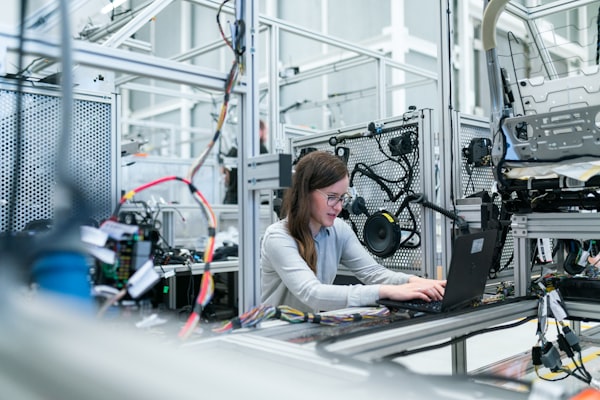 Defining your robot's role is the first step in a successful comparison.
What's Your Humanoid Robot's Mission?
Before diving into technical specifications, the most crucial step is to clearly define the primary purpose of your humanoid robot. Are you looking for a research platform, an educational tool, a companion, or an industrial assistant? Each role demands a different set of priorities and capabilities.
A robot designed for complex research tasks, for instance, will prioritize open-source software, high degrees of freedom, and advanced sensor integration. Conversely, an educational robot might focus on ease of programming and robust, user-friendly hardware. Understanding this core mission will significantly narrow down your options and prevent feature overload.
What's the primary intended use for your humanoid robot?
Focus: High Flexibility & Data Access
For advanced research, prioritize robots with high degrees of freedom (DoF), extensive sensor suites (Lidar, force-torque, high-res cameras), powerful onboard processing, and open-source software frameworks like ROS. Modularity for custom hardware integration is also key. Look for models with robust APIs and strong community support for development.
Designed for cutting-edge research, offering unparalleled DoF, modular sensor bays, and full ROS compatibility for complex experimental setups.
Focus: Ease of Use & Durability
Educational settings benefit from robots that are durable, easy to program (often with visual programming interfaces), and have clear documentation. Safety features are paramount. Consider models with pre-built lesson plans or strong community resources for learning. A balance of capability and affordability is often ideal.
Perfect for classrooms, featuring intuitive block-based programming, robust construction, and comprehensive educational resources.
Focus: Interaction & User Experience
For personal use or companionship, prioritize natural interaction capabilities (voice recognition, facial expression, smooth movement), safety, and a user-friendly interface. Aesthetics and personality can also be important. Battery life and quiet operation are often valued. Customization options for appearance or behavior can enhance the experience.
Focus: Reliability & Task Efficiency
Light industrial or service applications require robots with high reliability, precision, and the ability to perform repetitive tasks efficiently. Payload capacity, battery endurance, and integration with existing industrial systems are critical. Robust construction and minimal maintenance are also key considerations for operational uptime.
Key Categories for Humanoid Robot Comparison
Once you've identified your primary use case, it's time to delve into the specific attributes that differentiate one humanoid robot from another. These categories form the backbone of any effective comparison.
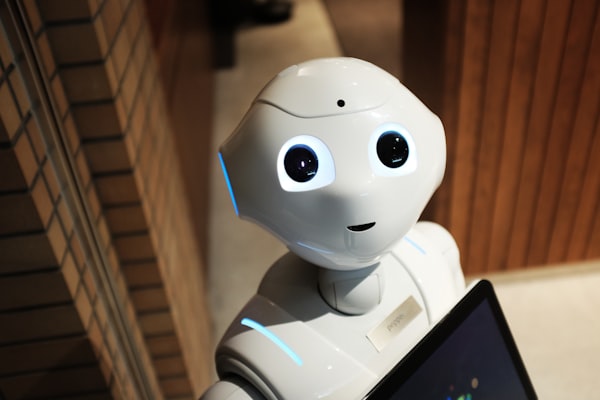 The complexity of a robot's joints determines its dexterity.
How Do They Move? Mobility and Dexterity Explained
Humanoid robots are defined by their human-like form, but their movement capabilities can vary wildly. Mobility refers to how the robot navigates its environment. Bipedal robots, like many advanced humanoids, can walk, climb stairs, and traverse uneven terrain, mimicking human movement. Other models might use a wheeled base for speed and stability on flat surfaces, sometimes combined with a torso that can articulate.
Dexterity, on the other hand, describes the robot's ability to manipulate objects. This is largely determined by the number of 'degrees of freedom' (DoF) in its arms, wrists, and hands. More DoF means more fluid, human-like movement and the ability to perform complex tasks like picking up small objects or using tools. Consider the precision and force required for your robot's tasks.
Degrees of Freedom (DoF) refers to the number of independent parameters that define the configuration of a mechanical system. In robotics, each joint that can move independently adds a DoF. A human arm, for example, has many DoF, allowing for a wide range of motion. A robot arm with 6 DoF can typically reach any point in its workspace with any orientation, while a hand with 20+ DoF can perform highly intricate grasping tasks. More DoF generally means greater flexibility but also increased complexity and cost.
The Robot's Senses and Brain: Perception & Processing
A humanoid robot's ability to interact intelligently with its environment hinges on its sensor array and processing power. Sensors are its eyes, ears, and touch, gathering data about the world. Processing is its brain, interpreting that data to make decisions and execute actions.
Common sensors include cameras (for vision and object recognition), lidar (for mapping and navigation), force-torque sensors (for precise manipulation), and tactile sensors (for 'touch' feedback). The onboard processor then takes this raw data and runs algorithms for perception, path planning, and task execution. High-end robots often feature powerful embedded systems capable of real-time AI and machine learning, allowing for adaptive and autonomous behavior.
Vision Systems: Seeing the World
Most humanoids use high-resolution cameras, often in stereo configurations for depth perception. Advanced models integrate AI-powered computer vision for facial recognition, object detection, and gesture interpretation. Consider frame rates, resolution, and low-light performance based on your application. Some also include thermal cameras for specific industrial or safety monitoring tasks.
Proximity & Range: Understanding Space
Lidar (Light Detection and Ranging) and ultrasonic sensors are crucial for navigation and collision avoidance. Lidar creates detailed 3D maps of the environment, essential for autonomous movement and object localization. Ultrasonic sensors provide simpler, short-range obstacle detection. The range, accuracy, and field of view of these sensors are vital for safe and effective operation, especially in complex or crowded spaces.
Force & Touch: Feeling the Interaction
Force-torque sensors, often located in wrists or ankles, allow the robot to measure forces applied to its limbs, enabling delicate manipulation and stable balance. Tactile sensors on fingertips or body panels provide a sense of touch, crucial for grasping objects of varying textures and ensuring safe human-robot interaction. These sensors are critical for tasks requiring fine motor control or physical collaboration.
Powering Performance: Battery & Endurance Metrics
A robot's operational uptime is directly tied to its power system. Understanding battery capacity, typical runtime, and charging characteristics is essential for planning deployments and ensuring continuous operation.
 The software ecosystem is as vital as the hardware.
Beyond the Hardware: Software & Ecosystem
A robot's hardware is only as good as the software that controls it. The software ecosystem includes the operating system, programming interfaces, development tools, and community support. Many advanced humanoids leverage the Robot Operating System (ROS), an open-source framework that provides libraries and tools to help developers create complex robot behaviors.
Consider whether the robot offers intuitive graphical programming interfaces for beginners or robust APIs for advanced developers. The availability of documentation, tutorials, and an active user community can significantly impact your ability to develop and deploy your robot effectively. An open-source approach often provides greater flexibility and longevity.
Software Ecosystem Checklist
0 of 5 completedThe Price Tag: Budgeting for Your Humanoid Robot
The cost of a humanoid robot can range from a few thousand dollars for educational or hobbyist models to hundreds of thousands for advanced research or industrial platforms. It's crucial to look beyond the initial purchase price and consider the total cost of ownership (TCO).
TCO includes not just the robot itself, but also essential accessories (chargers, spare parts), software licenses, potential customization, training, and ongoing maintenance. Factor in the cost of development time if you're building custom applications. For a detailed breakdown, explore our Humanoid Robot Cost Calculator.
Model Spotlight: A Quick Comparison of iBR Humanoids
To illustrate how these factors come into play, let's look at a simplified comparison of three hypothetical iBuyRobotics humanoid models, each tailored for different primary use cases. This table highlights key differentiators to help you visualize the trade-offs.
| Feature | iBR-EduBot (Entry-Level) | iBR-FlexiPro (Mid-Range) | iBR-ResearchPro (High-End) |
|---|---|---|---|
| Primary Use | Education, Hobbyist | General Research, Light Service | Advanced Research, Complex Tasks |
| Total DoF | 16 (6 arms, 6 legs, 4 head) | 28 (7 arms x2, 6 legs x2, 2 head) | 36+ (7 arms x2, 6 legs x2, 2 head, 8 hands) |
| Locomotion | Bipedal (basic) | Bipedal (advanced), Dynamic Balance | Bipedal (highly dynamic), Terrain Adaptable |
| Vision System | Single HD Camera | Stereo HD Cameras, Basic Object Rec. | Stereo 4K Cameras, Lidar, AI Vision Suite |
| Sensor Suite | IMU, Ultrasonic | IMU, Force-Torque (wrists), Lidar | IMU, Force-Torque (all joints), Lidar, Tactile |
| Processing | ARM Cortex-A53 | NVIDIA Jetson Xavier NX | Intel Core i7 / NVIDIA Jetson AGX Orin |
| Software | Proprietary GUI, Python API | ROS, Python, C++ SDK | Full ROS 2, Open-Source, Advanced AI Frameworks |
| Battery Life | 1.5 - 2 hours | 3 - 4 hours | 4 - 6 hours (swappable) |
| Starting Price | $4,999 | $28,000 | $95,000+ |
Striking a balance between advanced capabilities and accessibility, the FlexiPro is an excellent choice for diverse research and service applications, offering robust performance without the top-tier investment.
Making Your Final Decision: A Holistic Approach
Choosing the right humanoid robot is a significant investment, and it requires a holistic evaluation of your needs against the available technology. Don't get caught up in chasing the highest specifications; instead, focus on the features that directly contribute to your robot's intended mission and long-term viability.
Consider the learning curve for programming and operation, the availability of technical support, and the potential for future upgrades or expansion. A robot that is easy to integrate into your existing workflow or research environment will provide greater value over time. For more guidance on what to prioritize, visit our guide on What Features Should You Look For?
"The best humanoid robot isn't necessarily the most expensive or feature-rich one. It's the one that perfectly aligns with your specific goals, budget, and technical capabilities, providing the most effective solution for your unique challenges."
— Dr. Anya Sharma, Lead Robotics Engineer, iBuyRobotics
Ready to Take the Next Step?
Continue your journey into the world of humanoid robotics with these related resources.
Further Reading